Tuesday, 23 June 2026

Tuesday, 23 June 2026
German biotech startup successfully develops roe deer muscle cells from induced pluripotent stem cells, marking a significant step toward premium cultivated game meat production Cultivated meat company MyriaMeat has achieved…
German biotech startup successfully develops roe deer muscle cells from induced pluripotent stem cells, marking a significant step toward premium cultivated game meat production
Cultivated meat company MyriaMeat has achieved a major technological milestone by successfully establishing an induced pluripotent stem cell (iPSC) line from roe deer and producing functional roe deer muscle cells using its proprietary differentiation technology, extending its platform beyond pork and reinforcing the scalability of its multi-species cultivated meat approach.
The breakthrough marks the first time the Munich-based startup has successfully applied its iPSC-based cultivated meat platform to a wild game species, highlighting the potential of advanced cell agriculture technologies to replicate a wider range of premium and specialty meats beyond conventional livestock.
Founded in 2022 as a spin-off from the University of Göttingen, MyriaMeat has rapidly emerged as one of Europe’s more closely watched cultivated meat innovators. The company has focused on developing whole-cut cultivated meat products using induced pluripotent stem cells, which possess the ability to differentiate into multiple cell types while offering significant advantages for scalable production.
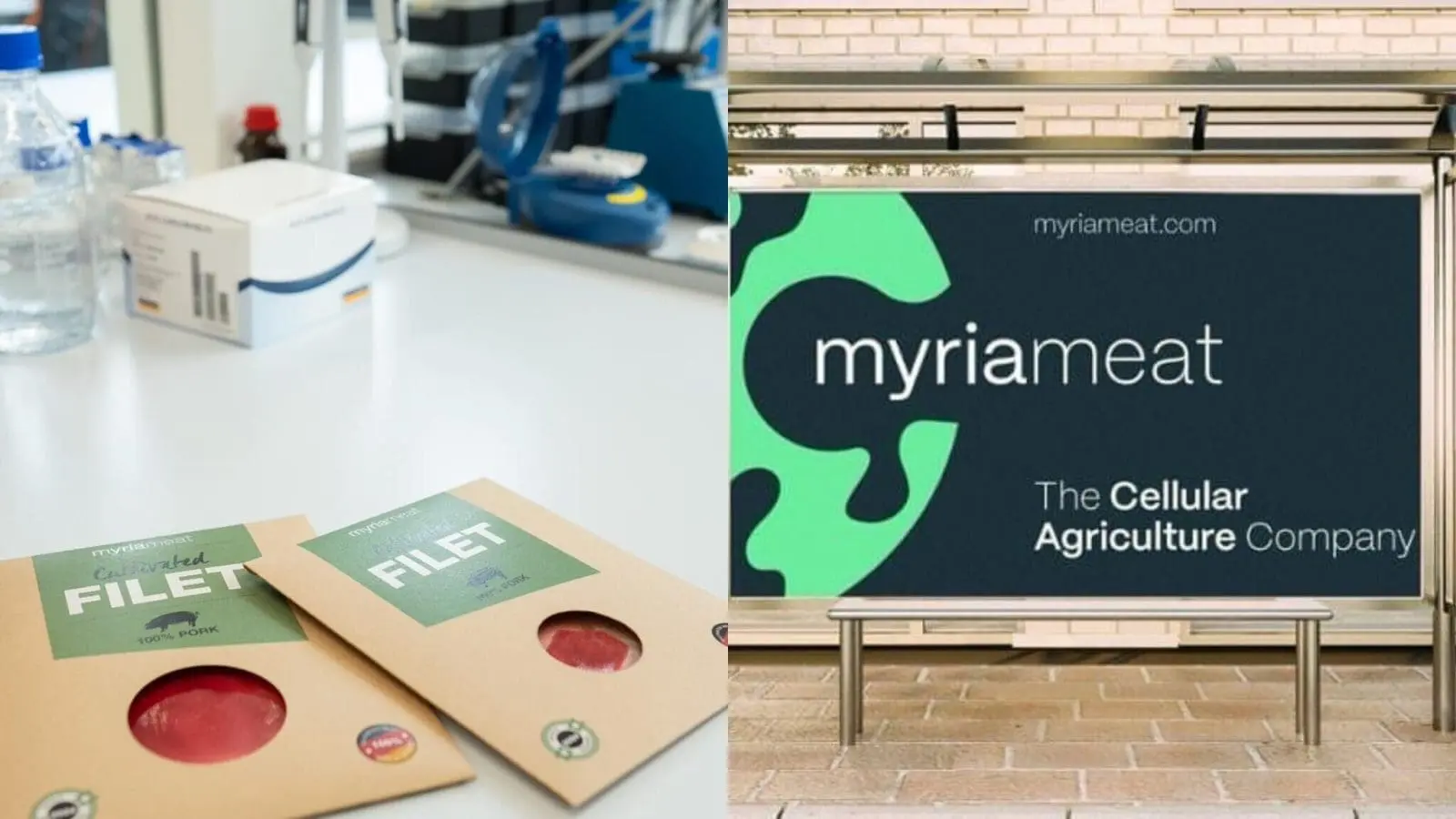
The latest achievement builds on a series of previous technical advances. The company previously unveiled what it described as the world’s first cultivated pork fillet produced entirely from iPSCs without the use of scaffolds or plant-protein blends. In 2025, it further demonstrated spontaneous muscle contractions in cultivated pig tissue, showcasing the functional maturity of its cell-derived muscle structures.
With the roe deer project, MyriaMeat has now demonstrated that its platform can be adapted beyond conventional farm animals, potentially opening new commercial opportunities across specialty meat categories.
The process begins with a single biopsy sample collected from a roe deer. From that sample, researchers establish pluripotent stem cell lines capable of continuous growth and subsequent differentiation into muscle tissue. Once the initial biopsy is obtained, no further animal interaction is required, offering a highly controlled and sustainable production pathway.
Using its patented differentiation protocol, the company successfully guided the stem cells into becoming functional muscle cells that exhibit characteristics consistent with authentic roe deer muscle tissue.
Industry experts view the development as particularly significant because it validates the transferability of MyriaMeat’s core platform technology. While cultivating a specific species remains a noteworthy accomplishment, the broader implication lies in proving that a single technological framework can potentially be adapted across multiple animal species with differing biological characteristics.
Such flexibility could substantially reduce development timelines and research costs associated with bringing new cultivated meat products to market.
The choice of roe deer is also strategically significant. Roe deer meat occupies a premium niche within European culinary traditions, particularly in Germany and other Central European markets where game meats are highly valued for their distinct flavour profiles and seasonal appeal.
By targeting a wild game species with established consumer demand, MyriaMeat is positioning itself not only within mainstream protein alternatives but also within high-value specialty meat segments that may offer stronger pricing opportunities and differentiated market positioning.
The achievement further supports the company’s broader ambition of creating cultivated versions of traditionally difficult-to-scale animal proteins while reducing pressure on wildlife populations and natural ecosystems.
Alongside its cultivated meat research, MyriaMeat has also been advancing hybrid protein innovations. The company is currently participating in a hybrid sausage development project supported by the European Regional Development Fund and the German state of Lower Saxony. The initiative combines cultivated and conventional pork to create products that can serve as transitional solutions for consumers and manufacturers.
As global investment in cultivated meat increasingly shifts toward technologies capable of improving scalability, lowering production costs and expanding product diversity, MyriaMeat’s successful application of its iPSC platform to roe deer represents an important proof point for the broader cell agriculture industry.
The development suggests that future cultivated meat production may extend well beyond conventional beef, pork and poultry to include premium game meats, specialty proteins and other niche categories that have traditionally remained inaccessible to large-scale sustainable production systems.
With the successful cultivation of roe deer muscle cells now achieved, MyriaMeat is advancing toward its next objective: transforming the laboratory breakthrough into commercially viable cultivated roe deer meat products that could eventually bring one of Europe’s most sought-after game meats into the emerging cultivated protein marketplace.

Jun 23, 2026 | Supply chain


Jun 22, 2026 | Australia

Jun 18, 2026 | Company News

Jun 23, 2026 | Cultured Meat
Jun 23, 2026 | Beverages