Friday, 10 July 2026

Friday, 10 July 2026
The study was conducted simultaneously across five European countries: Norway, France, Italy, Poland, and Germany, using four strawberry varieties: Clery, Frida, Gariguette, and Sonata A European research team led by…
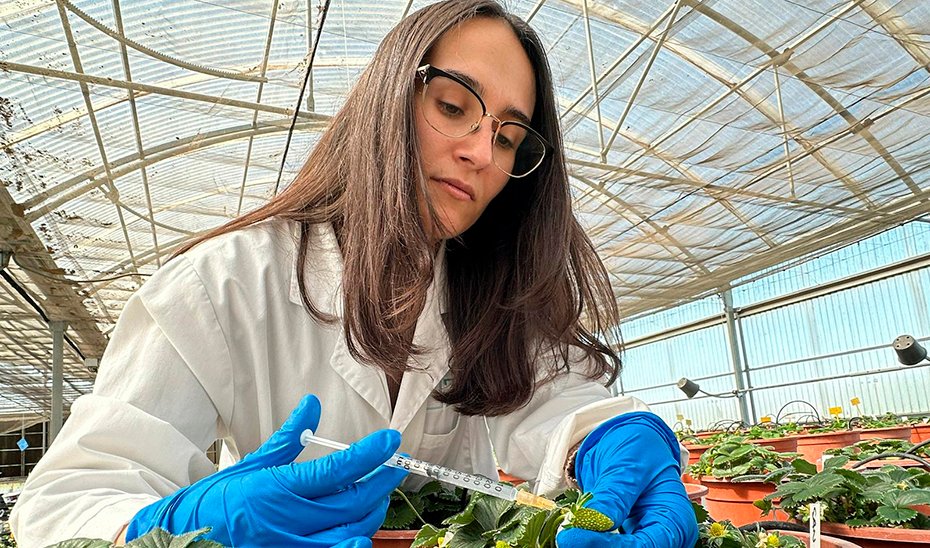
The study was conducted simultaneously across five European countries: Norway, France, Italy, Poland, and Germany, using four strawberry varieties: Clery, Frida, Gariguette, and Sonata
A European research team led by the University of Malaga and the La Mayora Institute of Subtropical and Mediterranean Horticulture (IHSM-UMA-CSIC) has identified the key genetic and environmental factors that determine strawberry flavour and quality across different growing regions, paving the way for faster and more cost-effective development of climate-resilient strawberry varieties.
The project, funded by the Regional Ministry of Universities, Research and Innovation, examined how environmental conditions, cultivation methods, and genetics interact to influence strawberry development, taste, and aroma. The findings were published in the journal Food Chemistry under the study titled “Cultivar-by-environment interactions shape strawberry fruit quality: A multi-omics approach across European climates.”
The study was conducted simultaneously across five European countries: Norway, France, Italy, Poland, and Germany, using four strawberry varieties: Clery, Frida, Gariguette, and Sonata. Researchers evaluated crops grown under different climatic and cultivation conditions, including open-field farming and polyethene tunnel cultivation systems.
According to the researchers, warm weather and high temperatures accelerate fruit ripening and increase acidity levels, while milder temperatures support the accumulation of sugars and aromatic compounds that improve flavor quality.
The study revealed that environmental conditions and cultivation systems account for nearly 30 per cent of the strawberry metabolomic profile the complete set of small molecules present in the fruit. Meanwhile, interactions between genetics and environment contributed close to 18 per cent of flavor and aroma variability. In contrast, harvest date and its interaction with other factors had a comparatively limited impact, contributing less than 5 per cent.
To achieve these insights, the research team employed multi-omics technologies that analyse large-scale molecular biological information, including DNA, RNA, and metabolites. Advanced mathematical modelling, multivariate analysis, and statistical techniques such as PERMANOVA were used to process massive datasets generated during the study.
José G. Vallarino, researcher at the La Mayora Institute of Subtropical and Mediterranean Horticulture and co-author of the study, noted that the integrated approach provides a foundation for future machine learning and artificial intelligence applications in plant breeding.
“This combination has allowed us to integrate large volumes of biological data and predict fruit behaviour under different climate scenarios,” he explained.
The cultivated strawberry presents an additional scientific challenge due to its octoploid genome structure, containing eight copies of its genome, making genetic analysis and breeding significantly more complex compared to crops such as tomato or Arabidopsis.
Researchers identified several key flavor-related compounds that remained stable across different growing environments, including sucrose, linalool, and γ-decalactone — compounds directly linked to the characteristic aroma and taste of strawberries.
Sonia Osorio, researcher at the University of Malaga and co-author of the study, said these molecules play a major role in shaping the fruit’s sensory profile, influencing both flavor perception and aroma intensity.
The findings are expected to support the development of molecular markers for assisted breeding programmes, enabling researchers and breeders to accelerate the creation of strawberry varieties better adapted to climate variability while maintaining desirable taste and quality characteristics.

Jul 09, 2026 | Company News
Jul 08, 2026 | Packaging

Jul 08, 2026 | Australia
Jul 01, 2026 | Food Safety and Testing

Jun 18, 2026 | Company News
Jul 10, 2026 | Company News
Jul 10, 2026 | Company News
Jul 10, 2026 | Company News