Wednesday, 1 July 2026

Wednesday, 1 July 2026
The World Bank’s warning that nearly 30 per cent of food produced in South Asia is lost or wasted, an amount sufficient to feed nearly 300 million people, deserves urgent…

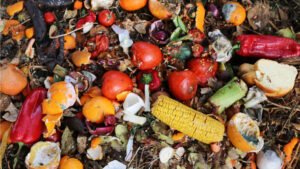
The World Bank’s warning that nearly 30 per cent of food produced in South Asia is lost or wasted, an amount sufficient to feed nearly 300 million people, deserves urgent attention from policymakers. Speaking at the workshop “Unlocking Value: Advancing Food Processing for Employment Generation and Sustainable Growth in South Asia” in Ahmedabad, the Bank’s Acting Country Director for India, Paul Procee, pointed out that food loss not only deprives millions of adequate nutrition but also squanders opportunities for employment in food processing, logistics, waste management and exports.
Procee’s observations are especially significant as the United Nations Sustainable Development Goal (SDG) 12.3 aims to halve global food waste by 50 per cent till 2030. The World Bank Group has emphasised that transforming South Asia’s food systems beyond farm production could unlock millions of jobs, attract billions of dollars in investments, reduce poverty and accelerate economic growth across the region.
With only four years remaining to achieve this target, the challenge is formidable. South Asia loses nearly one-fifth of its food production, while losses are around 16 per cent in Europe and North America and only 5–6 per cent in Australia and New Zealand. In sub-Saharan Africa, food loss is even more severe, with 30–50 per cent of production lost along the value chain before reaching consumers.
Reducing food loss requires identifying where it occurs. In developing countries, the problem lies largely between harvest and consumption. Poor storage, inadequate cold-chain infrastructure and limited food processing result in substantial post-harvest losses. In contrast, developed countries experience most food waste at the household level, driven by over-purchasing and consumer behaviour. The solutions, therefore, must reflect these different realities.
Thus, expanding storage facilities, cold chains, logistics networks, and market linkages can help reduce food losses while creating employment opportunities and increasing returns for farmers. In a developed world where adequate infrastructure is available for storage and processing, the on-plate wastage is very high, requiring different strategies.
Food waste is often viewed through the lens of hunger, and rightly so. In societies where millions remain undernourished, wasting food carries a moral cost. Yet its environmental consequences are equally serious.
Every kilogramme of wasted food represents wasted water. Agriculture accounts for nearly 72 per cent of global freshwater withdrawals, and every crop lost also means the loss of the water used to produce it. As freshwater scarcity intensifies worldwide, reducing food waste becomes an essential component of water conservation.
The same holds true for land. Agriculture already occupies about one-third of the world’s land surface, while expanding urbanisation, industrialisation and soil degradation continue to reduce cultivable land. According to the Food and Agriculture Organization (FAO), global food production must increase by around 50 per cent by 2050 compared to 2012 to feed a growing population. However, expanding agricultural land is becoming increasingly difficult. More than 1.6 billion hectares have already been degraded, with over 60 per cent of this degradation occurring on agricultural land. Further expansion also accelerates deforestation and destroys carbon-rich ecosystems. This explains the likely pressure on the availability of land for agriculture.
Food waste is therefore not merely an economic loss; it is a major environmental challenge. Addressing this challenge requires a three-pronged strategy. First, governments must invest or encourage investments in modern storage facilities, warehouses and efficient cold-chain infrastructure to minimise post-harvest losses. Second, food processing and value addition should be expanded so that a greater share of agricultural produce reaches consumers instead of being discarded. Third, sustained public awareness campaigns are needed to discourage household food waste by highlighting its environmental and social costs.
The defining question is no longer how much land is cultivated, but how much can be produced sustainably from every square foot. The challenge is no longer to acquire more land, but to use existing resources more wisely and sustainably. And avoiding food loss and wastage is an integral part of it.

Jul 01, 2026 | Food Security
Jul 01, 2026 | Food Safety and Testing

Jun 29, 2026 | Australia
Jul 01, 2026 | Food Safety and Testing

Jun 18, 2026 | Company News
Jul 01, 2026 | Food Security
Jul 01, 2026 | Australia
Jul 01, 2026 | Food Safety and Testing