Wednesday, 1 July 2026
Wednesday, 1 July 2026
The new roadmap goes further by integrating aquatic food systems into national food systems planning for the first time Cambodia has formally recognised aquatic food systems as a cornerstone of…
The new roadmap goes further by integrating aquatic food systems into national food systems planning for the first time
Cambodia has formally recognised aquatic food systems as a cornerstone of its development strategy, placing fish and other aquatic foods among six national “Game-Changing Actions” in its newly launched Second Roadmap for Food Systems for Sustainable Development 2025–2030.
The roadmap, led by the Council for Agricultural and Rural Development (CARD), underscores the critical role aquatic foods play in the country’s nutrition and livelihoods. Fish accounts for more than half of all animal protein consumed in Cambodia—one of the highest rates globally—and serves as a key source of essential micronutrients for millions of rural households.
The move builds on earlier policy momentum in 2025, when Cambodia’s Third National Strategy for Food Security and Nutrition positioned fish at the centre of the country’s nutrition agenda. The new roadmap goes further by integrating aquatic food systems into national food systems planning for the first time.
The recognition reflects more than a decade of research and grassroots interventions across Cambodia’s floodplains, rice fields and fishing communities. Since 2012, WorldFish and its partners have supported the establishment of more than 160 Community Fish Refuges, improving the management of over 200,000 hectares of rice–fish landscapes and benefiting up to 127,000 households.
In Kampong Thom province, results have been particularly striking. Under the Scaling Aquaculture for Resilience (SAFR) project, annual fish catch per household increased from 170 kg to 250 kg within a year—delivering both improved nutrition and higher incomes for rural families.
Complementary approaches, such as integrated rice-field pond systems, have further demonstrated how small adjustments to traditional farming practices can transform a single rice harvest into a year-round source of food and income.
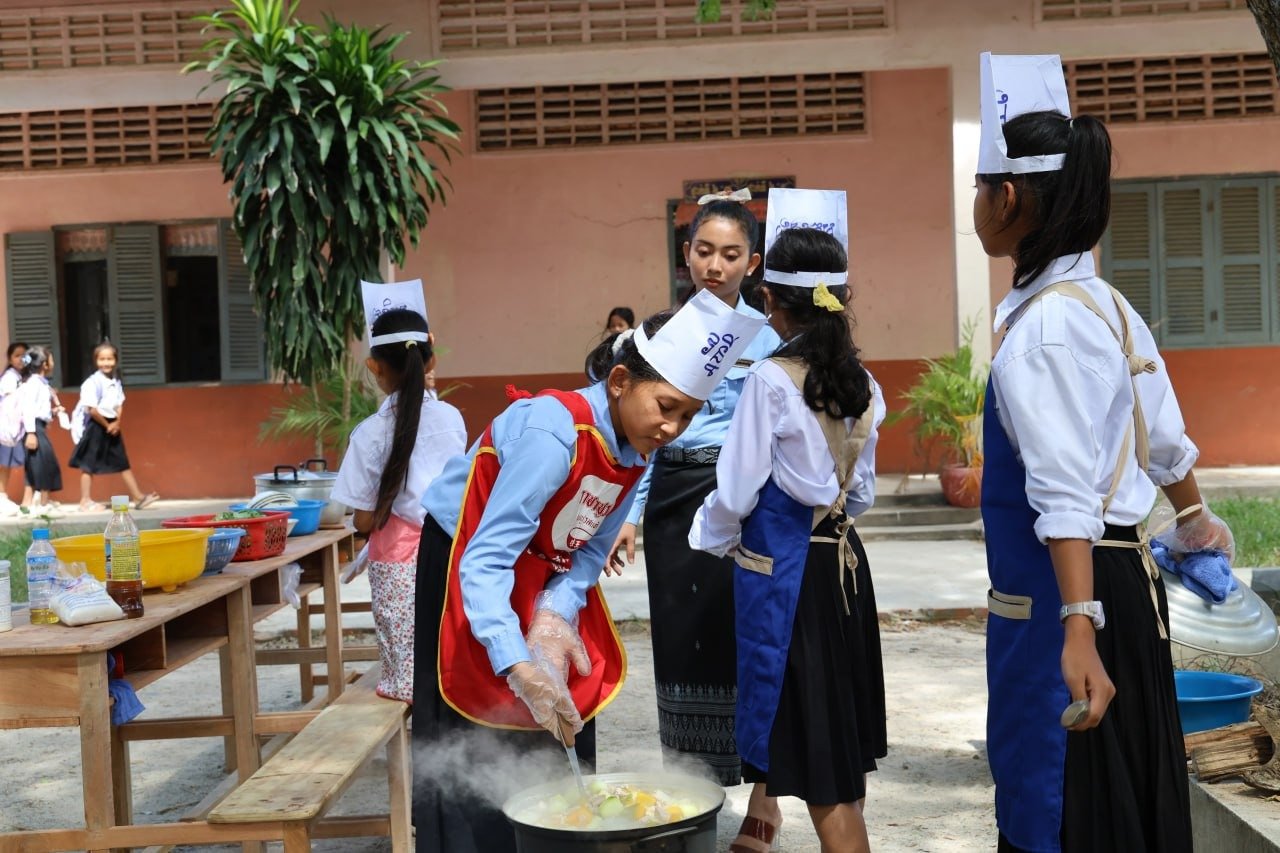
A key feature of the new roadmap is the integration of aquatic foods into Cambodia’s school feeding programmes. Pilot initiatives are already underway through the CGIAR Scaling for Impact Program, with WorldFish and the International Institute of Rural Reconstruction working in Kampong Thom and Prey Veng provinces to link smallholder fish producers with school meal supply chains.
Communities have been trained to produce small fish powder—a low-cost, nutrient-dense product made from locally available species—which can be easily incorporated into school meals. Across 28 primary schools, 1,251 participants, including 671 women and girls, have received training. Five agricultural cooperatives are now supplying locally produced fish and vegetables to schools, creating reliable market access for farmers while improving the nutritional quality of meals for children.
With the new roadmap in place, Cambodia is positioning aquatic foods not only as a dietary staple but as a strategic lever for advancing food security, nutrition and rural livelihoods nationwide.
Jul 01, 2026 | Food Security
Jul 01, 2026 | Food Safety and Testing

Jun 29, 2026 | Australia
Jul 01, 2026 | Food Safety and Testing
Jun 18, 2026 | Company News
Jul 01, 2026 | Company News
Jul 01, 2026 | Company News
Jul 01, 2026 | Food Security