Friday, 10 July 2026

Friday, 10 July 2026
FAO Director-General QU Dongyu addresses the event on the Middle East conflict with Spain Prime Minister The actions taken now will be critical in determining whether the world can manage…
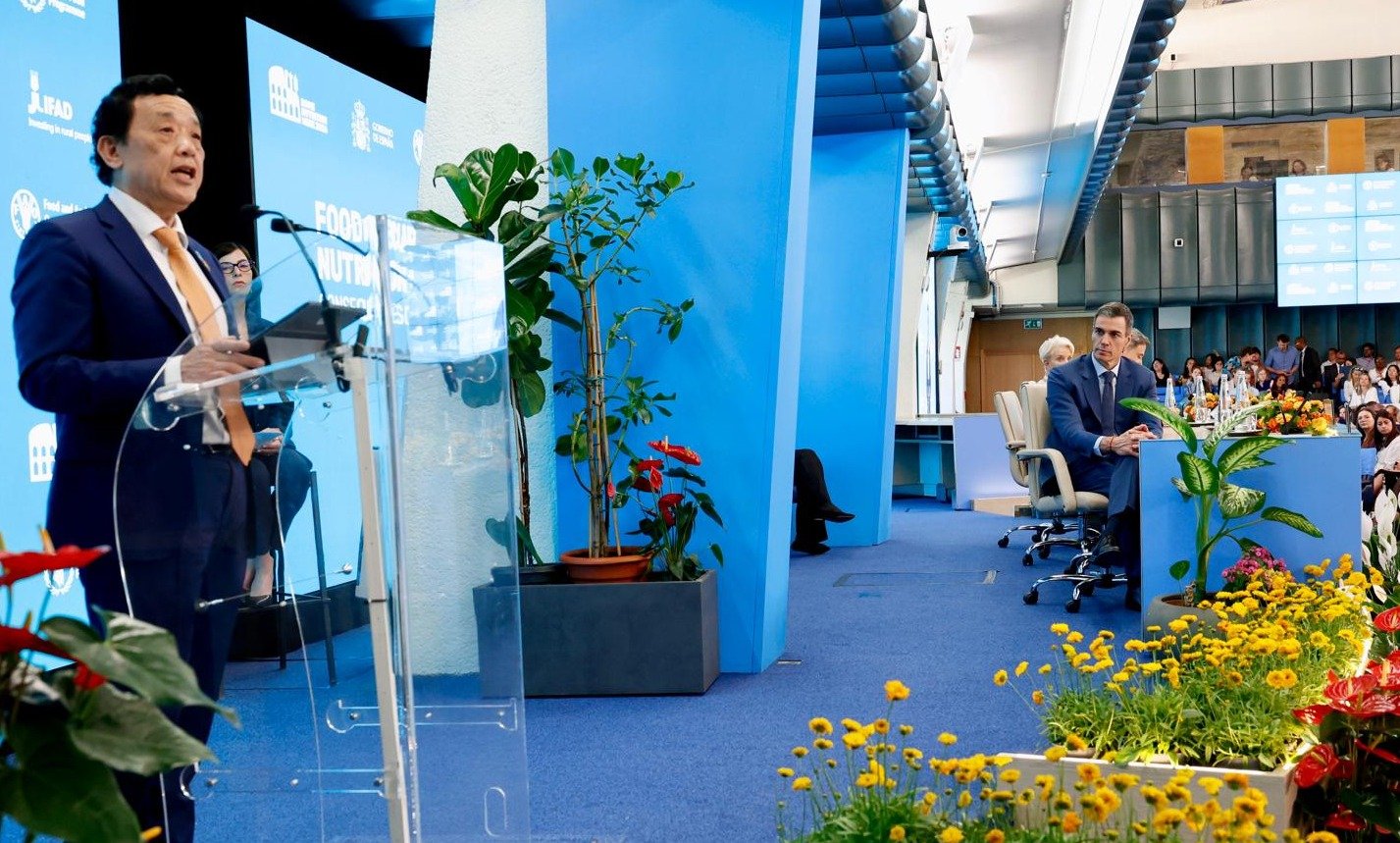
FAO Director-General QU Dongyu addresses the event on the Middle East conflict with Spain Prime Minister
The actions taken now will be critical in determining whether the world can manage the shock caused by the disruptions in the Strait of Hormuz or face a far more serious food security crisis in the years to come, the Director-General of the Food and Agriculture Organisation (FAO), QU Dongyu, warned.
Qu was addressing a Special Event on the crisis in the Middle East during Rome Nutrition Week. The meeting, organised by the Government of Spain, was also attended by Spanish Prime Minister Pedro Sánchez, as well as the Executive Director of the World Food Programme, Cindy McCain, and the President of the International Fund for Agricultural Development, Alvaro Lario.
In his remarks, the FAO Director-General said the meeting in Rome was taking place at a moment of “profound geopolitical and economic fragility.”
“What we are witnessing today is not only a geopolitical crisis, it is a systemic shock to the global agrifood system,” Qu said.
The largest impacts of this crisis may not be immediate, however. They may emerge months from now, when farmers begin harvesting less because they planted less, fertilised less, or can no longer afford production.
“The decisions we make now will determine whether this remains a manageable shock, or evolves into a deeper global food security crisis in 2026 and 2027, and beyond,” Qu told the meeting.
FAO notes that severe disruptions in the Strait of Hormuz have already affected the movement of oil, liquefied natural gas, sulfur, and fertilisers – driving up agricultural input costs and placing upward pressure on seed prices due to their dependence on fertilisers. As energy prices rise, agrifood systems become more expensive across all regions.
Input-import-dependent countries, in particular, are facing rising bills, while vulnerable households are losing purchasing power as inflation erodes incomes.
For many countries, especially in Africa and parts of Asia, these impacts are not occurring in isolation; they are compounding existing pressures from debt distress, climate shocks, conflict, and constrained public finances.
“We must act early before humanitarian and economic costs rise,” the Director-General said.

Jul 09, 2026 | Company News
Jul 08, 2026 | Packaging

Jul 08, 2026 | Australia
Jul 01, 2026 | Food Safety and Testing

Jun 18, 2026 | Company News
Jul 10, 2026 | Company News
Jul 10, 2026 | Company News
Jul 10, 2026 | Company News