Friday, 22 May 2026

Friday, 22 May 2026
Colin Barrow, Chair in Biotechnology at Deakin University, and Murray de Jong, CEO of Bellarine Foods As global demand accelerates for high-quality collagen and protein ingredients driven by the rapid…
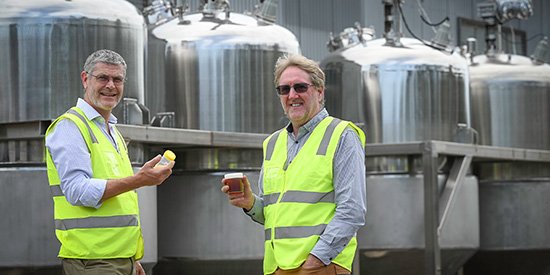
Colin Barrow, Chair in Biotechnology at Deakin University, and Murray de Jong, CEO of Bellarine Foods
As global demand accelerates for high-quality collagen and protein ingredients driven by the rapid growth of sports nutrition, functional foods, and beauty-from-within segments, the spotlight is increasingly turning toward more sustainable, locally sourced production models. In Australia, a pioneering collaboration between Deakin University and Bellarine Foods is positioning itself at the forefront of this shift, leveraging enzyme-based extraction technologies to transform aquaculture byproducts into high-value collagen products.
Backed by the Trailblazer Universities Program through Deakin’s REACH initiative, this effort represents a significant step toward building a domestic, circular bioeconomy, reducing reliance on imported collagen while unlocking new value streams from materials that would otherwise go to waste. By combining advanced biotechnology with commercial-scale processing capabilities, the initiative is not only addressing sustainability challenges but also opening up new market opportunities across nutraceuticals, cosmetics, and, potentially, biomedical applications.
In this interview with NUFFOODS Spectrum, Colin Barrow, Chair in Biotechnology at Deakin University, and Murray de Jong, CEO of Bellarine Foods, share insights into the technological breakthroughs behind enzyme-based extraction, the role of government-backed funding in accelerating innovation, and the roadmap for scaling up production while strengthening Australia’s domestic supply chain.
What makes enzyme-based extraction a breakthrough compared to conventional collagen and protein processing methods?
Response attributable to Chair in Biotechnology, Deakin Distinguished Professor Colin Barrow at Deakin University’s School of Life and Environmental Sciences and the Centre for Sustainable Bioproducts:
“This research represents the first commercial-ready product made from Australian raw materials in Australia. Currently, collagen is imported for the Australian market.
“Advances in enzyme processing have resulted in improved activity and clearer product differentiation. The approaches to enzyme hydrolysis or break down of different proteins to smaller peptides in a controlled way for this project varies considerably based on enzyme type and digestion condition. As these variables significantly influence the final product, these processes need to be carefully developed and then tightly controlled to ensure consistent quality and performance.”
With support from Deakin’s REACH initiative under the Trailblazer Universities Program, how critical is government-backed funding in accelerating sustainable food innovation in Australia?
Response attributable to Bellarine Foods CEO Murray de Jong:
“At Bellarine Foods, we have invested in a commercial spray drying operation. However, partnering with Deakin through REACH has enabled the front end of the process to be developed and refined to enable scale. That is, the use of enzyme digestion, separation and concentration before spray drying. Without the Trailblazer funding we would not have considered end-to-end collagen production.”
Market Opportunity: Given the high demand across sports nutrition and beauty-from-within segments, which market applications do you view as the most immediate commercial opportunities?
Response attributable to Bellarine Foods CEO Murray de Jong
“The two initial markets are cosmetics and nutritional supplements, where demand for collagen-based ingredients is already strong. There is also potential for fortified food as the technology scales. In the longer term, we are exploring native collagen for biomedical applications, although this represents a longer and more complex development pathway.”
How does this initiative strengthen Australia’s domestic supply chain and reduce reliance on imported collagen and hydrolysed proteins?
Response attributable to Bellarine Foods CEO Murray de Jong
“This initiative focuses on using Australian byproducts, such as salmon skin, which currently goes to landfill or is used in low value feed applications. By converting these materials into high-value collagen products, we can create more value from existing resources.
“A key aim here is to provide Australian collagen products for the Australian market, reducing reliance on imports and providing higher value for Australian primary producers.”
How significant is the potential reduction in aquaculture waste, and how does this align with Australia’s circular bioeconomy ambitions?
Response attributable to Chair in Biotechnology Deakin Distinguished Professor Colin Barrow at Deakin University’s School of Life and Environmental Sciences and the Centre for Sustainable Bioproducts
“Agriculture and aquaculture both result in high levels of byproduct, some of which goes to landfill and some going to animal feed applications. The circular bioeconomy requires the development of higher value applications for waste so that it becomes economically viable to divert waste from landfill. For example, separating salmon skins from other byproducts allows them to be used for higher-value applications such as collagen production. This approach is similar for the case for consumer recycling, where separating waste streams is essential to enable the recovery and reuse of higher value materials.”
As you move toward pilot production in 2026, what key milestones must be achieved to ensure regulatory compliance and market readiness?
Response attributable to Bellarine Foods CEO Murray de Jong:
“Market readiness has been achieved regarding product quality and saleability. Regulatory hurdles are primarily around quality of manufacturing, such as food grade production and Good Manufacturing Practice (GMP) requirements. Bellarine Foods already holds the necessary manufacturing quality approvals and relevant accreditations.
“The two key issues to address now are the installation and commissioning of the enzyme digestion manufacturing process and the negotiation around access to, and cost of, raw materials. These are business considerations rather than technology challenges.”
Shraddha Warde
shraddha.warde@mmactiv.com

May 22, 2026 | Australia

May 21, 2026 | Company News

May 21, 2026 | India
May 14, 2026 | Food
May 13, 2026 | Food Safety and Testing

May 12, 2026 | Food Safety and Testing
May 22, 2026 | Company News
May 22, 2026 | China
May 22, 2026 | Beverages