Wednesday, 1 July 2026

Wednesday, 1 July 2026
Hope Johnson, Associate Professor and ARC DECRA Fellow at the Queensland University of Technology School of Law As the global food industry faces mounting pressure to reduce waste, strengthen supply…

Hope Johnson, Associate Professor and ARC DECRA Fellow at the Queensland University of Technology School of Law
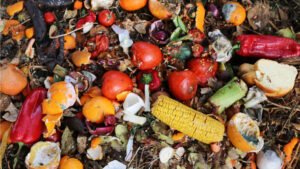
As the global food industry faces mounting pressure to reduce waste, strengthen supply chain resilience, and meet evolving sustainability expectations, upcycled food products are emerging as a powerful solution within the circular economy. By transforming food surplus, by-products, and ingredients that would otherwise go to waste into commercially viable products, the sector is attracting growing interest from manufacturers, policymakers, investors, and consumers alike. Australia, with its strong agricultural base and expanding food innovation ecosystem, is increasingly being viewed as a market with significant potential to lead in this space. However, scaling the industry will require greater investment in food manufacturing and logistics, clearer regulatory frameworks, and stronger collaboration across the value chain.
In an interview with NUFFOODS Spectrum, Hope Johnson, Associate Professor and ARC DECRA Fellow at the Queensland University of Technology School of Law, discusses the immediate commercial opportunities for food manufacturers in the upcycled food segment, the policy and standardisation changes needed to accelerate industry adoption, and the role organisations such as End Food Waste Australia can play in fostering cross-sector partnerships. She also highlights the complexities of balancing sustainability goals with long-term profitability and explains why a clearer definition of “upcycled food” will be essential as the market continues to evolve globally.
Commercialisation: What are the most immediate opportunities for food manufacturers to commercialise upcycled products at scale?
The immediate opportunities lie in low-tech upcycled food products, as these are easier to scale and still provide flexibility for companies developing options. Food manufacturers are well-placed to identify opportunities to use inputs or outputs from their manufacturing process going to waste and to expand their current operations. It is more difficult for growers to move into upcycled food generally, as this requires capital investment and expertise in food manufacturing.
Global Competitiveness: With the global market projected to reach $68.56 billion by 2032, what key factors will determine Australia’s competitiveness in this space?
Investment in Australia’s food transport and manufacturing will allow it to exploit opportunities for upcycled foods. Increasing demand for Australian produced food would also facilitate uptake.
Regulation and Policy: Your research notes minimal regulatory barriers but highlights the need for clearer definitions. What specific policy or standardisation changes are most critical to accelerate industry adoption?
A legal or policy definition of upcycled food would create clarity for companies seeking to use the term and for regulators wanting to develop food waste policies and interventions. Currently, the term upcycled has unclear boundaries that make it difficult to determine what should be described as upcycled. Consensus is also lacking around what the goals for upcycled food should be in terms of sustainability.
Stakeholder Collaboration: How can organisations like End Food Waste Australia better enable cross-sector partnerships between growers, manufacturers, and policymakers?
End Food Waste Australia is facilitating these kinds of relationships. A dedicated third party that can connect growers with food manufacturers and can help food manufacturers identify opportunities to upcycle within their own operations is ideal.
Sustainability and Profitability: How can upcycled food initiatives balance profitability with measurable impacts on food waste reduction and supply chain resilience?
Ideally, the inputs in upcycled food would be more economical but this isn’t always the case, especially when it comes to fresh fruit and vegetables as harvesting and transport entails high costs. A complexity is that if an upcycled food becomes too popular, then it may just be a standalone product without using food surplus and waste for various reasons associated with cost and competition. This is a complicated question and our final report addresses it much better than I can quickly here.
Shraddha Warde
shraddha.warde@mmactiv.com

Jul 01, 2026 | Food Security
Jul 01, 2026 | Food Safety and Testing

Jun 29, 2026 | Australia
Jul 01, 2026 | Food Safety and Testing
Jun 18, 2026 | Company News
Jul 01, 2026 | Company News
Jul 01, 2026 | Company News
Jul 01, 2026 | Food Security