Thursday, 9 July 2026

Thursday, 9 July 2026
The UNSW team has harnessed high-frequency ultrasound to accelerate the extraction process, producing a rich, concentrated coffee shot in less than three minutes Researchers at the University of New South…
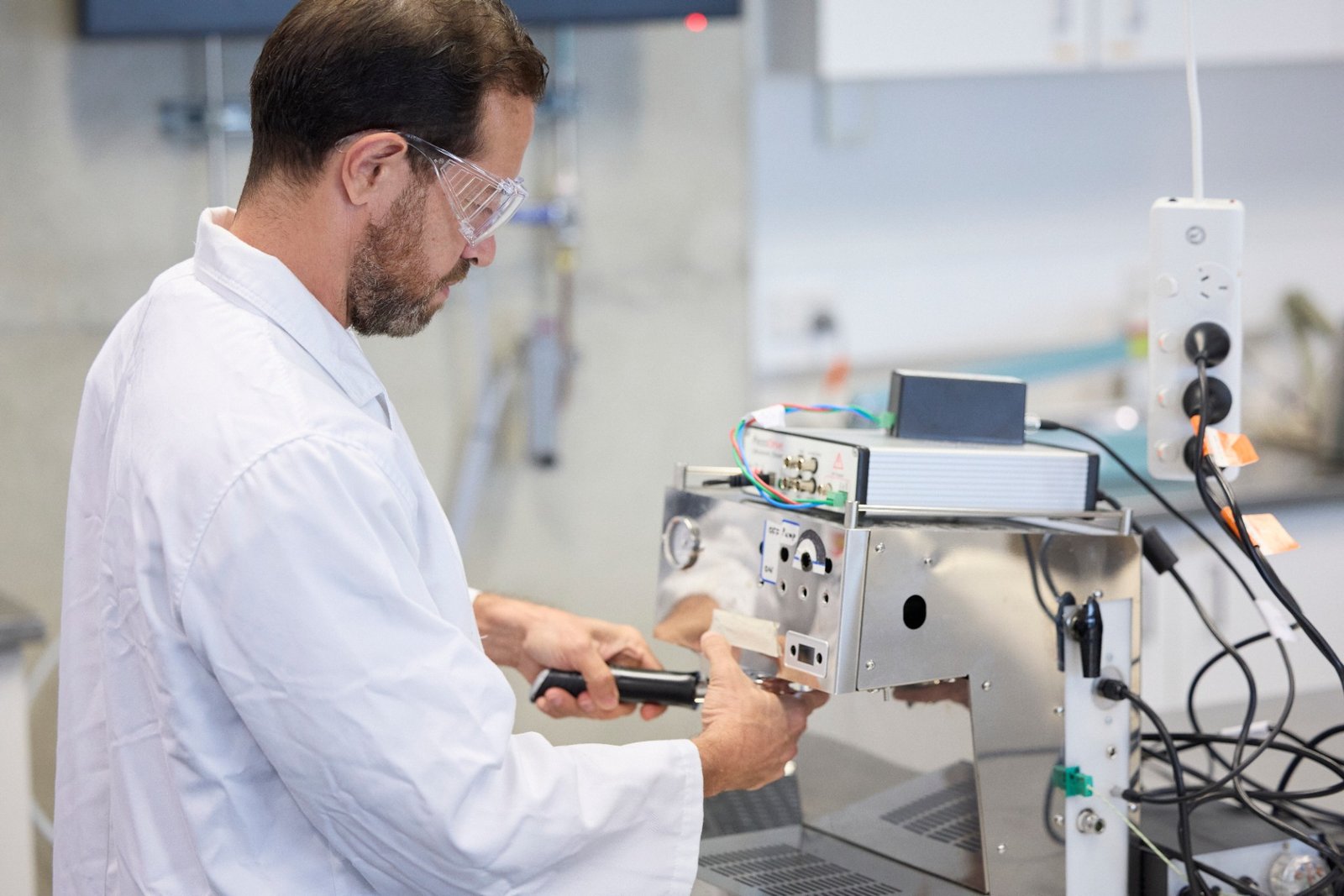
The UNSW team has harnessed high-frequency ultrasound to accelerate the extraction process, producing a rich, concentrated coffee shot in less than three minutes
Researchers at the University of New South Wales (UNSW) Sydney have developed an innovative coffee brewing technique that uses ultrasonic sound waves and room-temperature water to produce espresso-strength coffee while reducing energy consumption by up to 75 per cent.
The breakthrough, published in the Journal of Food Engineering, challenges the conventional belief that espresso requires boiling water and high pressure to achieve its characteristic flavour, aroma and caffeine concentration. Instead, the UNSW team has harnessed high-frequency ultrasound to accelerate the extraction process, producing a rich, concentrated coffee shot in less than three minutes.
Led by Dr Francisco Trujillo from UNSW’s School of Chemical Engineering, the researchers transformed a traditional coffee filter basket into an ultrasonic reactor. A transducer attached to the basket generates ultrasound waves that create acoustic cavitation – the rapid formation and collapse of microscopic bubbles in water. These bubbles act like tiny scrubbing brushes, breaking down coffee particles and enabling faster extraction of flavour compounds, oils and caffeine.
According to the researchers, the resulting “ultrasonic espresso” delivers a sensory experience comparable to conventionally brewed espresso, despite using room-temperature water. In a blind taste test involving around 100 regular coffee drinkers, participants were unable to distinguish between traditional espresso and the ultrasound-brewed version. The study evaluated aroma, flavour, bitterness and overall liking, with both beverages receiving similar ratings.
The technology builds on earlier work by Dr Trujillo’s team, which used ultrasound to reduce cold-brew coffee preparation times from up to 24 hours to just a few minutes. The latest advancement demonstrates the potential of ultrasound-assisted extraction to create espresso-strength coffee while significantly lowering energy requirements.
Researchers believe the innovation could be particularly valuable for manufacturers of ready-to-drink coffee beverages, offering both sustainability benefits and faster production times at an industrial scale.
Jul 09, 2026 | Company News

Jul 08, 2026 | Packaging

Jul 08, 2026 | Australia

Jul 01, 2026 | Food Safety and Testing
Jun 18, 2026 | Company News
Jul 09, 2026 | Company News
Jul 09, 2026 | Company News
Jul 09, 2026 | Company News