Monday, 29 June 2026

Monday, 29 June 2026
Professor David Hamilton, Dr Ben Stewart-Koster, and Dr Liliana Pagliero of the Australian Rivers Institute As climate change, population growth, and industrial demand place increasing pressure on freshwater resources, water…
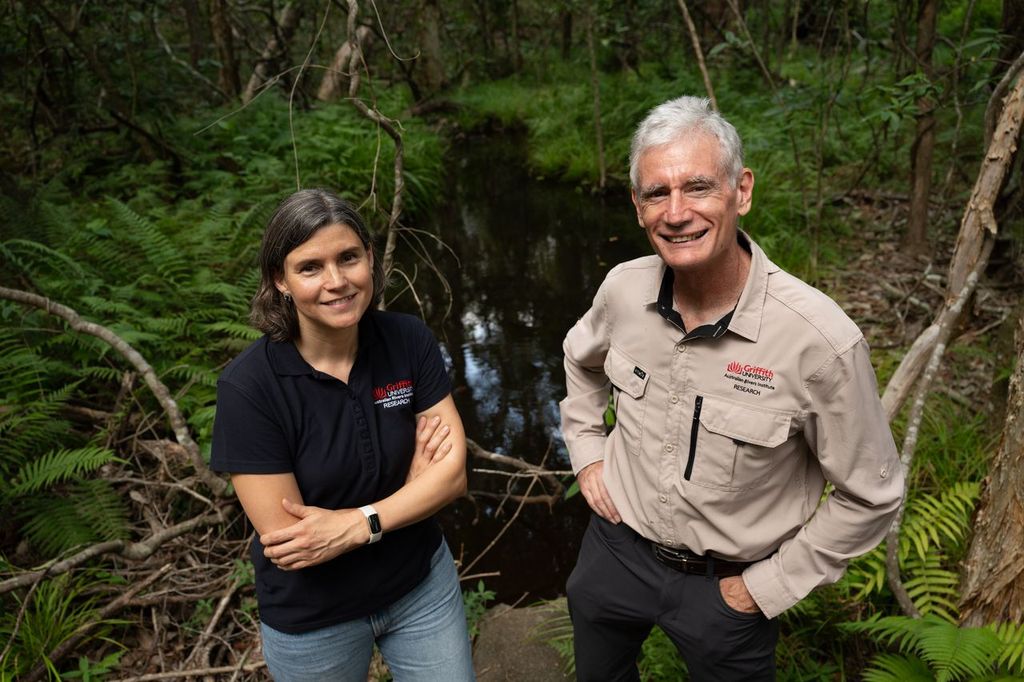
Professor David Hamilton, Dr Ben Stewart-Koster, and Dr Liliana Pagliero of the Australian Rivers Institute
As climate change, population growth, and industrial demand place increasing pressure on freshwater resources, water stewardship has become a defining priority for businesses committed to long-term sustainability. Moving beyond operational efficiency, leading companies are now investing in science-based, catchment-scale solutions that restore ecosystems while strengthening water security for communities and industry alike.
One such initiative is the collaboration between Suntory Oceania and the Australian Rivers Institute (ARI), which aims to develop evidence-based strategies for water replenishment and climate resilience in Queensland’s Brisbane River catchment. By combining cutting-edge hydrological research, ecological restoration, and predictive modelling, the partnership seeks to generate scalable solutions that not only offset water use at Suntory’s Swanbank Beverage Facility but also enhance the health and resilience of regional waterways.
In this exclusive interview with NUFFOODS Spectrum, Professor David Hamilton, Dr Ben Stewart-Koster, and Dr Liliana Pagliero of the Australian Rivers Institute discuss the scientific foundations of the partnership, the growing challenges facing Australia’s freshwater systems, the role of nature-based solutions and advanced modelling in improving catchment health, and why industry-academia collaborations are becoming essential to building climate-resilient water systems for Australia and the Asia-Pacific region.
What motivated ARI to partner with Suntory Group, and how does this collaboration align with your research priorities?
Professor David Hamilton: Over about two years before the formalisation of a research agreement, Suntory Oceania and ARI had extensive discussions to ensure the research carried out by ARI was aligned with the needs of Suntory Oceania for catchment water replenishment and enhancing water security. The partnership between Suntory Oceania and ARI offers an opportunity for Suntory to implement a globally leading and transparent sustainability strategy, reducing water consumption in its operations, and supporting water replenishment in the catchments where it operates. Locally, this strategy applies to its beverage manufacturing plant in Ipswich, in the Brisbane River catchment of Queensland. The objectives for the project align with ARI’s research priorities of providing leadership in research to build catchment resilience and enhance water security. ARI has a long history of research into the ecological impacts of water extraction and the importance of water replenishment in the form of environmental flows for the benefit of ecosystems and people.
From a scientific perspective, what are the most pressing water quantity and quality concerns currently affecting the Brisbane River catchment?
Dr Ben Stewart-Koster: The most pressing concerns in the Brisbane River catchment are the coalescence of increasing climate variability, land use intensification, and escalating water demand on water quantity and quality. Climate variability is accelerating extreme events such as floods, droughts and heatwaves. At the same time, some land-based activities, including agricultural intensification and urban and peri-urban development, are reducing the resilience of catchments to withstand these extreme events. The resulting loss of sediments and nutrients reduces soil stability and fertility, leading to sedimentation and elevated nutrient loads to receiving waters and threatening the reliability of water supplies.
How will this research help generate new insights into climate change impacts on local water systems, and what specific areas of study will be prioritised?
Dr Liliana Pagliero: We seek to understand how climate cycles and climate change affect river flows and water availability and how changes to catchment vegetation cover and land use can mitigate these impacts that may otherwise result in deterioration of water quantity and quality. We will use this knowledge to predict future changes to water quantity and quality of rivers and catchments and make recommendations about on-ground restoration actions in the Lockyer Creek as a detailed case study to scale our research to the Brisbane River catchment and globally.
What scientific methods and indicators will be used to measure the effectiveness of Suntory’s goal to replenish more water than its Swanbank Beverage Facility uses annually?
Professor David Hamilton: Suntory and its on-ground partners implementing the rehabilitation actions will monitor the progress of their actions through time. Key land-based health indicators of soil fertility and stability, and vegetation cover, will be complemented by those for receiving waters related to sediment and nutrient loads, in-stream sedimentation levels, and the response of river biota. These measurements will be embedded into our predictive model, which will help Suntory plan its water replenishment and water security strategies alongside other partners.
Which interventions, such as waterway restoration, riparian planting, or irrigation optimisation, are likely to deliver the greatest ecological benefits for the catchment?
Dr Ben Stewart-Koster: On-ground rehabilitation practitioners, working with landholders, are confronted with an array of potential catchment interventions, including optimising agricultural operations and different nature-based solutions related to revegetation and rehydration in catchments. The partnership of ARI with Suntory Oceania seeks to explore the most effective interventions through an environmental, economic and social lens. This planning will optimise the feasibility, benefits, durability and costs of actions. Catchment modelling tools will provide an essential underpinning for answering these questions and supporting the efficacy of catchment restoration efforts, both locally and in catchments across the world.
What role do you see private sector collaborations playing in strengthening water stewardship and building climate-resilient systems across Australia and the Asia-Pacific region?
Dr Liliana Pagliero: The private sector has an important role to play in supporting water stewardship and climate resilience. Many businesses depend on healthy water systems to support their operations and can contribute resources, long-term commitments, and practical experience to complement the work of researchers, governments, and communities. The partnership of Suntory Oceania with ARI provides an opportunity to demonstrate how leadership in water sustainability by the private sector can provide environmental and societal benefits and makes sense economically.
How important is community engagement and local stakeholder participation in ensuring the long-term success of these programs?
Professor David Hamilton: Community engagement and stakeholder participation are crucial to the long-term success of all catchment restoration programs. Local communities, landholders, Traditional Owners, water managers, and other stakeholders often have valuable local knowledge of the catchment where they live and are directly affected by the management decisions within it. Their involvement helps build trust, encourages shared ownership of outcomes, and increases the likelihood that positive changes will be sustained in the long term.
Could this collaboration serve as a model for future industry-academia partnerships focused on sustainable water management and climate adaptation?
Professor David Hamilton: The collaboration between Suntory and the Australian Rivers Institute can provide valuable lessons for how industry and academia can align complementary strengths of resourcing and science to address complex water challenges. It provides a scalable model for delivering targeted, evidence-based solutions even under constrained funding environments. Addressing challenges such as water security, ecosystem health and climate adaptation requires collaboration across sectors and highlights the value of integrating applied research with on-ground implementation, ensuring outcomes are scientifically robust and operationally feasible. The evidence base will be important for understanding of what actions work, where they work, and how different approaches might be adapted to other catchments and regions.
Shraddha Warde
shraddha.warde@mmactiv.com
Jun 29, 2026 | Australia

Jun 26, 2026 | Company News

Jun 18, 2026 | Company News

Jun 29, 2026 | Beverages
Jun 29, 2026 | Company News
Jun 29, 2026 | Australia