Thursday, 25 June 2026

Thursday, 25 June 2026
AINIA is identifying, extracting, and optimising proteins to replicate the texture, taste, and performance of animal-derived ingredients As the global food industry races to meet rising protein demand while reducing…
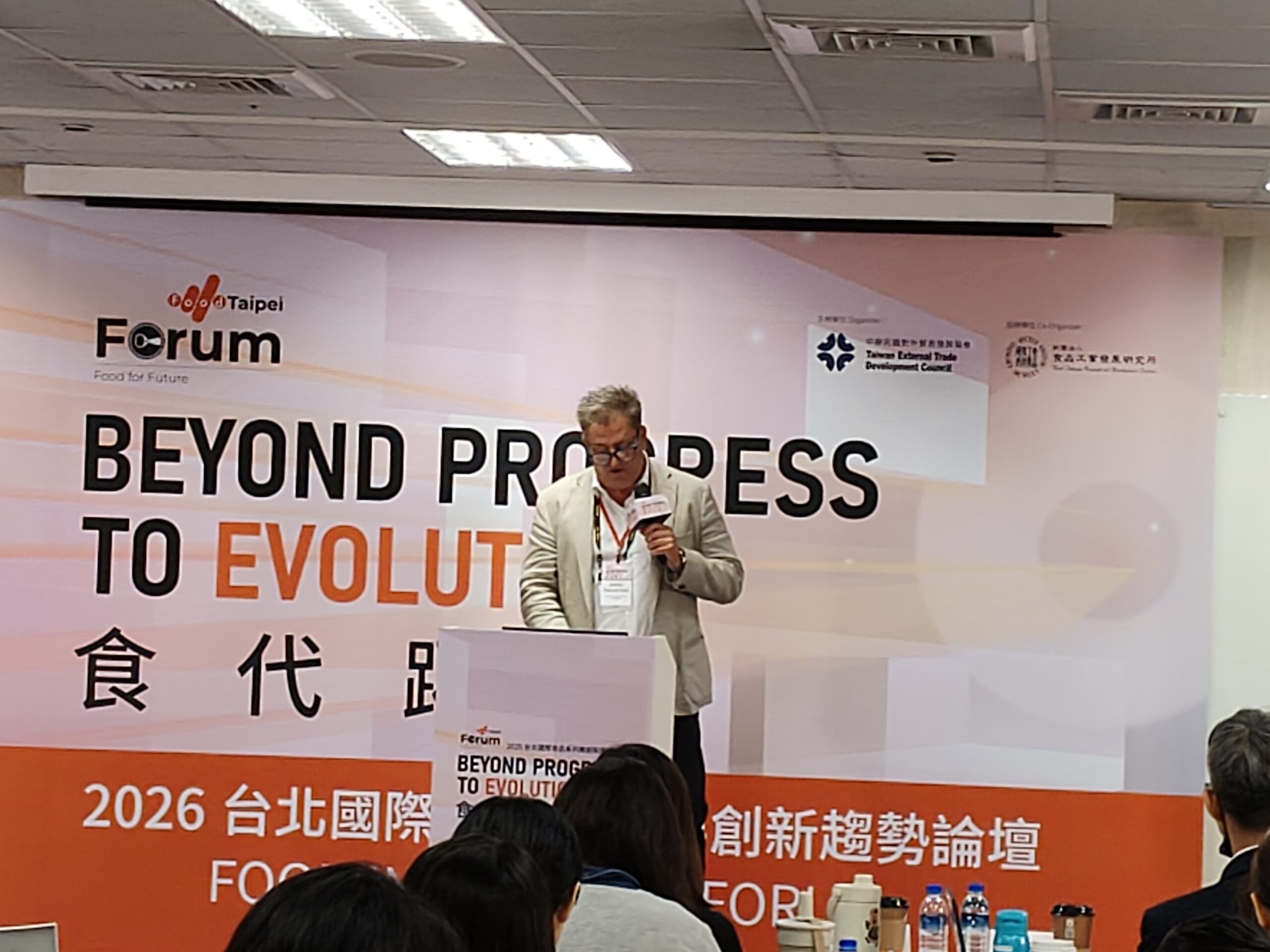
AINIA is identifying, extracting, and optimising proteins to replicate the texture, taste, and performance of animal-derived ingredients
As the global food industry races to meet rising protein demand while reducing environmental impact, precision-designed alternative proteins are emerging as a transformative solution. At the 2026 Food Innovation Forum, held alongside the Food Taipei Mega Shows, Andrés Pascual Vidal, Director of Innovation at Spain-based technology centre AINIA, outlined how advanced biotechnology, fermentation, and artificial intelligence are redefining the next generation of sustainable proteins.
Delivering a presentation titled “Alternative Protein Innovation Through Precision Design and Applications,” Vidal described a shift away from conventional plant-based substitutes toward highly tailored protein ingredients engineered to deliver specific nutritional, sensory, and functional characteristics.
Moving Beyond Traditional Plant-Based Alternatives
According to Vidal, the future of alternative proteins lies in “precision design”, a scientific approach that enables researchers to develop proteins with targeted functional properties for specific food applications.
Using omics technologies, molecular biology, and advanced food processing techniques, AINIA is identifying, extracting, and optimising proteins to replicate the texture, taste, and performance of animal-derived ingredients. These customised proteins can be designed to achieve key functionalities such as emulsification, gelation, and solubility, making them suitable for dairy, egg, and meat alternatives.
“Alternative proteins are no longer simply substitutes,” Vidal said. “They are becoming purpose-designed ingredients that can be optimised for nutrition, functionality, and consumer acceptance.”
Exploring Diverse Protein Sources
The presentation highlighted AINIA’s ongoing research into a broad portfolio of sustainable protein sources, including microalgae, duckweed (Lemna), fungi, yeast, insects, and cultured meat technologies.
Microalgae and duckweed were identified as highly promising protein-rich crops due to their rapid growth rates and ability to be cultivated in controlled environments with limited land use. Meanwhile, mycoproteins and single-cell proteins derived from fungi and yeast offer efficient protein production with significantly lower environmental footprints than conventional livestock systems.
AINIA is also investigating insect-derived proteins using green extraction technologies such as supercritical CO₂ processing to isolate valuable lipids while preserving protein quality. In parallel, the organisation is advancing cultured meat development through tissue engineering and 3D bioprinting technologies capable of recreating complex muscle-like structures.
Fermentation Driving the Next Wave of Innovation
A major focus of the session was the growing role of fermentation technologies in accelerating alternative protein development.
Vidal outlined three key approaches:
Traditional fermentation is used to enhance local plant-based raw materials and create clean-label dairy alternatives such as yoghurt and cheese.
Biomass fermentation, which utilises rapidly growing microorganisms to convert organic substrates into protein-rich biomass.
Precision fermentation, where genetically programmed microorganisms function as cellular factories to produce highly specific animal-free ingredients, including whey proteins, casein, and egg proteins.
Precision fermentation, in particular, is attracting significant industry interest due to its ability to create identical functional proteins without relying on animal agriculture.
Building a Circular Bioeconomy
Beyond protein innovation, Vidal emphasised the importance of integrating alternative protein production into circular food systems.
Through projects such as OPTIPROT and CHEERS, AINIA has demonstrated how agricultural and food-processing by-products, including brewery bagasse, pea pods, broccoli residues, and citrus waste, can be repurposed as nutrient-rich substrates for cultivating alternative proteins.
This biorefinery approach transforms industrial waste streams into valuable resources, supporting both sustainability objectives and economic efficiency.
Designing the Food Systems of the Future
As global food manufacturers seek scalable solutions to address climate challenges, resource constraints, and growing consumer demand for sustainable nutrition, precision-designed proteins are expected to play an increasingly important role.
Summarising the broader vision for the sector, Vidal noted that future food systems will depend on the integration of advanced biotechnology, green extraction technologies, and circular resource utilisation.
“In the modern bioeconomy, waste and industrial by-products are not liabilities—they are the premium raw materials of tomorrow,” Vidal said. “Through precision design, advanced fermentation, and green extraction, we are no longer just producing meat and dairy substitutes. We are designing highly functional, sustainable nutrition that supports human health, enhances sensory experiences, and guarantees global food security.”
The session underscored how innovation in alternative proteins is evolving from simple replacement strategies toward the creation of highly engineered, sustainable food solutions capable of meeting the nutritional needs of a growing global population.
Jun 25, 2026 | Events
Jun 25, 2026 | Events
Jun 18, 2026 | Company News

Jun 25, 2026 | Events
Jun 25, 2026 | Beverages