Wednesday, 24 June 2026

Wednesday, 24 June 2026
The project was developed in collaboration with National Chung Hsing University’s AIMIA research team, with support from Taiwan’s National Science and Technology Council In a significant advancement for climate-smart agriculture,…
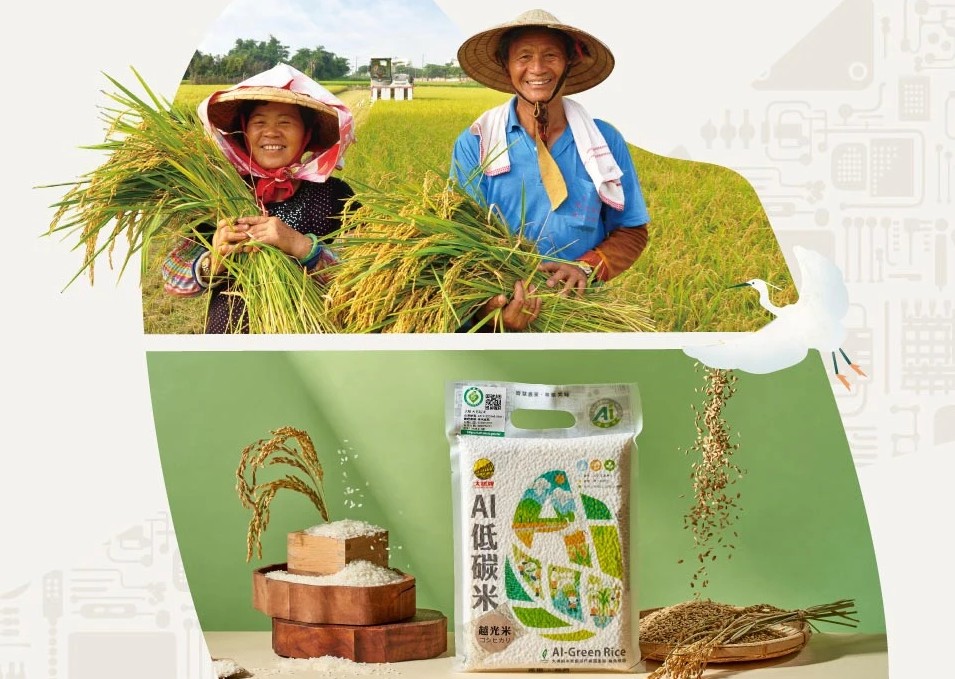
The project was developed in collaboration with National Chung Hsing University’s AIMIA research team, with support from Taiwan’s National Science and Technology Council
In a significant advancement for climate-smart agriculture, Taiwan-based Rice House Smart Agri has successfully scaled commercial production of its AI-Green Rice, combining artificial intelligence, precision irrigation, and sustainable farming practices to reduce the environmental footprint of rice cultivation.
Developed under the company’s flagship Dachiao brand, the initiative demonstrates how digital technologies can help address some of agriculture’s most pressing challenges, including water scarcity, greenhouse gas emissions, and growing demand for sustainable food production.
The project was developed in collaboration with National Chung Hsing University’s AIMIA research team with support from Taiwan’s National Science and Technology Council. Following a successful six-hectare pilot program, the technology has now been deployed across a large-scale commercial farming area in Erlin Township, Changhua County.
AI-Driven Irrigation Management
At the core of the initiative is a mobile AI irrigation decision-making platform designed to optimise water usage in rice paddies.
Traditional rice cultivation relies heavily on continuous flood irrigation, a practice that consumes substantial volumes of water while creating oxygen-deficient soil conditions that generate methane, one of agriculture’s most potent greenhouse gases.
Using the new system, farmers can photograph rice plants with their smartphones and upload the images to the cloud-based platform. Within seconds, the AI analyses plant growth indicators and spectral characteristics to determine whether irrigation is required.
The technology enables an Alternate Wetting and Drying (AWD) cultivation model, allowing farmers to reduce unnecessary irrigation while maintaining crop productivity.
“We are effectively using AI as a paddy field management assistant, helping farmers make more precise irrigation decisions while improving sustainability outcomes,” Eating Lai, Deputy General Manager of Rice House Smart Agri, said, speaking with NUFFOODS Spectrum at Food Taipei Mega Shows 2026.
Significant Environmental Benefits
According to Eating Lai, the AI-guided irrigation model has delivered measurable environmental improvements compared with conventional rice-growing methods.
For every kilogram of white rice produced, the system achieves:
Approximately 20–30 per cent reduction in irrigation water consumption.
Water savings of nearly 2 metric tonnes per kilogram of rice.
Reduction of approximately 260 grams of CO₂-equivalent emissions.
A 30–35 per cent decrease in methane emissions from paddy fields.
Lower electricity consumption through reduced operation of irrigation pumps.
Across the project’s initial 180-hectare commercial implementation area, cumulative savings have already reached:
1.35 million metric tonnes of water conserved.
142.4 metric tonnes of CO₂-equivalent emissions reduced.
133,100 kWh of electricity saved.
The results highlight the potential of AI-enabled agriculture to support national and corporate decarbonization goals while improving resource efficiency.
Supporting ESG and Sustainable Procurement
The initiative also aligns with the growing demand for environmentally responsible sourcing among foodservice operators, hospitality businesses, and corporations pursuing Environmental, Social and Governance (ESG) targets.
“As companies face increasing pressure to demonstrate measurable sustainability performance, low-carbon agricultural procurement is becoming an important component of corporate ESG strategies,” said Eating Lai.
The company is actively partnering with restaurants, hotel groups, and corporate buyers seeking to incorporate low-carbon food products into their sustainability programs and annual ESG reporting frameworks.
To strengthen consumer confidence and supply chain transparency, AI-Green Rice is certified under Taiwan’s Traceable Agricultural Product (TAP) system, enabling end-to-end traceability from farm to consumer.
Premium Rice Varieties
Rice House Smart Agri emphasises that sustainability does not come at the expense of quality. The AI-Green Rice portfolio includes five of Taiwan’s most highly regarded rice varieties:
Koshihikari – A premium Japanese-origin variety favoured by chefs for its texture and flavour.
Taichung No. 194 – Known for its naturally aromatic pandan-like fragrance.
Tainan No. 16 – Recognised for its superior chewiness and premium eating quality.
Kaohsiung No. 147 – A speciality variety featuring subtle taro-like notes.
Taikeng No. 9 – One of Taiwan’s most popular varieties, valued for its rich flavour profile.
A Model for Future Food Systems
As governments, food manufacturers, and retailers seek scalable solutions to reduce agricultural emissions, Rice House Smart Agri’s AI-Green Rice program offers a compelling example of how digital innovation can support sustainable food production while preserving profitability and product quality.
By integrating artificial intelligence with low-carbon farming practices, the company is positioning Taiwan’s rice industry at the forefront of next-generation sustainable agriculture and demonstrating how technology can help build more resilient food systems for the future.
Jun 24, 2026 | Company News

Jun 23, 2026 | Supply chain
Jun 18, 2026 | Company News

Jun 24, 2026 | Company News
Jun 24, 2026 | Company News
Jun 24, 2026 | Company News