Friday, 26 June 2026
Friday, 26 June 2026
Marie Davies, Category Manager, Trays and Films at Duni Group As the global food packaging industry accelerates its transition toward low-carbon and resource-efficient solutions, balancing sustainability with food safety and…
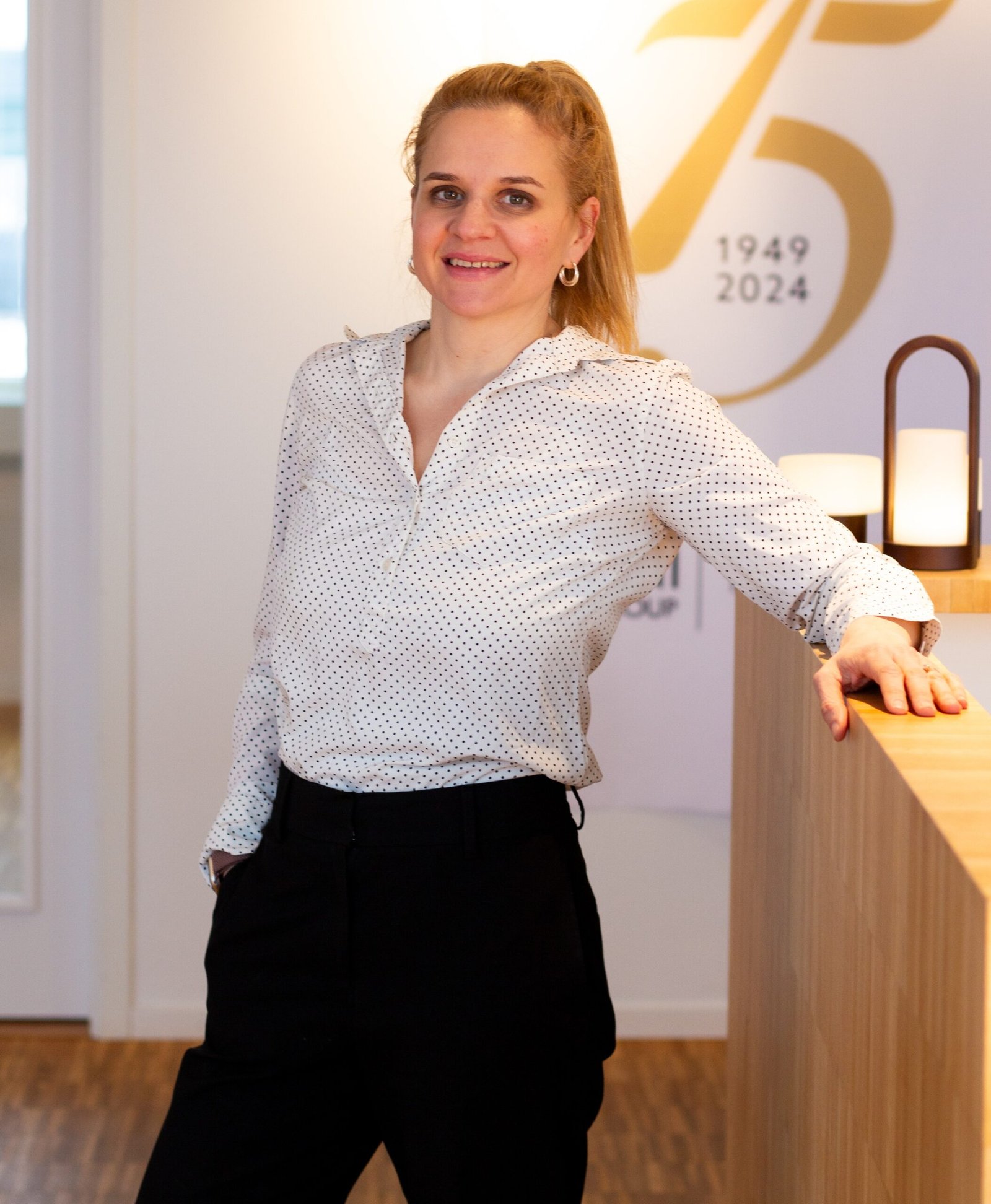
Marie Davies, Category Manager, Trays and Films at Duni Group
As the global food packaging industry accelerates its transition toward low-carbon and resource-efficient solutions, balancing sustainability with food safety and shelf-life performance remains a critical challenge. Against this backdrop, the Duni Group is advancing innovative packaging technologies designed to reduce environmental impact without compromising operational efficiency or product protection. One such development is Sealable Ronda, a paper-based packaging solution engineered to support hermetic sealing and Modified Atmosphere Packaging (MAP) while significantly lowering plastic usage and carbon emissions.
In this interaction with NUFFOODS Spectrum, Marie Davies, Category Manager Trays and Films at Duni Group, discusses the technological complexities behind developing low-plastic barrier packaging, the role of integrated packaging ecosystems, and how sustainable materials can help address food waste and evolving regulatory demands. She also shares insights into market adoption trends and the company’s future innovation roadmap for environmentally responsible food packaging.
Technological Challenges: Duni Group has introduced Sealable Ronda as a paper-based solution with hermetic sealing and MAP. What were the key challenges in combining these features within a low-plastic format?
We invested significant time in developing Sealable Ronda precisely because combining hermetic sealing with a paper‑based format is technically challenging. Plastic plays an important role in preventing oxygen leakage and protecting food from spoilage. A key focus was therefore optimising the liner layer—both material choice and thickness—to achieve the required MAP performance while keeping plastic usage to an absolute minimum.
Food Waste & Shelf Life: How does Sealable Ronda practically improve shelf life and reduce waste compared to conventional plastic packaging?
Sealable Ronda offers a clear improvement in shelf life compared to conventional paper packaging that lacks a hermetic liner, which is what makes this solution unique. By combining carefully selected materials, we can effectively protect the food while at the same time significantly reducing the overall CO₂ impact.
Sustainability Metrics: Could you elaborate on the lifecycle assessment behind the figures of 85 per cent lower plastic content and 50 per cent lower CO₂ emissions?
These figures are based on a comparison between Sealable Ronda and 100 per cent plastic bowls of similar size within our own assortment. The calculations are generated using the Food Packaging Solutions Carbon Footprint Calculator, which is assured by the Carbon Trust. In food packaging, material choice has the single largest impact on CO₂ emissions. By substantially reducing the amount of plastic—typically associated with a higher carbon footprint—and replacing it with paper from renewable sources, we achieve a significantly lower overall climate impact.
Market Response: How are food producers and retailers responding to this shift, and what barriers remain for large-scale adoption?
We see strong interest from both food producers and retailers. This is driven by evolving regulations such as PPWR, companies’ own sustainability targets, and growing consumer expectations to reduce the climate impact of packaged meals. While interest is high, large‑scale adoption naturally requires adjustments in production processes and supply chains.
Integrated Ecosystems: As part of the Duniform brand, how important is an integrated system (packaging, films, and machinery) in driving efficiency for clients?
Duniform is a full‑solution provider offering an integrated portfolio of packaging, films, machines, and service. This is critical because even small disruptions in sealing operations can quickly become very costly for our customers. Sealable packaging requires a precise match between tray, film, and machine performance. By also providing service support, we give our customers additional operational security and confidence that they cannot achieve by sourcing each of these items separately.
Future Innovation: How does Duni Group plan to further balance performance, cost, and environmental impact in future sustainable packaging developments?
Duniform has a dedicated and experienced innovation team working on future projects focused on materials and solutions that further reduce climate impact. At the same time, we ensure that food protection, operational efficiency, and performance remain uncompromised, as food safety and waste reduction are equally important sustainability factors.
Shraddha Warde
shraddha.warde@mmactiv.com
Jun 26, 2026 | Company News
Jun 25, 2026 | Events
Jun 18, 2026 | Company News

Jun 26, 2026 | Company News
Jun 25, 2026 | Events
Jun 25, 2026 | Beverages