Friday, 26 June 2026

Friday, 26 June 2026
Sandra Gillot, CEO and Co-Founder of Benexia As global nutrition priorities shift toward healthier fats and sustainable food systems, plant-based omega-3s are stepping into the spotlight. The latest edition of…
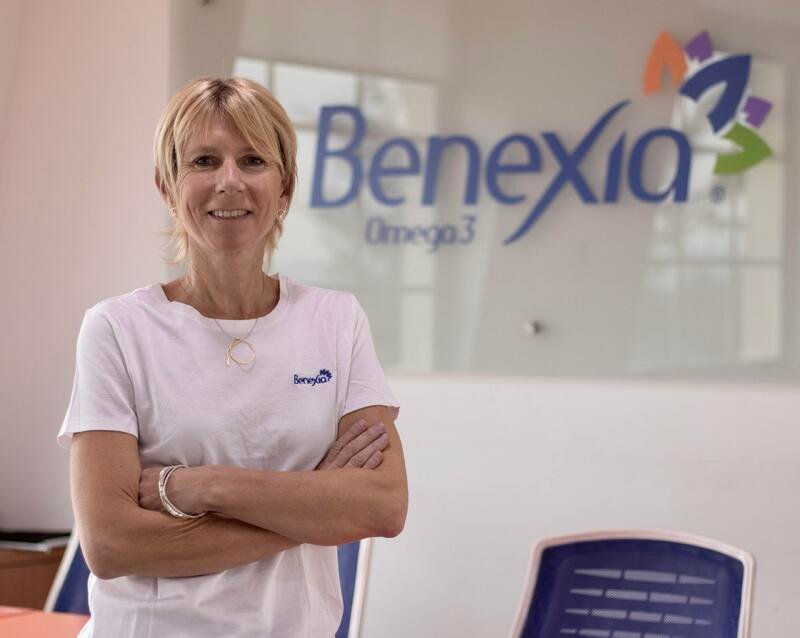
Sandra Gillot, CEO and Co-Founder of Benexia
As global nutrition priorities shift toward healthier fats and sustainable food systems, plant-based omega-3s are stepping into the spotlight. The latest edition of the Dietary Guidelines for Americans underscores the importance of essential fatty acids and reducing saturated fat intake, prompting renewed interest in alternative, clean-label sources of nutrition.
In this exclusive interaction with NUFFOODS Spectrum, Sandra Gillot, CEO and Co-Founder of Benexia, discusses how the company’s vertically integrated, field-to-shelf model is driving innovation in chia-based nutrition. She shares insights on the growing science around alpha-linolenic acid (ALA), evolving consumer awareness of plant-based omega-3s, and how Seeds of Wellness Chia Oil is positioned at the intersection of health, sustainability, and culinary versatility.
From regenerative agriculture practices in South America to cold-pressed processing that preserves nutritional integrity, Gillot explains how transparency, traceability, and scientific validation are shaping the future of functional oils.
The latest Dietary Guidelines for Americans emphasise essential fatty acids and limiting saturated fat. How does Seeds of Wellness Chia Oil align with these recommendations, and why is this moment significant for plant-based omega-3s?
Essential fatty acids are necessary for health. However, the human body can’t produce them on its own, so we must get them from food. The two essential fatty acids are linoleic acid (LA), an omega-6 fatty acid, and alpha-linolenic acid (ALA), an omega-3 fatty acid found primarily in plant foods. Our Seeds of Wellness Chia Oil has one of the highest concentrations of omega-3 ALA among plant-based cooking oils.
Based on the guidelines, the majority of fats should be unsaturated fats with an emphasis on essential fats when it comes to oils. Most cooking oils have higher percentages of monounsaturated fats and/or omega-6 polyunsaturated fats (which bring their own contributions to health and nutrition). Balancing out the types of unsaturated fats in the diet by adding omega-3s is beneficial for health. Plant-based sources of omega-3s, like chia, can help diversify and balance the types of fats in the diet and easily meet these healthy fat guidelines.
Much of the omega-3 conversation has traditionally centred on fish oil. How do you see consumer understanding of ALA evolving, and what role can chia-based omega-3s play in everyday dietary patterns?
Much of the omega-3 dialogue has indeed centred on fish oil and marine-derived omega-3s EPA and DHA. Part of the reason is that most health research on omega-3s has focused on EPA and DHA. Research on ALA is growing and demonstrating that ALA offers unique health benefits. I believe this will help evolve consumer understanding and appreciation of ALA.
For example, research has shown that omega-3 ALA may be as effective as EPA and DHA in reducing the risk of heart disease (https://pubmed.ncbi.nlm.nih.gov/25398754/). Plus, a comprehensive research review, published in the journal Advances in Nutrition in 2022, found that increasing ALA in the diet, which is found in plant-based foods like chia, walnuts and flaxseeds, was associated with a 10% lower risk of cardiovascular disease and 20% reduced risk of fatal coronary heart disease (https://pmc.ncbi.nlm.nih.gov/articles/PMC9526859). Findings also showed trends toward decreasing cholesterol, blood pressure, and inflammation.
Recent research has also shown a relationship to higher non-DHA omega-3 status and lower risk of early onset dementia (https://www.sciencedirect.com/science/article/abs/pii/S0261561425003383). Here is another recent paper on Alzheimer’s disease and omega-3s: (https://pubmed.ncbi.nlm.nih.gov/41022152/).
There is also some really interesting emerging research that is causing scientists to ask new and different questions related to ALA’s conversion rate to EPA and DHA. The long-held belief has been that even though ALA can convert to EPA and then DHA, it does so inefficiently and, because of this, has a low impact. This new research is flipping the switch on this notion, and we look forward to seeing more science in this area of study.
At the end of the day, all omega-3s provide value to human health. They each bring their own benefits and matrix of nutrients. At a basic level, there is a true functional reason to eat omega-3 fatty acids – they help form the cellular membranes in all the cells in our body.
With 63 per cent of its fat content coming from omega-3 ALA, providing more than the daily recommended intake in a single teaspoon, what makes chia oil such a uniquely concentrated source compared to other oils?
Chia seeds are one of the most abundant sources of omega-3 ALA and our chia oil is a reflection of that. For comparison, avocado oil and extra virgin olive oil have <1 per cent and canola oil has ~9 per cent omega-3 ALA.
In order to create a high-quality, omega-3-rich oil, it starts with the seed and the care that is taken on the farms and during the production process. Our chia farms rely exclusively on rainwater as a watering source and follow regenerative agriculture practices. No-till practices are used when it comes to harvesting chia, which allows the soil to retain more nutrients and yields a highly nutritious seed rich in omega-3s and antioxidants. Our oils are also cold-pressed, which preserves naturally occurring nutrients and the flavour of the oil.
Seeds of Wellness Chia Oil is cold-pressed with no chemical solvents. How important is processing transparency today, and how does it influence trust and perceived nutritional quality?
Processing transparency is crucial given the growing scrutiny around processed foods, including edible oils. In the U.S. and other select countries, edible oils have become a polarising ingredient because of increased debate around refined seed oils.
More and more, people are looking at food labels and want to understand how food is made and what’s in it. According to data from the International Food Information Council (IFIC), eight in ten Americans consider whether food has been processed before purchasing it.
Our chia oil is unrefined and cold-pressed from 100% pure chia seed without the use of solvents and diluents. The temperature is kept at low levels throughout the entire process to preserve the omega-3 fatty acids, phytonutrients (like phenolic acids, tocopherols, and phytosterols), plus its nutty flavor.
Our parent company Benexia has been a worldwide leader in sustainable, chia-based innovations for over two decades. The same high-quality chia and chia-based ingredients that we create for the food industry are used in our Seeds of Wellness products. We hope this helps consumers feel good about saying yes to our products.
With a smoke point of 420°F and a mild nutty flavour, chia oil fits both raw and cooked applications. How critical is culinary versatility in driving regular consumer use of functional oils?
Taste is the top driver of food and beverage purchases. Also important is cost and convenience, including convenience to cook/prepare a food, eat it, store it, etc. With these factors in mind, culinary versatility is extremely important in driving regular consumption and showing consumers the value of purchasing the product. Our chia oil can be used in a variety of everyday applications in home cooking – sautéing, roasting, salad dressings, marinades, pestos, blending into smoothies, baking, and more. In food products, it is used in dips, salad dressings, soups, rice/grains, fruit and vegetable pouches formulated for toddlers, baked goods, and more.
Benexia’s vertically integrated, field-to-shelf model is unique in the ingredients space. How does this approach support quality consistency and your broader mission of advancing human and planetary health?
Benexia, the parent company behind Seeds of Wellness, is a field-to-shelf chia ingredients specialist that is vertically integrated from chia agricultural production to final ingredient solutions and distribution. The company is committed to advancing human and planet health by being hyper-focused on this small, but mighty seed.
Chia, by its very nature, is a highly sustainable crop. We grow it in its native South America, where it evolved to thrive. It’s the right plant for the right place and can be grown with minimal resources. As a fully integrated company, we’ve built on this inherent quality of chia to yield an eco-friendly farming production process that gives back to the local environment, local communities, and the planet.
Our chia farms rely exclusively on rainwater as a watering source and follow regenerative agriculture practices. Also, 50 per cent of Benexia’s partner shareholders are chia seed farmers, which guarantees fair pricing and technical support within our supply chain as well as full traceability of our ingredients.
From seed to shelf, every aspect of our chia-based ingredients and products are designed with human and planet health in mind and we’ve operated this way since day one.
Shraddha Warde
shraddha.warde@mmactiv.com

Jun 26, 2026 | Company News

Jun 25, 2026 | Events

Jun 18, 2026 | Company News

Jun 26, 2026 | Company News
Jun 25, 2026 | Events
Jun 25, 2026 | Beverages