Wednesday, 1 July 2026

Wednesday, 1 July 2026
The project aims to strengthen Australia’s capability to produce homegrown, sustainable protein solutions while reducing reliance on imports In a move set to reshape Australia’s health, wellness, and cosmetics industries,…
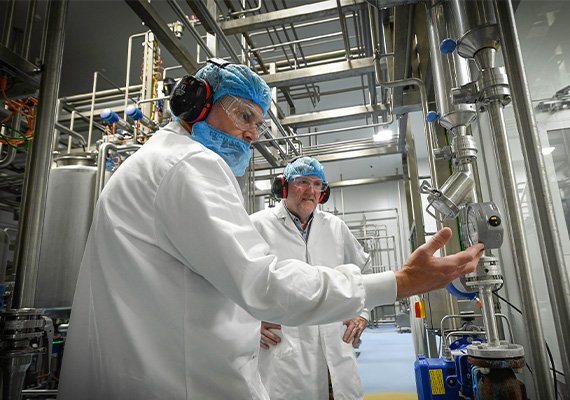
The project aims to strengthen Australia’s capability to produce homegrown, sustainable protein solutions while reducing reliance on imports
In a move set to reshape Australia’s health, wellness, and cosmetics industries, Deakin University has partnered with Bellarine Foods to develop high-value protein products derived from local marine byproducts, including collagen for use in protein powders and anti-ageing cosmetic formulations.
The initiative is supported by Deakin’s Recycling and Clean Energy Commercialisation Hub (REACH), which is backed by a $50 million grant under the Australian Government’s Trailblazer Universities Program. The project aims to strengthen Australia’s capability to produce homegrown, sustainable protein solutions while reducing reliance on imports.
Amid shifting dietary trends, rising health consciousness, and surging demand for protein powders and nutraceuticals globally, the research team is exploring innovative methods to convert aquaculture waste into premium protein ingredients.
The project is led by Colin Barrow, Chair in Biotechnology and Deakin Distinguished Professor at the School of Life and Environmental Sciences and the Centre for Sustainable Bioproducts. The team is investigating an enzyme-based extraction process designed to recover valuable proteins from salmon skin and mussels without the use of harsh chemicals.
“If successful, this project could offer a greener, more cost-effective alternative to traditional protein processing methods,” Professor Barrow said.
He noted that marine byproducts such as collagen are rich in protein and present strong opportunities for applications in health-focused products. The research focuses on safer, chemical-free extraction techniques that reduce landfill waste, support a circular economy, and contribute to a more sustainable aquaculture industry.
Early laboratory trials have shown encouraging results, with potential applications ranging from omega-3 supplements that support brain and heart health to collagen-enriched nutraceuticals aimed at muscle recovery and improved skin elasticity.
The collaboration also involves the CSIRO Food Innovation Centre in Werribee, which will assist in scaling the extraction process and evaluating its commercial and environmental viability. The team plans to transition from laboratory testing to pilot production in 2026, with commercial rollout to follow.
Bellarine Foods CEO Murray de Jong said the focus is on building a cost-effective, market-ready production model capable of delivering high-grade hydrolysed proteins, including collagen, for wellness supplements, protein powders, and anti-ageing products.
“It’s not just about the technology, it’s about creating a trusted, homegrown supply chain grounded in Australia,” de Jong said. “We want to offer wellness products that meet the highest quality standards and ingredient transparency, something imported products often lack.”
Through REACH and its industry partnerships, Deakin aims to accelerate greener supply chains and drive Australia’s transition toward a circular bioeconomy, positioning marine byproducts as a valuable resource rather than waste.
Jul 01, 2026 | Food Security
Jul 01, 2026 | Food Safety and Testing

Jun 29, 2026 | Australia
Jul 01, 2026 | Food Safety and Testing

Jun 18, 2026 | Company News
Jul 01, 2026 | Company News
Jul 01, 2026 | Company News
Jul 01, 2026 | Food Security