Wednesday, 8 July 2026
Wednesday, 8 July 2026
The export market could be worth €60 billion, similar to the EU’s current exports to South Korea, positioning Europe as a global hub for advanced food biomanufacturing Alternative proteins could…
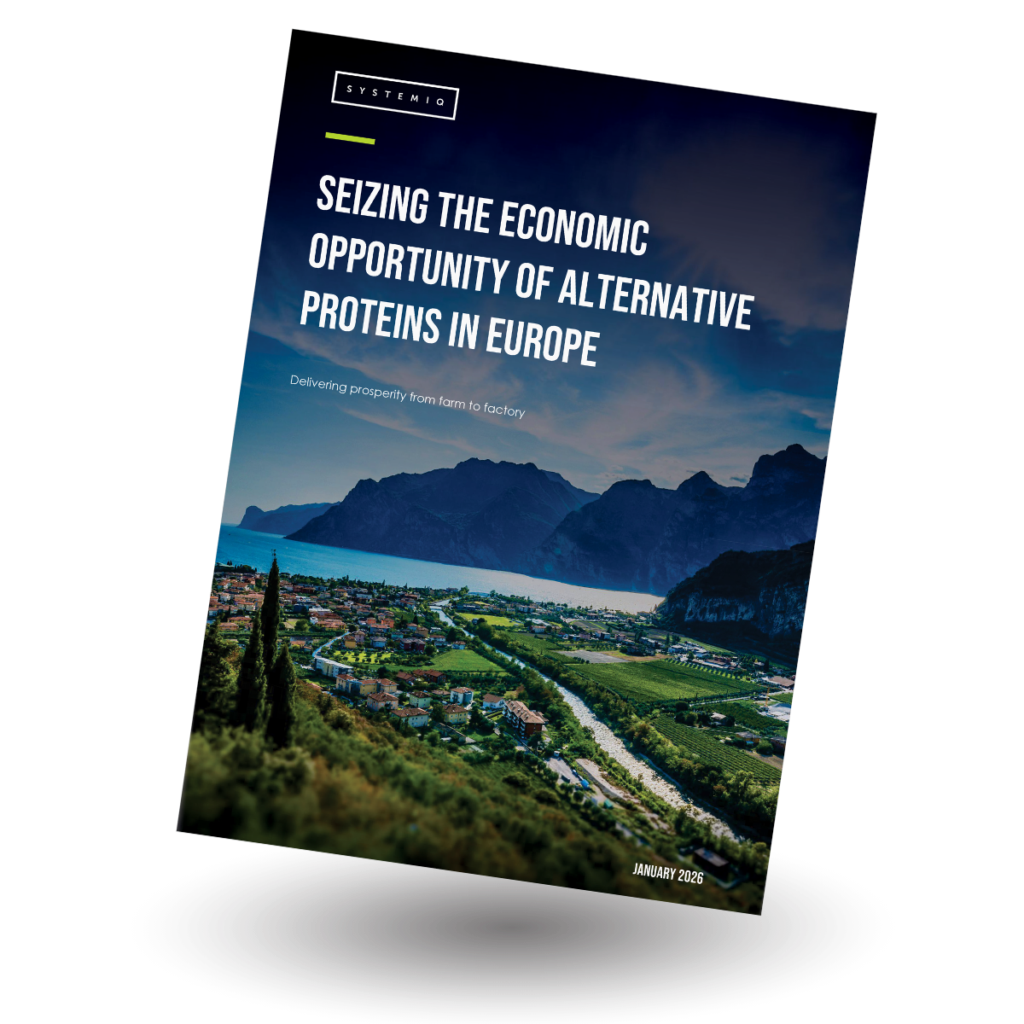
The export market could be worth €60 billion, similar to the EU’s current exports to South Korea, positioning Europe as a global hub for advanced food biomanufacturing
Alternative proteins could contribute €111 billion a year to the European Union’s economy by 2040 if treated as a strategic priority, according to new research by systems change company Systemiq, supported by nonprofit think tank Good Food Institute Europe (GFI Europe).
The analysis highlights the economic potential of plant-based foods, cultivated meat and fermentation-enabled proteins, modelling how targeted policy support and investment could accelerate the sector’s growth across the bloc. Fermentation, a traditional food production method, is increasingly being used to develop products that replicate the flavour and texture of animal-based foods.
The research found that, with modest but sustained public investment and regulatory support, the alternative protein sector could support 414,000 high-quality jobs within 15 years, spanning advanced science, manufacturing, agriculture and logistics.
According to the study, by 2040:
Alternative proteins could generate €111 billion in annual gross value added, comparable to the GDP contribution of Europe’s wine sector.
The domestic market could reach €79 billion, roughly equivalent to Lithuania’s 2024 GDP.
The export market could be worth €60 billion, similar to the EU’s current exports to South Korea, positioning Europe as a global hub for advanced food biomanufacturing.
To unlock this growth, the report calls on EU and national governments to invest in research, infrastructure and scale-up capacity, while modernising regulatory pathways for novel foods. The analysis estimates that annual public investment of €690 million in research and €720 million in scale-up could catalyse private capital and accelerate consumer adoption by making alternative proteins more affordable and appealing.
This proposed investment represents a small fraction of funding previously directed at emerging industries, such as the €10.6 billion in public funding allocated to green hydrogen in 2022, the report noted.
The study also points to opportunities for European agriculture. Expanding plant-based meat and dairy markets could more than double demand for crops such as peas, fava beans, lentils and chickpeas, while fermentation-based foods could drive demand for sugar and starch crops, including sugar beet. With EU demand for biofuel crops expected to decline by 2035, alternative proteins could offer farmers new, future-proof income streams.
Systemiq Partner Rupert Simons said alternative proteins represent a major growth opportunity for Europe, delivering economic value, job creation and improved food security with relatively modest public investment.
Elena Walden, Research Lead at GFI Europe, said the findings show alternative proteins could become a thriving European industry within 15 years, but warned that clearer, more predictable regulation and sustained investment are essential to bring innovative products to market while maintaining the EU’s high food safety standards.
Jul 08, 2026 | Packaging
Jul 08, 2026 | Australia

Jul 07, 2026 | Company News
Jul 01, 2026 | Food Safety and Testing

Jun 18, 2026 | Company News
Jul 08, 2026 | Dietary Supplements
Jul 08, 2026 | Beverages
Jul 08, 2026 | Packaging