Friday, 26 June 2026

Friday, 26 June 2026
Vittorio Fattori, Food Safety Officer at the FAO In an exclusive NUFFOODS Spectrum AgroSpectrum interview, Vittorio Fattori, Food Safety Officer at the FAO, explains how governments can urgently deploy environmental…
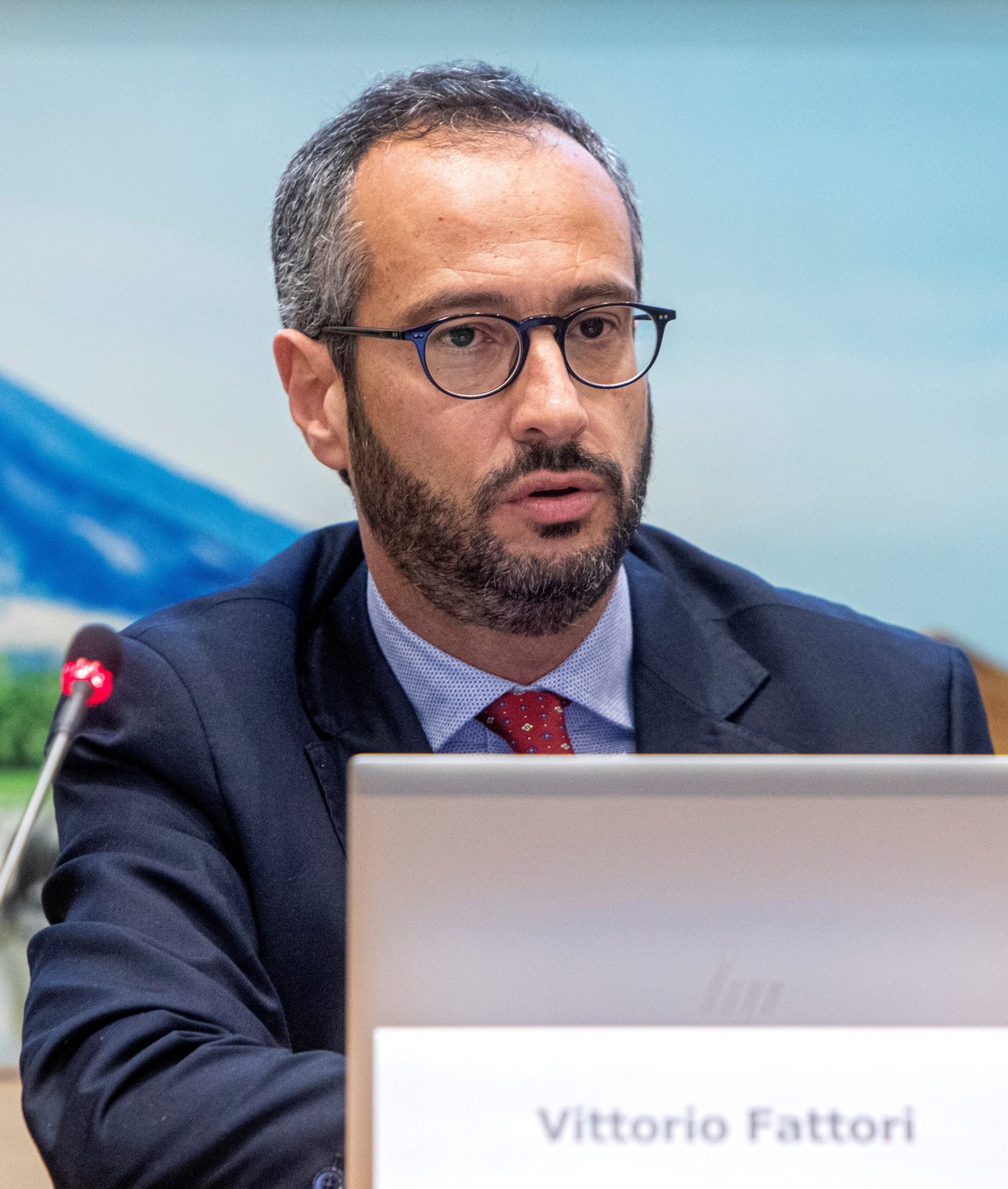
Vittorio Fattori, Food Safety Officer at the FAO
In an exclusive NUFFOODS Spectrum AgroSpectrum interview, Vittorio Fattori, Food Safety Officer at the FAO, explains how governments can urgently deploy environmental inhibitors to reduce methane and nitrous oxide emissions while upholding rigorous food safety standards. He emphasises a stepwise, proportionate risk assessment approach, allowing rapid scale-up when residues are not detectable, and targeted human risk assessment when they are plausible—ensuring climate action does not undermine consumer trust.
Fattori highlights the importance of harmonised Codex standards to reduce regulatory fragmentation, prevent trade disruptions, and provide predictability for innovators and producers globally. Addressing equity, he underscores FAO’s focus on feasible pathways for low- and middle-income countries, including reliance on international scientific evaluations and proportionate controls aligned with national capacities. Framing environmental inhibitors as part of a broader mitigation toolbox—sometimes transitional, sometimes structural—he stresses that transparent communication and continuous reassessment are essential to sustaining public confidence while advancing lower-emission agrifood systems.
Balancing Climate Urgency and Food Safety Rigour
Given the urgency to reduce agricultural methane and nitrous oxide emissions, how does FAO recommend balancing accelerated deployment of environmental inhibitors with the inherently cautious timelines of food safety risk assessment, without undermining public trust?
While recognising the urgency to cut methane and nitrous oxide emissions from agrifood systems, we also emphasise that ensuring food safety is essential when introducing new practices and technologies. The urgency to reduce greenhouse gas (GHG) emissions together with the need to maintain food safety are some the multiple factors (including also, for example, animal health and welfare, environmental benefits and more) that decision makers will need to balance in their decision-making process. We believe that by considering food safety at the outset, we can ensure that efforts to reduce environmental impacts are effective, trusted, and well understood. In the case of environmental inhibitors, if no residues are detectable in foods with sensitive methods under proposed use conditions, risk concerns are minimal and scale‑up can proceed with routine verification. If residues are plausible, a proportionate human risk assessment (hazard + exposure) should be completed before widespread use. This staged approach allows mitigation benefits to begin promptly while ensuring consumer protection remains at the core of any proposed intervention.
Evidence Thresholds and Precaution
What level and type of residue evidence does FAO consider sufficient to move from experimental or pilot use of environmental inhibitors to widespread commercial adoption, especially in contexts where long-term dietary exposure data may be limited?
The minimum evidence threshold is to determine whether residues of the parent compound and/or relevant metabolites are present in foods of animal or plant origin under realistic use (i.e. following good agricultural/animal husbandry practice). When robust residue studies show no detectable residues, further studies may be unnecessary. If residues are found, it will be important to follow these steps:
When data are limited and there is scientific uncertainty, it could be considered to conduct human exposure assessment(s) according to the Codex Alimentarius “Guidelines for rapid risk analysis following instances of detection of contaminants in food where there is no regulatory level”, possibly followed by a full risk assessment specific to human health if the residues in question meet the exclusion criteria of the guidelines. In this regard, it is important to recognise that substances already regulated as pesticides or veterinary drugs typically follow their full premarket pathways.
Regulatory Fragmentation and Global Trade
With environmental inhibitors classified differently across jurisdictions—as veterinary drugs, feed additives, or soil amendments—how does FAO see harmonised Codex standards reducing the risk of trade disruptions and regulatory arbitrage?
Today, environmental inhibitors (EIs) can be classified according to national regulations as either as veterinary drugs, feed additives, fertiliser components, or pesticides, which can lead to different data packages and approval routes across markets; this can create a risk of trade friction when residues are handled inconsistently. FAO supports harmonisation via Codex. In this context, FAO/WHO expert bodies – e.g. the Joint FAO/WHO Expert Committee on Food Additives (JECFA) and the Joint FAO/WHO Meeting on Pesticide Residues (JMPR) – provide independent scientific advice to underpin Codex standards, including Maximum Residue Limits (MRLs) where appropriate. Converging on common data requirements, residue definitions, and risk assessment principles reduces regulatory arbitrage, improves predictability for innovators and producers, and protects consumers while facilitating trade.
Cumulative and Systemic Risk Assessment
How does FAO propose assessing cumulative food safety risks when environmental inhibitors are used alongside other inputs such as pesticides, veterinary drugs, and feed additives, particularly in intensive production systems?
It is important to begin with the foundational EIs assessment (residues → hazard→ exposure) and, where residues are expected, consider aggregate dietary exposure from food and water consistent with existing pesticide/veterinary drug paradigms. When an EI shares toxicological endpoints with other regulated inputs (e.g., similar modes of action or common target organs), assessors would consider cumulative risk assessment considerations aligned with established Codex/Joint FAO/WHO Expert Committee on Food Additives (JECFA)/Joint FAO/WHO Meeting on Pesticide Residues (JMPR) practices. Practically, this means defining the residue of concern (parent/metabolites), ensuring analytical methods across relevant matrices, and evaluating whether use patterns in intensive systems plausibly raise combined exposure near health-based guidance values.
Equity and Adoption in Low- and Middle-Income Countries
What considerations is FAO giving to the food safety assessment and regulatory capacity challenges faced by low- and middle-income countries, where monitoring EI residues in food may be technically or financially constrained?
We are attentive to capacity constraints in Low- and Middle-Income Countries (LMICs) — notably the cost and technical demands of residue methods, surveillance, and regulatory review. Our guidance therefore stresses stepwise, feasible pathways: begin with plausibility screening of residue transfer, leverage validated methods and internationally available scientific opinions (e.g. from the Joint FAO/WHO Expert Committee on Food Additives (JECFA)/Joint FAO/WHO Meeting on Pesticide Residues (JMPR) practices), and apply proportionate controls (label conditions, use restrictions) that match national laboratory capacities. Through the Food Safety work, FAO provides tools, training, and normative guidance that Member countries can adapt, helping them adopt mitigation technologies without compromising consumer protection or market access.
Managing Uncertainty in Novel Agrifood Technologies
In cases where scientific uncertainty remains—especially regarding chronic exposure or indirect food chain transfer—how does FAO advise policymakers to apply the precautionary principle without stalling climate mitigation innovations?
When uncertainty remains — especially about chronic exposure or indirect transfer along the food chain — it can be important to use conservative exposure assumptions and interim risk management measures (e.g., restricted use conditions, defined withdrawal intervals, targeted monitoring) while additional data are generated. As mentioned, existing guidelines like Codex Guidelines for rapid risk analysis following instances of detection of contaminants in food where there is no regulatory level (CXG 92-2019), can prove to be useful in specific circumstances without substituting for full premarket evaluation required for pesticides or veterinary drugs.
This approach protects consumers without stalling climate mitigation innovation when that shows clear efficacy and a low likelihood of significant human dietary exposure.
Public Perception and Consumer Confidence
How important is transparent communication about food safety risk assessments for environmental inhibitors in maintaining consumer confidence, and what role should FAO play in shaping that global narrative?
Transparent communication is essential. With this work we wanted to bring some clarity on what environmental inhibitors are, why they are used, and how food safety is assessed. We also wanted to explain in accessible terms what residue testing shows and how standards are set internationally. Our new report and technical brief were designed to explain the science and outline a clear, stepwise safety pathway.
In this respect, we support our members by generate and sharing timely, actionable insights on food safety, as well as by providing proactive and strategic guidance on emerging food safety issues.
Long-Term Agrifood System Transformation
Do you see environmental inhibitors as a transitional solution toward lower-emission agrifood systems, or as a long-term structural component—and how does that distinction influence FAO’s approach to food safety foresight and regulatory guidance?
Environmental inhibitors are some of the tools available within a portfolio of measures to lower agrifood systems’ emissions. In some production contexts, EIs may be transitional — bridging to system redesigns (e.g., breeding, feed system changes, nitrogen management). In others, certain inhibitors could become more structural components, provided they consistently demonstrate safety, efficacy, and practicality. This framing shapes the notion of establishing durable, harmonised safety frameworks (including, where needed, Codex MRLs), maintaining surveillance and periodic reassessment as science evolves, and considering the integration of EIs into broader mitigation strategies rather than viewing them in isolation.
—– Suchetana Choudhury (suchetana.choudhuri@agrospectrumindia.com)

Jun 26, 2026 | Company News

Jun 25, 2026 | Events

Jun 18, 2026 | Company News

Jun 26, 2026 | Company News
Jun 25, 2026 | Events
Jun 25, 2026 | Beverages