Thursday, 25 June 2026
Thursday, 25 June 2026
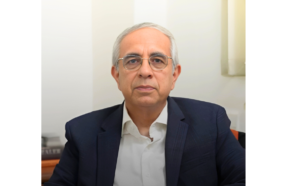
Professor Tony Bacic, Director, La Trobe Institute for Sustainable Agriculture and Food (LISAF) Australia’s protected cropping sector is entering a transformative new era, one driven by technological innovation, sustainability, and…

Professor Tony Bacic, Director, La Trobe Institute for Sustainable Agriculture and Food (LISAF)
Australia’s protected cropping sector is entering a transformative new era, one driven by technological innovation, sustainability, and a growing imperative to secure reliable, high-quality food and plant-based medicinal products. Despite being the fastest-growing food production system in the country, protected cropping still represents a relatively small share of national horticulture. The newly launched ARC Industrial Transformation Research Hub for Protected Cropping (PC Hub), led by La Trobe University with support from the Australian Research Council and a consortium of leading research, industry, and technology partners, aims to change that.
In this exclusive interview with NUFFOODS Spectrum, Professor Tony Bacic, Director of the La Trobe Institute for Sustainable Agriculture and Food (LISAF), discusses the vision behind the Hub, how it plans to lift Australia’s global competitiveness, and the role of cutting-edge tools from AI to precision irrigation in reshaping the future of sustainable horticulture and medicinal agriculture. He also highlights how cross-sector collaboration, energy-efficient systems, and waste valorisation are setting new benchmarks for efficiency, resilience, and circularity in controlled-environment agriculture.
What were the key drivers behind establishing the Protected Cropping Research Hub, and how does it aim to transform Australia’s protected cropping industry over the next five years?
Protected cropping is the fastest-growing food-producing sector in Australia, and for good reason. It employs more than 10,000 people and had a gross value of $16.6 billion in 2022–23, with forecasts indicating significant growth in the coming years. This sector offers significant potential in terms of sustainable production, economic opportunity, and food security. But despite its potential, protected cropping still represents a relatively small part of the horticulture industry in Australia.
The ARC Industrial Transformation Research Hub for Protected Cropping (PC Hub), for horticulture and medicinal agriculture, was launched in early 2025 with major support from the Australian Research Council (ARC), La Trobe University (LTU), and a consortium of leading research and industry partners, including:
The University of Melbourne
Photon Systems Instruments
Cann Group Limited
The Florey Institute of Neuroscience and Mental Health
Kensana Health
YieldX
SpexAI (Lamnatec)
Bioplatforms Australia
Olivia Newton-John Cancer Research Institute
By bringing together leading research providers, technology and industry partners, the PC Hub is closing education and research gaps, driving innovation, strengthening skills, and supporting the sector to become more competitive, sustainable, and resilient in the face of changing market and environmental demands.
Australia currently lags behind international competitors in protected cropping. What specific innovations or strategies is the Hub prioritising to help close this gap?
Technological innovation will drive the next wave of improvements in Australia’s protected cropping industry, helping the country catch up with leading international competitors. The PC Hub leverages world-class research facilities and close collaboration with industry and research partners to test and optimise cutting-edge technologies, including for crop monitoring, smart nutrient delivery systems, precision irrigation, and non-invasive detection and control tools.
These innovations help growers increase productivity, improve crop quality, and reduce input costs. Australia has a huge opportunity not only to enhance yield and quality but also to position itself as an exporter of premium horticultural and medicinal agriculture products across the Asia-Pacific region. Through technology, big data insights and collaboration, the PC Hub is accelerating PC adoption and strengthening the sector’s sustainability and global competitiveness.
How are smart nutrient delivery systems, precision irrigation, and digital agriculture technologies being integrated into your research to enhance crop yield and sustainability?
We are integrating the latest advances in artificial intelligence (AI), machine learning (ML), Internet of Things (IoT), and speed breeding technologies to optimise every stage of protected cropping. By collecting and analysing data from sensors and imaging systems, we can precisely optimise light, water and nutrient use, reducing inputs while maintaining or increasing yield and quality.
Through advanced data fusion and analytics, we are developing smart nutrient delivery systems and precision irrigation tools that enhance efficiency, minimise environmental impact, and improve crop quality. Together, these digital innovations are paving the way for a more sustainable and productive future in PC.
The Hub brings together academia, research organisations, industry, and government. Could you share examples of how this collaboration model is helping accelerate innovation and real-world application for growers?
The collaborative model of the PC Hub builds on the success of earlier partnerships, such as the ARC Research Hub for Medicinal Agriculture (2019-2024), which advanced controlled-environment production of medicinal plants.
Building on these partnerships, La Trobe University, the University of Melbourne, Cann Group, PSI, and SpexAI secured Australian government support for the NEXTGen Protected Cropping initiative in 2022. This program has delivered new tissue culture capabilities now operating commercially and strengthened national capacity through the new BioPlatforms Australia Plant Synthetic Biology Australia and Australian Plant Phenomics Network. The education component spans industry upskilling to PhD training and supported the establishment of a new Certificate II in Protected Horticulture with SuniTAFE Mildura.
Together, these initiatives demonstrate how collaboration is transforming research (and training skills) into real-world innovation for a more productive and sustainable protected cropping industry.
With sustainability and climate resilience being central themes, what role do energy efficiency and waste valorisation play in the Hub’s approach to future-ready horticulture?
In protected cropping systems, plant cultivation is carefully controlled to maximise yield and quality, producing both harvestable crops and significant plant by-products. Unlike broadacre farming, these systems generate cleaner, more uniform biological waste with fewer contaminants, making it ideal for valorisation, converting organic material into valuable products. New technologies bring new opportunities to improve sustainability by reducing horticultural and medicinal agriculture waste and reusing it to derive high-value products, such as bioactives.
Through biorefining, this biomass can be transformed into bioplastics, bioenergy, and plant-based compounds, turning waste into economic opportunity. Combined with advances in energy-efficient technologies, waste valorisation supports a circular economy by reducing waste, lowering emissions, and improving resource efficiency. Together, these approaches enhance sustainability and strengthen the climate resilience of Australia’s protected cropping industry.
Beyond horticulture, the Hub also focuses on medicinal agriculture. How does plant-based medicine and bioactive compound research fit within the broader protected cropping framework?
There has been a momentum to move medicinal agriculture into protected environments, where conditions can be carefully controlled to optimise plant growth, consistency, and to reproducibly generate optimal profiles of bioactive compounds. By applying the same principles used in horticulture, such as precision irrigation, smart nutrient delivery, and environmental monitoring, the Hub ensures that medicinal plants achieve high standards of quality, yield, and reproducibility. This enables GLP/GMP production that is expected in pharma-based medicinal production systems.
The foundational knowledge gained from the ARC Research Hub for Medicinal Agriculture (2019-2024), including strategies to maximise yield and quality traits, is now being scaled and applied to a broader array of high-value horticultural crops. Insights into optimising growth and accelerating production cycles are guiding research that enhances both productivity and sustainability across the protected cropping sector.
Shraddha Warde
shraddha.warde@mmactiv.com
Jun 25, 2026 | Events
Jun 25, 2026 | Events
Jun 18, 2026 | Company News

Jun 25, 2026 | Events
Jun 25, 2026 | Beverages