Monday, 8 June 2026

Monday, 8 June 2026
The transformation underscores a broader strategic shift: from manufacturing-led operations to knowledge- and innovation-driven functions As artificial intelligence reshapes industries worldwide, global brewers are increasingly tapping into its transformative potential.…
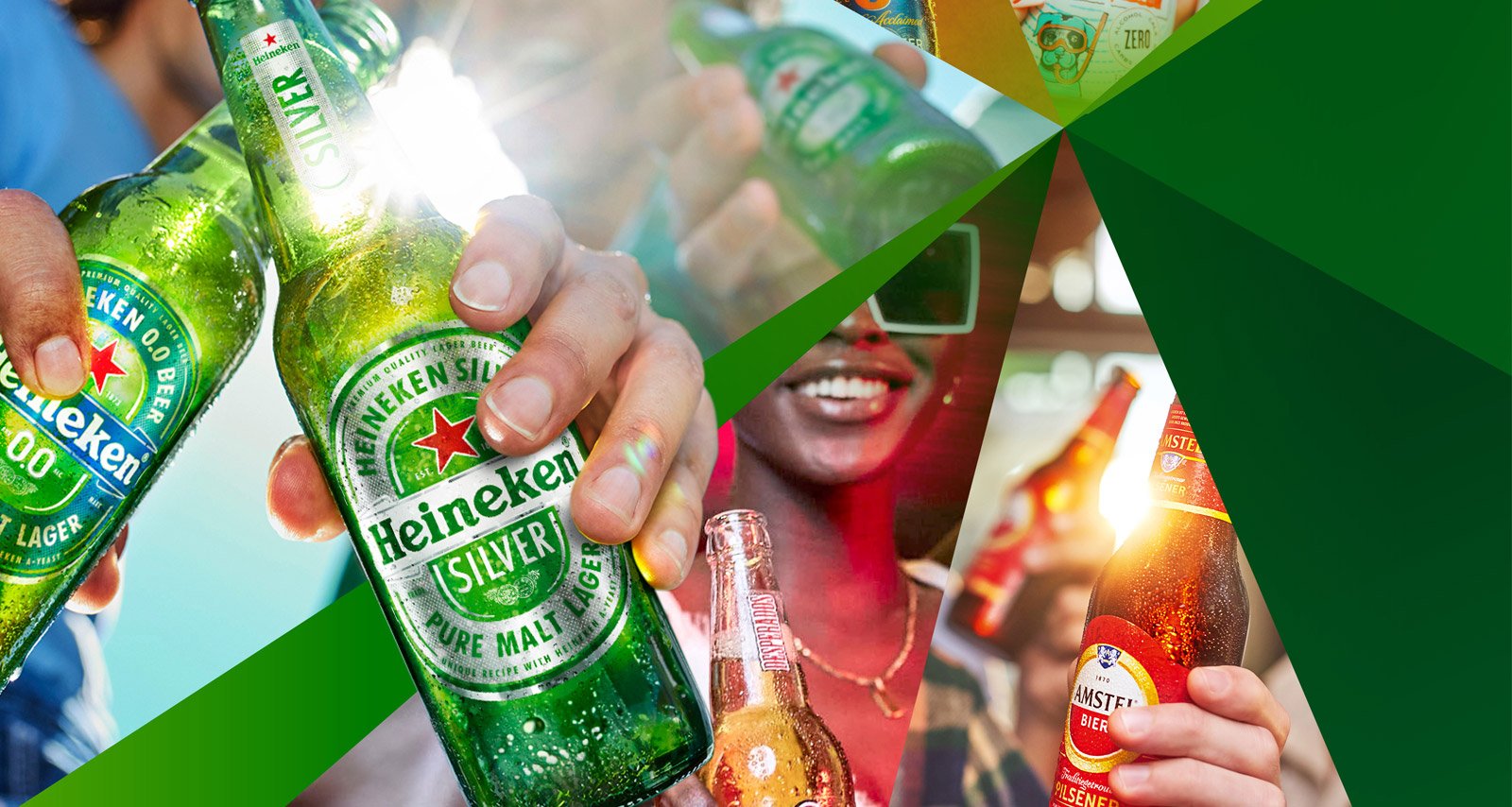
The transformation underscores a broader strategic shift: from manufacturing-led operations to knowledge- and innovation-driven functions
As artificial intelligence reshapes industries worldwide, global brewers are increasingly tapping into its transformative potential. At HEINEKEN, GenAI is no longer just a technological upgrade it is becoming central to how the company rethinks supply chains, innovation, and regional strategy across Asia Pacific.
In a significant structural shift, HEINEKEN is transitioning Asia Pacific Breweries Singapore (APBS) to an import-based supply model, gradually scaling down large-scale brewing at its Tuas facility. While this move marks the end of an era for local production, the company emphasises that it is a forward-looking decision aligned with long-term competitiveness and its EverGreen 2030 ambitions.
“This is a long-term structural decision grounded in several years of careful assessment of our operating environment and the evolving needs of our regional supply network,” a HEINEKEN spokesperson said. “Rather than diminishing Singapore’s role, this transformation strengthens its strategic importance within our global ecosystem.”
Singapore as a Strategic Nerve Centre
The transformation underscores a broader strategic shift from manufacturing-led operations to knowledge- and innovation-driven functions.
With continued investments in logistics, commercial operations, and GenAI capabilities, Singapore is set to remain the global home of Tiger Beer, anchoring brand leadership, creativity, and R&D.
“Singapore will continue to be a critical hub for our regional and global operations,” the spokesperson added. “Our investments here reflect where we see the greatest long-term value innovation, digital capabilities, and strategic coordination.”
A key pillar of this transformation is the establishment of HEINEKEN’s Global GenAI Lab in collaboration with AI Singapore. The lab is designed as a global centre of expertise, driving AI innovation locally while scaling impact across the company’s worldwide operations.
“GenAI will play an increasingly important role in understanding consumer needs, enhancing customer engagement, and improving productivity throughout the company,” said Ronald den Elzen. “The Global GenAI Lab marks a significant milestone in our digital transformation journey, highlighting our strategic focus on advanced GenAI technologies as key drivers of growth, efficiency, and innovation.”
Echoing this, Kenneth Choo noted that the initiative reinforces the company’s long-term commitment to the region. “This Lab will serve as a global centre of expertise, leveraging Singapore’s strong AI ecosystem, skilled talent, and supportive policy environment to develop innovative solutions that will transform the beverage industry,” he said.
The lab will focus on building scalable GenAI solutions across critical business functions, including marketing automation, financial reporting, customer support, and knowledge management. These systems will incorporate advanced agentic capabilities, enabling them to solve complex business challenges while maintaining responsible AI practices autonomously.
The initiative also represents a long-term collaboration model. By 2025, the lab is expected to bring together a specialised team combining HEINEKEN’s digital and technology experts with talent from AI Singapore, ensuring continuous knowledge exchange and access to cutting-edge innovation.
“We are excited to partner with HEINEKEN on this strategic collaboration,” said Laurence Liew. “It demonstrates how public-private partnerships can drive meaningful, real-world AI innovation at scale.”
Singapore’s role as an innovation hub is further reinforced by strong institutional support. Chan Ih-Ming highlighted that the initiative will help unlock new business value while strengthening AI capabilities and talent development within the ecosystem.
A Shift Toward a Future-Fit Model
The transition is closely tied to HEINEKEN’s EverGreen 2030 strategy, which prioritises sustainable growth, agility, and productivity. By relocating large-scale brewing to regional hubs in Malaysia and Vietnam, the company is building a more efficient and integrated production network.
At the same time, Singapore is being repositioned as a high-value hub, with its GenAI Lab and Innovation Hub signalling a clear pivot toward advanced capabilities and digital transformation.
According to the spokesperson, “The new structure allows APBS to focus on brand leadership, commercial excellence, logistics coordination, and innovation, key pillars that support our EverGreen 2030 objectives.”
Strengthening Supply Chain Resilience
The phased reduction of brewing at Tuas is expected to enhance operational efficiency and resilience across the Asia Pacific region. By diversifying production across multiple geographies, HEINEKEN reduces reliance on a single high-cost market while gaining flexibility to respond to shifting demand.
The regional network already has sufficient capacity to absorb production volumes, ensuring continuity without compromising product availability or quality.
Singapore, meanwhile, will play a central role in coordinating logistics, driving innovation, and piloting advanced technologies such as GenAI-enabled operations, further reinforcing its strategic importance.
Safeguarding Brand Integrity
Despite the shift in production locations, HEINEKEN emphasises that quality and consistency remain non-negotiable. The company applies uniform global standards across all its breweries, ensuring that products meet the same specifications regardless of where they are produced.
This is particularly critical for Tiger Beer, which has evolved into a global brand, with over 95 per cent of its sales now occurring outside Singapore.
“Tiger Beer’s international success is built on rigorous quality controls applied consistently across our global network,” the spokesperson noted.
Reinventing the Tuas Site
Rather than shutting down entirely, the Tuas facility will be transformed into a multi-functional hub supporting logistics, innovation, and pilot brewing.
The planned pilot brewery will enable:
New product and flavour development
Prototype packaging and format testing
Exploration of new consumer experiences
These initiatives will support not only Singapore but also HEINEKEN’s broader global network, positioning the site as a centre for experimentation and product innovation.
Shraddha Warde
shraddha.warde@mmactiv.com

Jun 08, 2026 | Company News

Jun 08, 2026 | Indonesia

Jun 04, 2026 | Beverages

May 14, 2026 | Food
Jun 08, 2026 | Company News
Jun 08, 2026 | Company News
Jun 08, 2026 | Food