Thursday, 25 June 2026

Thursday, 25 June 2026
The situation remains above the levels recorded in the September–December 2025 period The Food and Agriculture Organisation of the United Nations (FAO) and the United Nations World Food Programme (WFP)…
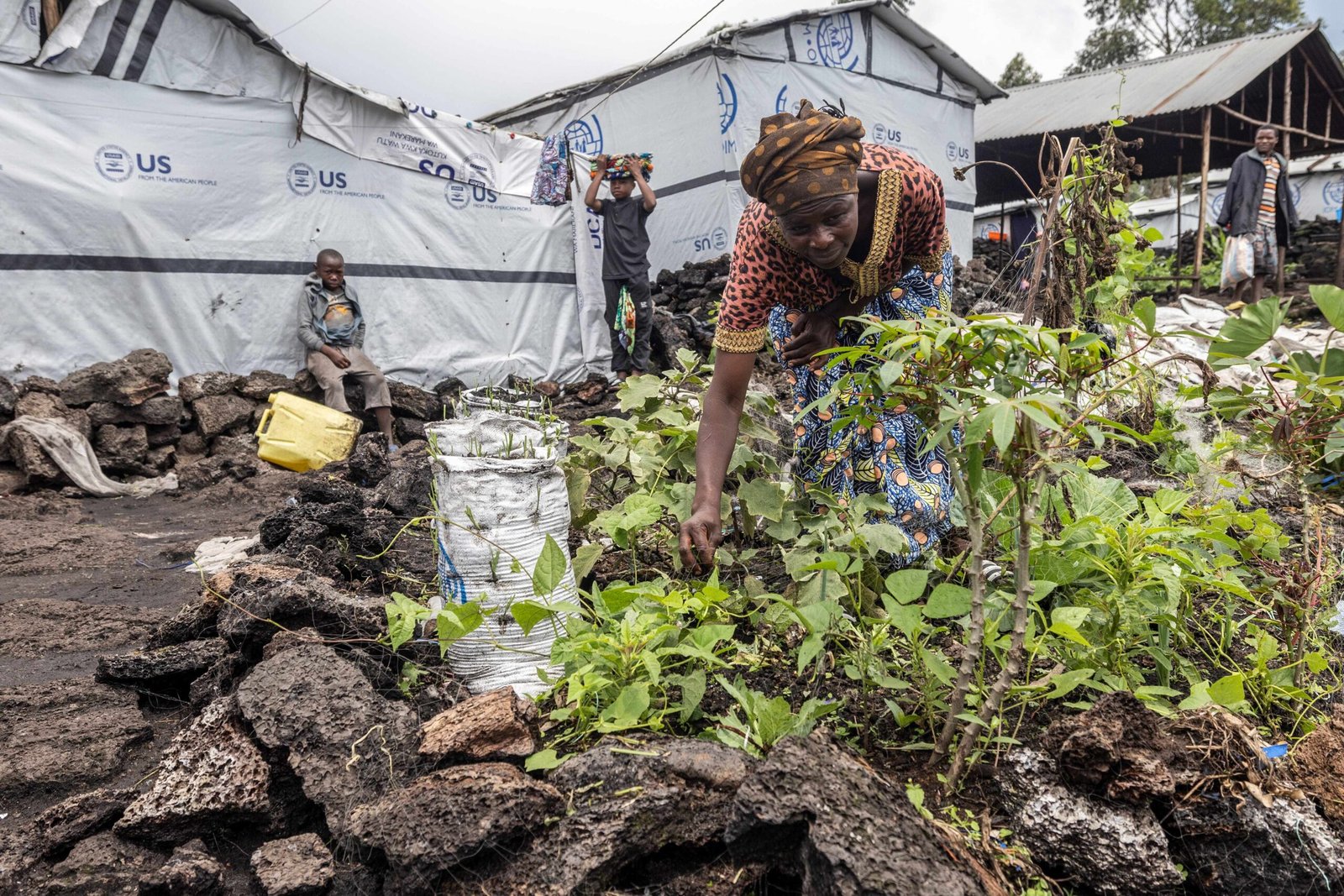
The situation remains above the levels recorded in the September–December 2025 period
The Food and Agriculture Organisation of the United Nations (FAO) and the United Nations World Food Programme (WFP) warn that the Democratic Republic of the Congo (DRC) continues to face one of the world’s largest and most severe hunger crises.
Today, over 26.5 million people—nearly one in four Congolese—are struggling to meet their basic food needs, according to the latest Integrated Food Security Phase Classification (IPC) analysis update. Among them, more than 3.6 million people are in emergency conditions, facing critical food shortages that threaten their survival without urgent assistance.
Although the latest projections show a slight improvement compared to previous estimates, the situation remains above levels recorded in the September–December 2025 period, when 24.8 million people were facing crisis or worse levels of hunger—highlighting the deepening and protracted nature of the crisis. This underscores the entrenched dynamics, particularly in the most affected provinces – North Kivu, South Kivu, Ituri and Tanganyika – where conflict continues to uproot families, destroy livelihoods, disrupt markets and limit access to farmland.
Across the country, there are more than 7.8 million internally displaced people, many of whom have lost their homes, fields, livestock and sources of income. At the same time, persistently high food prices, disrupted supply chains and recurrent disease outbreaks, including cholera, measles and Mpox, are pushing already fragile communities closer to the brink.
The nutrition situation is particularly alarming. An estimated 4.18 million children under five require treatment for acute malnutrition (January–June 2026). Of these, more than 1.3 million children are suffering or expected to suffer from severe acute malnutrition, a life-threatening condition that can become fatal within weeks if untreated. In addition, over 1.5 million pregnant and breastfeeding women are projected to be acutely malnourished, further compounding health risks for both mothers and children.
FAO and WFP also warn that humanitarian assistance continues to fall critically short of needs. Without urgent and sustained investment, the crisis risks deepening further, with potentially irreversible consequences for millions of people.
In 2026, FAO is already supporting 55,500 crisis-affected families in North Kivu, South Kivu, Ituri and Tanganyika through a $10 million allocation from the DRC Humanitarian Fund. This support includes seeds, tools and livelihood inputs, as well as cash-based assistance where feasible, helping families restore food production, protect their assets and reduce dependence on food assistance. FAO urgently requires $163 million to scale up this life-saving agricultural support before critical planting windows are missed.
“Every missed agricultural season increases dependence on humanitarian assistance,” said Athman Mravili, FAO Representative a.i. “When families receive seeds, tools and timely livelihood support, they can produce food within weeks, protect their dignity and avoid falling deeper into hunger. But this support must arrive before planting windows close.”
Jun 25, 2026 | Events

Jun 25, 2026 | Events

Jun 18, 2026 | Company News

Jun 25, 2026 | Events
Jun 25, 2026 | Beverages