Friday, 3 July 2026

Friday, 3 July 2026
The impact of disrupted imports is becoming visible in several Gulf markets Food security concerns are intensifying across parts of the Middle East as import restrictions, geopolitical tensions, and supply…
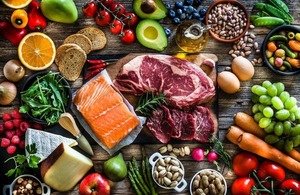
The impact of disrupted imports is becoming visible in several Gulf markets
Food security concerns are intensifying across parts of the Middle East as import restrictions, geopolitical tensions, and supply chain disruptions begin to affect the availability and pricing of key food commodities. Several countries in the region are witnessing rising prices and tightening supplies of essential food products, especially during the holy month of Ramadan, when demand traditionally surges.
A major development contributing to the situation is the recent decision by the Saudi Food and Drug Authority (SFDA) to impose a total ban on poultry and egg imports from 40 countries, along with a partial ban on specific provinces and cities in 16 additional countries. The measure, introduced as a precautionary step to safeguard public health and strengthen food safety standards, includes countries such as India, Germany, China, the United Kingdom, Japan and Egypt, among others. Authorities indicated that the list may be periodically reviewed depending on global disease outbreaks and health developments.
The SFDA clarified that poultry meat and related products that undergo adequate heat treatment or processing capable of eliminating the Newcastle disease virus would be exempt from the temporary ban, provided they meet all approved health and safety standards.
In parallel, regional authorities have also moved to safeguard domestic food supplies. The General Administration of Customs issued urgent directives to all land, sea, and air ports to prohibit the export of food products under the directive of the Minister of Commerce and Industry’s Decision. The measure is aimed at preserving national food security and ensuring price stability within local markets.
Despite these precautionary steps, the impact of disrupted imports is becoming visible in several Gulf markets. Retail prices of fruits and vegetables, already in high demand during Ramadan, have surged due to limited supply and disrupted import flows. A wide range of products such as lime, banana, garlic, ginger, carrot, grapes, watermelon, tomato, capsicum and cabbage are reportedly in short supply or unavailable in some stores.
The price spike is particularly evident in imported fruits. Bananas from Ecuador, which were earlier sold at around 500 baisas in markets in Oman, are now retailing at nearly 900 baisas, reflecting the broader supply strain affecting regional markets.
Amid these pressures, governments are increasingly relying on domestic production to maintain stability. In Qatar, the food manufacturing sector has stepped up operations to ensure steady supplies. According to the Ministry of Commerce and Industry, more than 138 national food factories are currently operating at full capacity to support local demand.
The sector includes a wide range of food processing facilities, such as 24 dairy factories, 20 water production plants, 16 meat and fish processing units, and 15 bakery and pasta production factories, alongside facilities for grain milling, vegetable processing, juices, edible oils, spices, and ready-made meals.
Authorities in Qatar recently conducted field inspections across food and water production facilities to monitor production processes, supply chain efficiency, and readiness of production lines. Officials confirmed that strategic food stocks remain sufficient and that distribution to retail outlets is continuing smoothly.
However, analysts warn that continued geopolitical instability and disease-related import restrictions could place additional pressure on food supply chains across the Middle East. With the region heavily dependent on imports for key food commodities, prolonged disruptions could further elevate prices and intensify concerns over food security in the months ahead.

Jul 03, 2026 | Beverages

Jul 01, 2026 | Food Security
Jul 01, 2026 | Food Safety and Testing
Jul 01, 2026 | Food Safety and Testing

Jun 18, 2026 | Company News
Jul 03, 2026 | Company News
Jul 03, 2026 | Beverages
Jul 03, 2026 | Company News