Wednesday, 24 June 2026
Wednesday, 24 June 2026
Marcela Wive, VP Marketing, Carlsberg Denmark As moderation reshapes drinking habits across Europe, Denmark is emerging as a key test market for the next evolution in beer: the rise of…
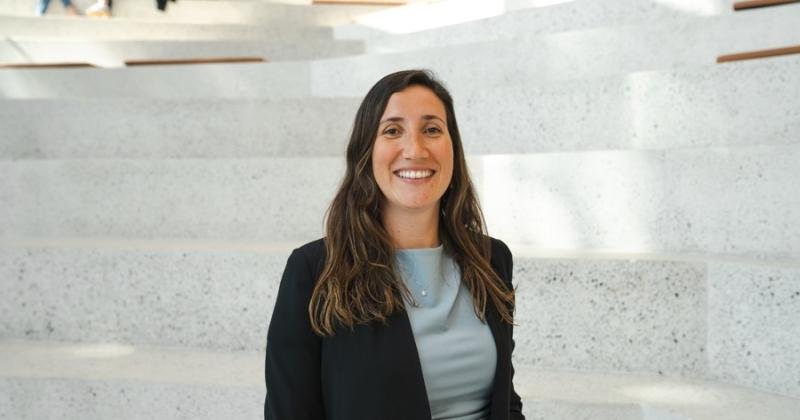
Marcela Wive, VP Marketing, Carlsberg Denmark
As moderation reshapes drinking habits across Europe, Denmark is emerging as a key test market for the next evolution in beer: the rise of the “session” category. While alcohol-free options have seen rapid growth over the past two decades, a new space is opening for beers that sit between full strength and zero alcohol, offering consumers flexibility without compromise on taste.
Carlsberg is at the forefront of this shift with the launch of Carlsberg Nordlyst at 2.5 per cent ABV, formally establishing session beer as a distinct category in the Danish market rather than a simple line extension. The move reflects changing consumer expectations around alcohol content, occasion-based drinking and premium flavour experiences and signals broader implications for the European beer landscape.
In this exclusive conversation with NUFFOODS Spectrum, Marcela Wive, VP Marketing, Carlsberg Denmark, discusses the research behind the session strategy, the brewing innovations enabling lower-ABV beers to maintain body and character, and how the new category complements both alcohol-free and full-strength segments. She also shares insights into how moderation, “flex drinking” and evolving consumption occasions are shaping the future of beer across Europe.
Moderation is emerging as a key trend in Denmark. What consumer research led Carlsberg to formalise “session” beer as a distinct category rather than treating it as a line extension?
In recent years, multiple consumer studies have shown that Danes are becoming increasingly attentive to the specific alcohol percentage in what they choose to drink – and this also applies to beer. It’s a reflection of an international moderation trend seen in many other countries. The shift isn’t about consumers opting out of alcohol, but rather about actively selecting the right ABV for the moment they’re in, whether that’s a football match, a dinner, a weekend lunch or a party. Sometimes consumers skip having a beer – despite wanting one – because they wish to avoid the full effects of alcohol. This product gives them the best of both worlds: a great-tasting beer with only half the alcohol.
This growing moderation trend led Carlsberg to formalise “session” as its own beer category rather than treating it as a simple line extension for the Danish market. Research consistently shows that consumers want flexibility and choice: sometimes they prefer a full-strength beer, other times something lighter that fits better with the occasion, without compromising on taste.
With Carlsberg Nordlyst positioned at 2.5 per cent ABV, how do you balance flavour, mouthfeel, and brand expectations when developing lower-alcohol beers that still need to deliver a premium experience?
Carlsberg Nordlyst is the first beer in Carlsberg’s new session initiative and developing it at 2.5 per cent ABV has been very much about balancing flavour, mouthfeel and the premium expectations consumers have of a Carlsberg pilsner. Even though the alcohol content is roughly half that of a classic pilsner, the ambition was never to compromise on taste or character.
Nordlyst sets the foundation for the entire session category by giving consumers the option to choose the alcohol percentage that fits the moment without sacrificing the overall beer experience. That means it must deliver on both flavour and the recognisable Carlsberg quality.
Sometimes, lower alcohol can challenge the mouthfeel of a beer a bit. That insight guided the development process, which over the course of 1.5 years focused intensely on creating a good body and a modern pilsner profile despite the lower ABV. A carefully tailored brewing process and a specific dry hopping technique were key to achieving a refined aroma and a rounded, flavourful character. We’re very proud that Carlsberg Nordlyst performed so well in blind taste tests, with many consumers believing it had a significantly higher ABV.
Alcohol-free beer has already seen strong adoption in Denmark. How does Carlsberg see session beer complementing, rather than competing with, the alcohol-free and full-strength segments?
Carlsberg sees session beer as complementing, not competing with, the alcohol‑free and full-strength segments. Danish consumers are increasingly moderating their alcohol intake and two out of three say they want to try or choose a lower‑ABV beer as their primary option, according to a study conducted for Carlsberg by Ipsos.
Alcohol‑free beer has grown rapidly over the past 15–20 years: from almost no options to roughly 120 different variants on the Danish market today. We expect the same development curve to happen here once consumers discover that the option they’ve been looking for is finally available.
Your research shows that two-thirds of Danes are open to lower-alcohol options. How do consumption occasions, such as weekday meals or social gatherings shape the role session beers play in everyday life?
2 out of 3 Danes are interested in trying or choosing a lower alcohol beer as their primary beer option, according to a study conducted by Ipsos. Our research shows that Danes increasingly want to moderate their alcohol intake, not by opting out of beer, but by choosing the ABV that fits the moment. For many everyday occasions, like a weekday meal, a long social gathering, or an afternoon event, it’s all about giving people more flexibility.
From a portfolio and growth perspective, what does the session category unlock for Carlsberg in terms of new consumers, frequency of consumption, or market expansion?
The session category gives Carlsberg a new moderation entry point that complements both alcohol‑free and full-strength beer. Consumers are increasingly “flex drinking” — alternating between full‑alc, low‑alc and AFB and session beers allow them to moderate without opting out of beer entirely. This opens opportunities to reach new consumers, increase frequency in more everyday occasions, and broaden our relevance across the full spectrum of drinking moments.
Looking ahead, how do you see the lower-alcohol and session beer segment evolving across Europe, and what role will innovation in brewing techniques play in sustaining taste and quality at reduced ABV levels?
It’s still early days, but we expect lower-alcohol and session beers to become an increasingly common way Europeans enjoy beer. Innovation will be key. Carlsberg’s renowned research laboratory has spent over 150 years pushing the boundaries of brewing science – from purifying yeast in 1883, to inventing the pH scale, to having Nobel-level science coming out of our laboratory as recently as 2022. Today, more than 100 scientists are working on the future of beer, including techniques that help reducedABV beers deliver the same flavour, body and quality people expect.
Shraddha Warde
shraddha.warde@mmactiv.com

Jun 24, 2026 | Company News

Jun 23, 2026 | Supply chain

Jun 18, 2026 | Company News

Jun 24, 2026 | Company News
Jun 24, 2026 | Company News
Jun 24, 2026 | Company News