Friday, 10 July 2026

Friday, 10 July 2026
The team will develop an AI tool capable of calculating optimal fermentation conditions to produce protein powder at scale efficiently Researchers at Australia’s national science agency, CSIRO, and the University…
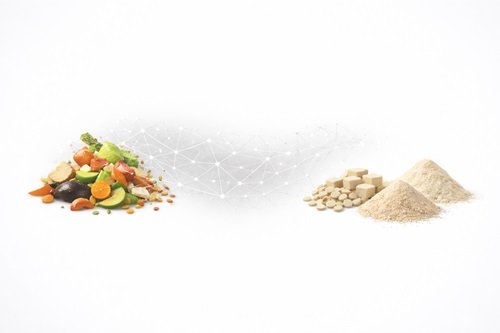
The team will develop an AI tool capable of calculating optimal fermentation conditions to produce protein powder at scale efficiently
Researchers at Australia’s national science agency, CSIRO, and the University of Leeds in the UK have partnered to develop a new AI-powered platform aimed at transforming global agrifood waste into sustainable, high-quality protein, helping strengthen food security and advance the circular bioeconomy.
In Australia alone, more than seven million tonnes of food are wasted each year, around one third of all food produced. The new two-year, $3 million project will use fermentation and artificial intelligence to convert this nutrient-rich waste into microbial protein suitable for human and animal consumption.
The research will focus on three major sources of agrifood waste: damaged or unharvested vegetable crops, grain byproducts such as canola meal and brewer’s spent grain, and byproducts from cheese production.
Using real-world case studies, the team will develop an AI tool capable of calculating optimal fermentation conditions to produce protein powder at scale efficiently. The goal is to create upcycled protein ingredients that are competitive in both price and quality with conventional protein sources.
“Globally, billions of tonnes of nutrient-rich material are currently being lost each year,” said Dr Kai Knoerzer, CSIRO Project Lead. “Working with our colleagues internationally, this project will combine AI, fermentation science and real case studies to support the industry to turn that waste into sustainable protein at scale.”
Fermentation, one of humanity’s oldest food technologies, could play a much larger role in modern food systems, according to Dr Knoerzer. “When fermented using yeast, for example, food waste can be transformed into valuable products within the framework of a circular bioeconomy,” he said.
From the AI perspective, the project aims to overcome one of the main barriers to alternative proteins: cost.
“To truly impact global food security, upcycled protein can’t just be a niche alternative — it has to compete on price with what is already on the supermarket shelf,” said Professor Nicholas Watson, Professor of Artificial Intelligence in Food at the University of Leeds. “We are excited to work with CSIRO and partners across the globe to bridge that gap, launching an AI platform to support the fermentation of agri-food waste.”
The Bezos Earth Fund supports the project through its AI for Climate and Nature Grand Challenge, a $100 million initiative designed to apply artificial intelligence to the challenges of climate change and biodiversity loss.
Dr Amen Ra Mashariki, Director of AI and Data Strategies at the Bezos Earth Fund, said the collaboration demonstrated how responsibly developed AI could strengthen environmental action. “When guided by science and local knowledge, AI can ensure its overall impact on the planet is positive,” he said.
If successful, the initiative could open new pathways for the large-scale production of affordable, sustainable protein while significantly reducing global food waste — a dual benefit for both climate resilience and food security.
Jul 09, 2026 | Company News
Jul 08, 2026 | Packaging

Jul 08, 2026 | Australia
Jul 01, 2026 | Food Safety and Testing

Jun 18, 2026 | Company News
Jul 10, 2026 | Company News
Jul 10, 2026 | Company News
Jul 10, 2026 | Company News