Thursday, 4 June 2026

Thursday, 4 June 2026
The coconut water industry has increasingly come under scrutiny for issues such as added sugar, water dilution, and other forms of adulteration As global demand for coconut water continues to…
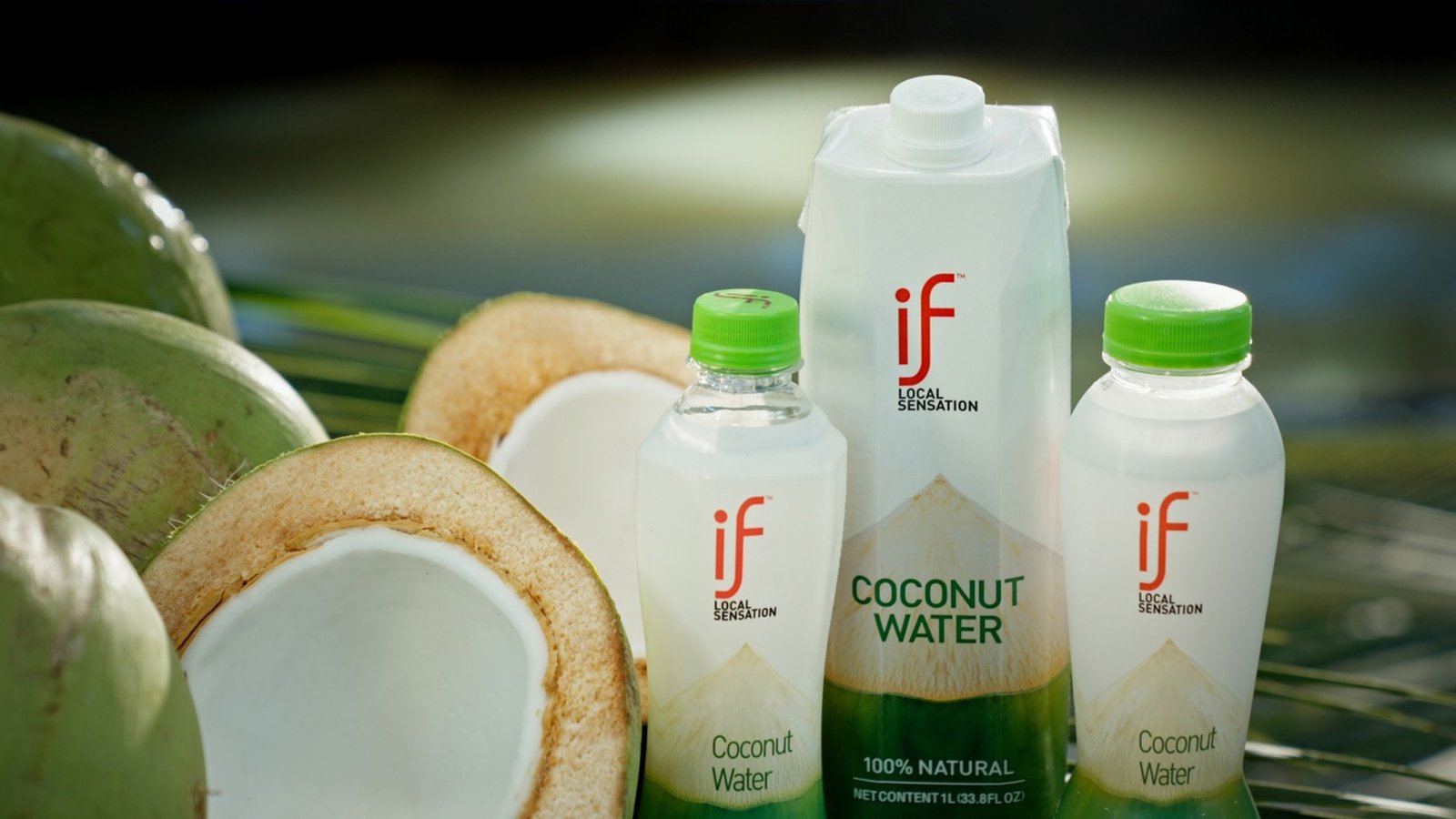
The coconut water industry has increasingly come under scrutiny for issues such as added sugar, water dilution, and other forms of adulteration
As global demand for coconut water continues to rise, so do concerns surrounding product adulteration and authenticity. In response, IF, one of the leading players in the coconut beverage segment, is investing in advanced scientific verification systems to strengthen consumer trust and reinforce product integrity across its supply chain.
At the centre of this initiative is EA-IRMS (Elemental Analyser–Isotope Ratio Mass Spectrometry), a sophisticated, molecular-level authentication technology that enables IF to verify the purity and authenticity of coconut water before production even begins.
The coconut water industry has increasingly come under scrutiny for issues such as added sugar, water dilution, and other forms of adulteration. While traditional quality control systems primarily rely on post-production testing, IF sought a more proactive and scientifically robust approach.
“Product authenticity and consumer trust have always been our top priorities,” the company stated. “As coconut water continues to grow globally, concerns around adulteration have also become more common within the industry. We wanted to go beyond conventional quality control and invest in a scientifically proven system that could verify authenticity at the molecular level.”
That ambition led the company to adopt EA-IRMS technology a system capable of detecting exogenous sugar and added water with extremely high precision before the raw material enters production.
Shifting Quality Assurance Upstream
One of the defining aspects of IF’s approach is the decision to conduct verification at the raw material receiving stage rather than relying solely on finished-product testing.
According to the company, this upstream verification creates a significantly stronger quality assurance framework.
“At IF, we conduct EA-IRMS verification before production even begins,” the company explained. “By screening raw materials upfront, we can prevent any non-compliant materials from entering production in the first place.”
This preventive strategy not only minimises risks associated with adulterated inputs but also improves traceability and confidence across the manufacturing process. It reflects a broader shift within the food and beverage industry toward proactive quality management rather than reactive testing.
EA-IRMS technology works by analysing naturally occurring isotope ratios within a product at the molecular level. In the case of coconut water, the technology focuses on two important isotopic markers, Carbon-13 (¹³C) and Oxygen-18 (¹⁸O).
Carbon-13 analysis helps confirm that the product originates from a coconut, which belongs to the C3 plant category. Oxygen-18 analysis, meanwhile, helps detect added water or dilution.
By studying these isotope signatures, the system can accurately identify adulteration, such as sugar addition or water dilution issues that are often difficult to detect through conventional testing methods.
The result is a scientifically validated authentication process that strengthens both quality assurance and supply chain integrity.
A New Benchmark for Beverage Authentication?
As food fraud and ingredient transparency become increasingly important topics globally, IF believes molecular-level verification technologies could eventually become industry standard, particularly in beverage categories vulnerable to adulteration.
“We believe molecular-level verification represents the future of quality assurance,” the company noted. “As consumers and regulators continue to demand greater transparency and accountability, scientific authentication methods like EA-IRMS will become increasingly important.”
While the adoption of such systems requires significant investment and technical expertise, the company sees long-term value in setting higher benchmarks for authenticity and consumer trust.
Innovation Beyond Product Development
For IF, innovation extends beyond launching new beverages or flavours. The company views technological investment in quality assurance as a core part of its broader business strategy.
“Our investment in EA-IRMS reflects our long-term commitment to combining science, technology, and global standards to strengthen product integrity,” the company said.
The company is also exploring opportunities to extend advanced verification systems into additional product categories where authenticity and traceability play a critical role.
As the global food and beverage industry faces mounting pressure to deliver cleaner labels, greater transparency, and verifiable sourcing, IF’s adoption of molecular authentication technologies signals a broader transformation in how brands approach quality assurance, moving from conventional testing toward science-backed authenticity verification at the source.
Shraddha Warde
shraddha.warde@mmactiv.com

Jun 04, 2026 | Beverages

Jun 03, 2026 | India
Jun 02, 2026 | Company News
Jun 04, 2026 | Beverages

May 14, 2026 | Food

May 13, 2026 | Food Safety and Testing
Jun 04, 2026 | Company News
Jun 04, 2026 | Australia
Jun 04, 2026 | Beverages