Monday, 22 June 2026

Monday, 22 June 2026
The 38th Session of the FAO Regional Conference for the Near East (NERC38) addresses growing risks to food security The 2026 conflict in the Middle East is adding further pressure…
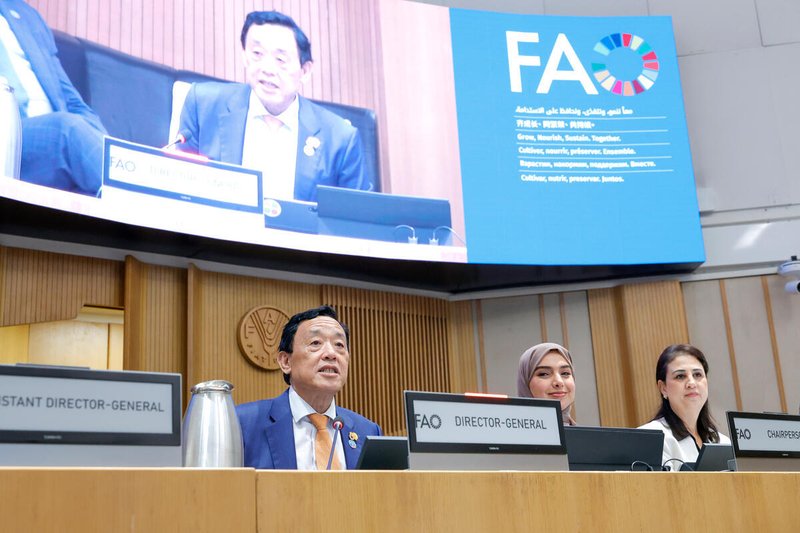
The 38th Session of the FAO Regional Conference for the Near East (NERC38) addresses growing risks to food security
The 2026 conflict in the Middle East is adding further pressure on fragile agrifood systems and global supply chains, threatening the availability, accessibility, and affordability of food, the Director-General of the Food and Agriculture Organisation of the United Nations (FAO), QU Dongyu, told the 38th Session of the FAO Regional Conference for the Near East (NERC38).
The conference took place on Monday at the Organisation’s headquarters in Rome during a “critical moment” for the region, underscoring the need to recognise “the immense importance of maintaining trade flows, and of ensuring access to adequate food for all, particularly in import-dependent countries,” Qu said in his opening statement.
The NERC38 was chaired by the United Arab Emirates, represented by Amna bint Abdullah Al Dahak Al Shamsi, Minister of Climate Change and Environment. The regional ministerial conference brought together Ministers and policymakers from across the region to discuss the increasingly complex and interconnected landscape of risks that severely affect agrifood systems and food security.
As a technical knowledge organisation, and in line with its mandate, FAO is closely assessing the impacts of ongoing global conflicts – including the one in the Middle East – on food security and agrifood supply chains to provide the best available evidence, technical expertise, and policy support to help Members safeguard food security, strengthen resilience, and protect rural livelihoods.
The Director-General warned that the significant disruptions to food production, trade, and distribution systems currently being experienced across the region were further compounded by global implications, “including rising energy prices and disruptions in fertiliser markets, which are increasing production costs and affecting agricultural productivity both within the region and beyond.”
Noting that the crisis was affecting all agricultural inputs, including chemicals and machinery in addition to fertilisers, the Director-General said he had informed UN Secretary-General Antonio Guterres that its impact would have “long-term consequences for agriculture,” even if it were to end today.
Conflicts are already severely impacting farmers, producers, and value chain actors, whose livelihoods are increasingly at risk.
“At FAO, our work is firmly grounded in the belief that the right to food is a basic human right, and that peace is a prerequisite for food security,” Qu said. “Efficient, inclusive, resilient and sustainable agrifood systems are critical to support recovery, reduce vulnerabilities, and contribute to long-term stability and peace in the Near East.”
For her part, Minister Al Dahak affirmed that the UAE’s chairing of this session aims to drive a fundamental shift in the region’s agrifood systems. The systems are set to transform from reactive crisis management to proactive innovation, empowering the region to build resilient systems that can turn environmental and geopolitical challenges into sustainable development opportunities, backed by robust logistics infrastructure and strategic partnerships that keep global supply chains secure, she said.

Jun 22, 2026 | Australia

Jun 18, 2026 | Company News
Jun 18, 2026 | Company News

Jun 22, 2026 | Feature
Jun 22, 2026 | Dietary Supplements