Sunday, 21 June 2026

Sunday, 21 June 2026
The initiative forms part of a two-year research project funded by the Fisheries Research and Development Corporation (FRDC) on behalf of the Australian Government Researchers in Western Australia have identified…
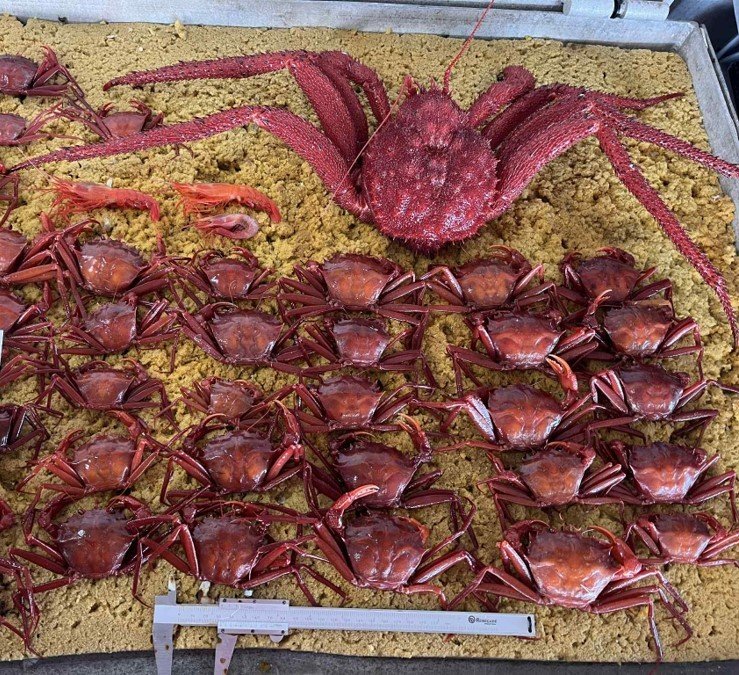
The initiative forms part of a two-year research project funded by the Fisheries Research and Development Corporation (FRDC) on behalf of the Australian Government
Researchers in Western Australia have identified promising high-value crustacean species that could significantly boost the value of the State’s West Coast Deep-Sea Crustacean Managed Fishery.
Scientists from the Department of Primary Industries and Regional Development (DPIRD) have spent the past 14 months exploring previously unfished deepwater habitats along the Western Australian coastline. The initiative forms part of a two-year research project funded by the Fisheries Research and Development Corporation (FRDC) on behalf of the Australian Government.
The sustainable fishery, certified by the Marine Stewardship Council, covers a vast area stretching from Cape Leeuwin in Western Australia to the Northern Territory border, including parts of the Indian Ocean and Timor Sea.
To identify potential new fishing opportunities, researchers deployed five types of specially designed pots equipped with underwater cameras known as POTBoTs across various habitats and depths.
The DPIRD team recorded a wide range of deep-sea species and identified several with strong commercial potential. These include deep-sea crabs weighing up to 3.5 kilograms, large prawn species reaching lengths of up to 21 centimetres, and scampi.
According to DPIRD offshore crustacean research scientist Jack Parker, the fishery has historically targeted species such as crystal crab (Chaceon albus), giant crab (Pseudocarcinus gigas), and champagne crab (Hypothalassia acerba). Despite the fishery covering an expansive region, only about 10 per cent of the area is currently fished using species-specific gear.
Early trials of modified fishing gear have delivered encouraging results.
“Beehive pots are proving to be the strongest performers to date, outperforming standard commercial pots,” Parker said.
He noted that specialised designs such as Lander and Scampi pots were effective at capturing their intended species. In contrast, the success of modified pots highlights the potential for more efficient and targeted deep-sea fishing methods.
One of the most notable discoveries during the research has been the golden crab (Chaceon granulatus), a large species that could complement Western Australia’s existing crystal crab fishery.
“Most of the new species being assessed in this project are highly prized in Asian and Australian seafood markets,” Parker added.
Further analysis is ongoing, but preliminary findings suggest strong potential for developing new deep-sea crustacean resources alongside continued improvements in fishing technology and efficiency.


Jun 18, 2026 | Company News

Jun 18, 2026 | Australia
Jun 18, 2026 | Company News

Jun 19, 2026 | Beverages
Jun 19, 2026 | Africa