Wednesday, 3 June 2026

Wednesday, 3 June 2026
The pact provides a transformative boost to Indian exports of tea, coffee, spices, fresh fruits and vegetables, and processed foods by improving market access and enhancing competitiveness in European markets…
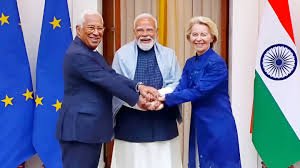
The pact provides a transformative boost to Indian exports of tea, coffee, spices, fresh fruits and vegetables, and processed foods by improving market access and enhancing competitiveness in European markets
The conclusion of the India–European Union Free Trade Agreement (India–EU FTA) at the 16th India–EU Summit marks a significant milestone in bilateral economic relations and is poised to reshape agricultural and food trade between the two partners.
Prime Minister Narendra Modi and European Commission President Ursula von der Leyen jointly announced the conclusion of the India–EU FTA during the visit of European leaders to India. This announcement is a historic moment in India–EU economic relations and trade engagement with key global partners.
The finalised agreement, reached after renewed negotiations began in 2022, establishes India and the EU as trusted partners committed to open markets, predictability, and inclusive growth. The EU is one of India’s largest trading partners, with bilateral goods trade reaching Rs 11.5 lakh crore ($136.54 billion) in 2024–25, and services trade amounting to Rs 7.2 lakh crore ($ 83.10 billion). Together, the two economies account for nearly 25 per cent of global GDP and one-third of world trade, creating unprecedented opportunities for agricultural and food integration.
For agriculture, the pact provides a transformative boost to Indian exports of tea, coffee, spices, fresh fruits and vegetables, and processed foods by improving market access and enhancing competitiveness in European markets. Streamlined sanitary and phytosanitary procedures, regulatory cooperation, and simplified customs processes are expected to reduce compliance costs and enhance predictability for exporters.
India has protected sensitive sectors such as dairy, cereals, poultry, and select produce, ensuring a balance between export growth and domestic priorities. By integrating Indian agricultural products more deeply into European value chains, the India–EU FTA promises to strengthen rural incomes, expand opportunities for agri-MSMEs (Micro, Small, and Medium Enterprises) and processors, and enhance India’s role in global food supply chains.

Jun 03, 2026 | India
Jun 02, 2026 | Company News

Jun 02, 2026 | Beverages

May 14, 2026 | Food

May 13, 2026 | Food Safety and Testing

May 12, 2026 | Food Safety and Testing
Jun 03, 2026 | Company News
Jun 03, 2026 | Company News
Jun 03, 2026 | India