
As conflict, displacement, and climate pressures continue to drive high levels of acute food insecurity across the Near East and North Africa, the Food and Agriculture Organization of the United Nations (FAO) is calling for urgent funding for emergency agricultural assistance to help families continue producing food and earning an income.
Conflict and economic shocks are undermining the region’s food productive capacity, while funding shortfalls are limiting assistance to protect food production and livelihoods.
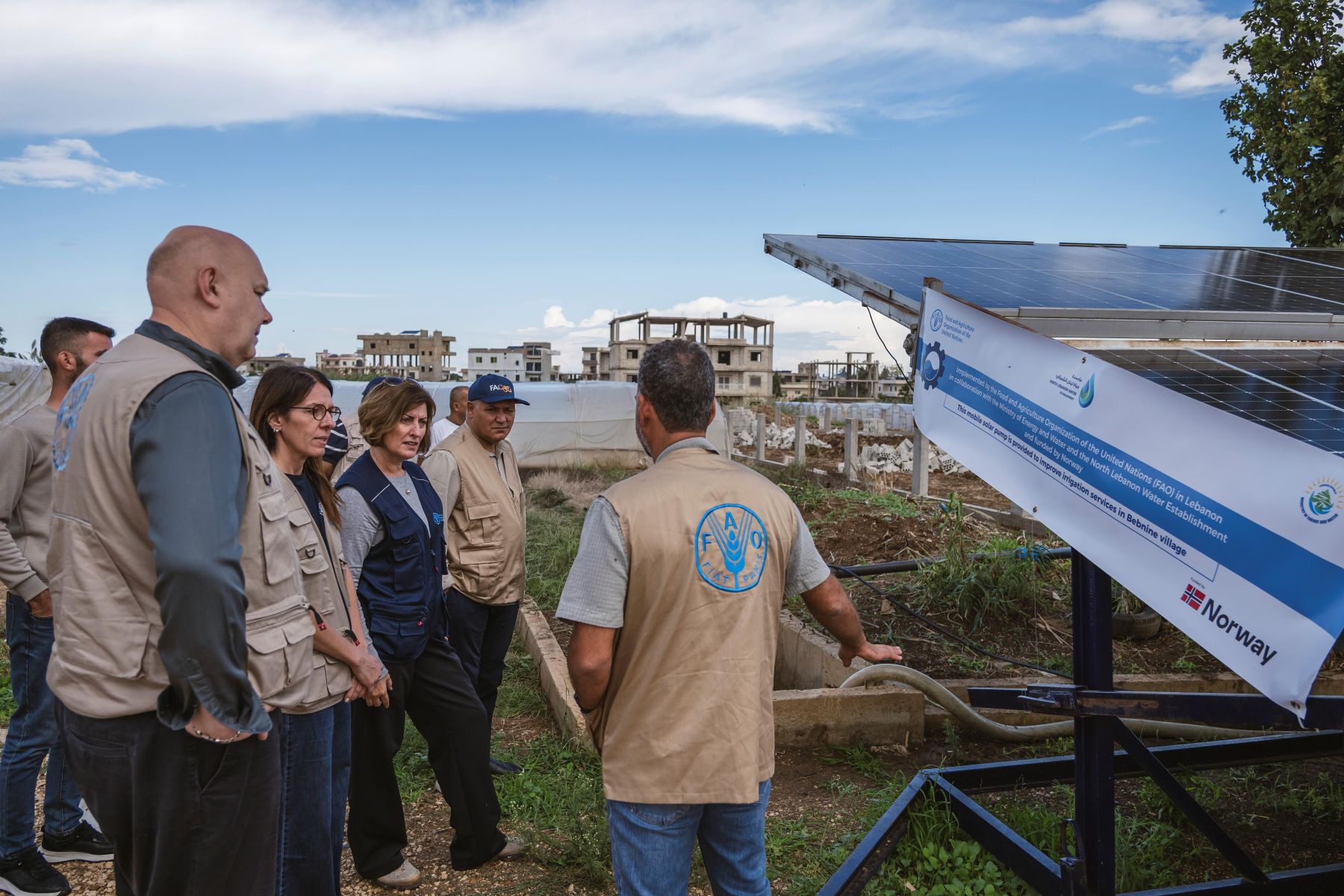
FAO Deputy Director-General Beth Bechdol, Assistant Director-General and Regional Representative for the Near East and North Africa AbdulHakim Elwaer, and Director of the FAO Office of Emergencies and Resilience Rein Paulsen met governments, donors and partners to highlight agriculture's critical role in preventing food insecurity from worsening, protecting livelihoods and supporting recovery.
Across these countries, more than 45 million people face crisis-level hunger or worse, as conflict and economic shocks are derailing food production, destroying agricultural infrastructure and disrupting markets.
“Repeated shocks are stripping families of their ability to produce food and earn an income—just as humanitarian resources are becoming increasingly constrained,” said Bechdol. “We must act before those losses become irreversible. Investing early in seeds, livestock, water and other agricultural support can protect livelihoods, prevent hunger from deepening and reduce humanitarian needs over time.”
In Gaza and the West Bank, more than 1.2 million people faced Crisis or worse levels of acute food insecurity between April and June 2026, and conditions are projected to worsen during the second half of the year. FAO is seeking $140.9 million in 2027 for time-critical agricultural assistance and recovery.
In Lebanon, 1.24 million people are projected to face Crisis or worse levels of acute food insecurity between April and August 2026. FAO requires $38 million to reach 35 000 conflict-affected farmers and rural households.
In Sudan, 19.5 million people are facing high levels of acute food insecurity. Yet only 23 percent of the $193 million required under the 2026–2028 Emergency Response Plan has been funded.
In Syria, around 7.2 million people were facing acute food insecurity in late 2025. FAO requires $171.5 million in 2027 to assist 5.2 million people, combining immediate livelihood protection with recovery and resilience measures.
In Yemen, 18.3 million people faced Crisis or worse levels of acute food insecurity in the latest analysis. FAO has secured less than 1 per cent of the $87.9 million required under its 2027 Emergency and Resilience Plan.
Protecting productive capacity can provide food and income, help households withstand future shocks, and reduce dependence on humanitarian assistance.
Emergency agricultural assistance, including seeds, livestock feed, veterinary services, cash and vouchers, irrigation support, and other inputs, can help families keep producing food during crises.
For example, in Gaza, FAO assistance has enabled farmers to resume production and helped livestock-keeping households preserve sources of food and income. In Sudan, FAO has reached almost five million people in 2026 with seeds, livestock vaccination, animal feed, agricultural input vouchers and other support.
“Agriculture must be at the heart of emergency response. The earlier we act, the more lives and livelihoods we can protect,” said Elwaer. “When a farmer receives seed before the planting season, or a livestock keeper receives feed and veterinary support before animals are lost, we are protecting food today and the means to produce it tomorrow. But this only works if resources arrive in time.”


