
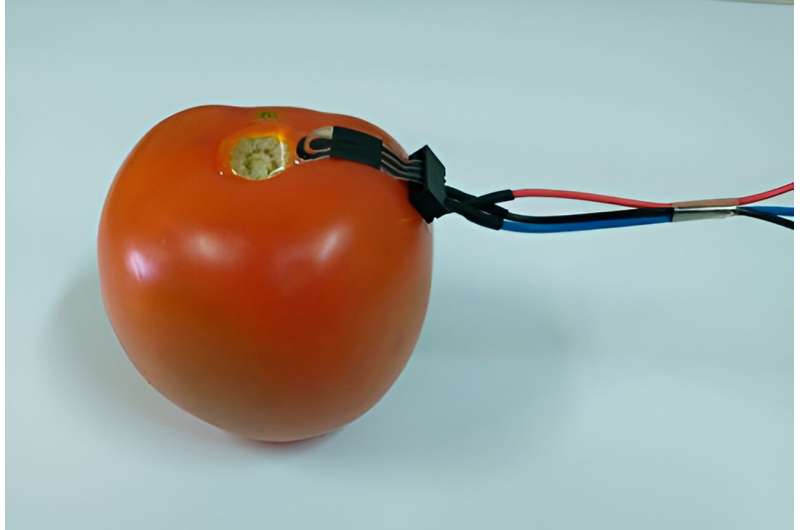
Made from cellulose acetate, a material derived from wood pulp, the device has been named plant-wearable
A team of researchers from the University of São Paulo (USP) and the Federal University of Viçosa (UFV) in Brazil have developed a sustainable sensor that can be directly placed on the surface of fruits or vegetables to detect the presence of pesticides.
Made from cellulose acetate, a material derived from wood pulp, the device has been named "plant-wearable" and has the potential to ensure food safety in a world where food shortage and environmental and health issues caused by the excessive use of agrochemicals are increasingly prevalent.
The results of the study have been published in the journal Biomaterials Advances. Pesticides are widely used to improve crop yields but only 50 per cent of them reach their target, with the remaining chemicals ending up in soil, groundwater, surface water, raw drinking water, wastewater, and food products.
Monitoring pesticide levels in food, water, and soil is, therefore, essential to prevent the public from being exposed to these toxic substances through their skin, lungs, or digestive system.


