
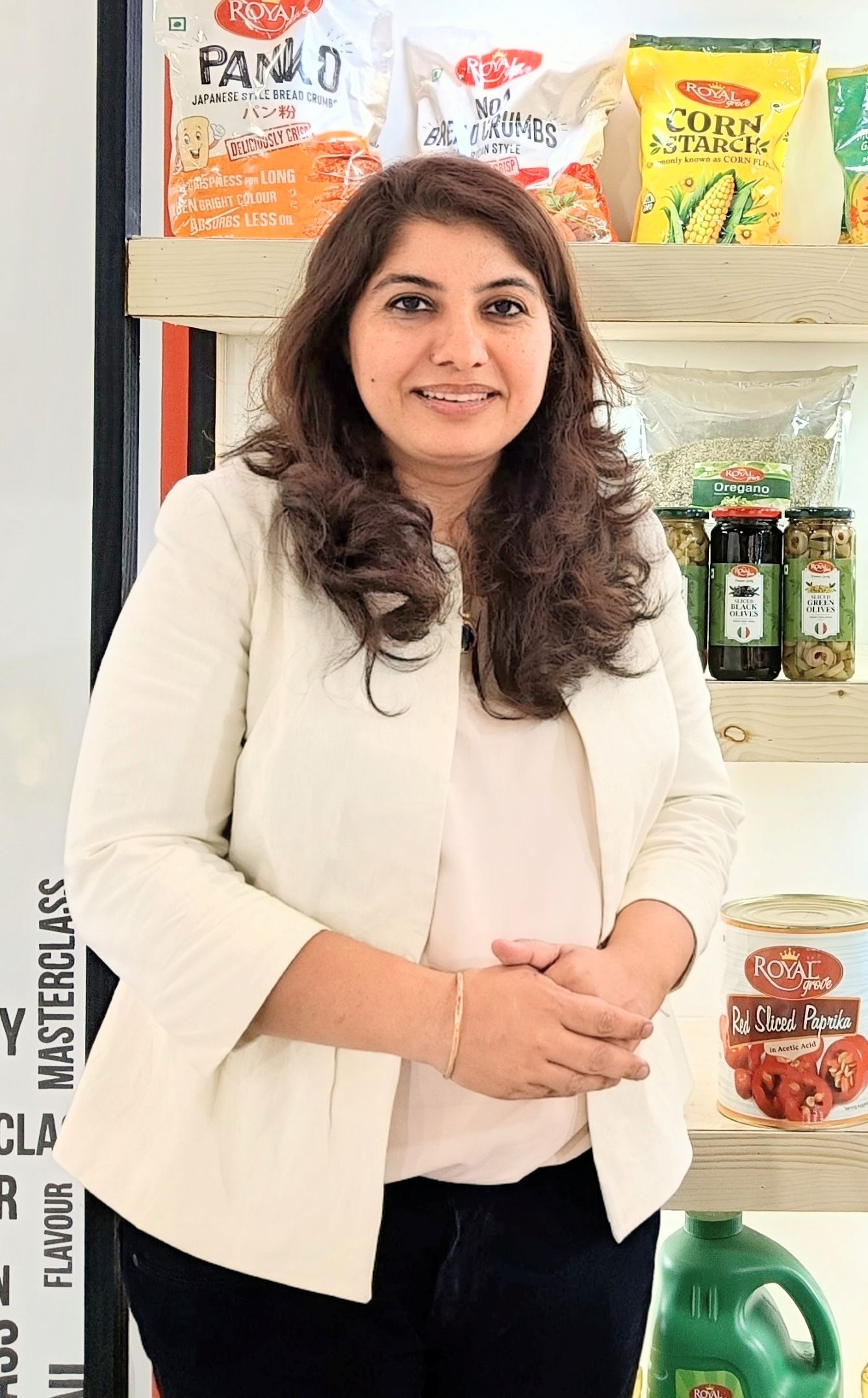
Shippy Sharma, Founder and Managing Director, Earthling Consumer Products
India’s evolving food landscape, growing interest in international cuisines and rising demand for convenient, high-quality ingredients are creating new opportunities for food businesses. For Earthling Consumer Products, these shifts are shaping a portfolio that caters to both professional kitchens and modern consumers, spanning olive oils, sauces, canned foods, pasta, breakfast products, drink mixes and Ready-to-Eat offerings.
With a presence across more than 150 cities and a portfolio of over 250 products across 90+ SKUs, the company is focused on strengthening its HoReCa and institutional business while expanding its consumer-facing brands and distribution across e-commerce and quick-commerce channels. Its sourcing partnerships with farmer cooperatives and agri-based MSMEs also play a role in building a more consistent and quality-driven supply chain.
In an interaction with NUFFOODS Spectrum, Shippy Sharma, Founder and Managing Director, Earthling Consumer Products, discusses the consumer trends driving product innovation, the growing demand for global food ingredients, technology-enabled supply-chain capabilities and the company's priorities for its next phase of growth.
Earthling Consumer Products has built a portfolio spanning olive oils, canned foods, sauces, pasta, breakfast products, drink mixes, and Ready-to-Eat offerings. What key consumer and market trends are shaping your product development and portfolio expansion strategy?
The growing interest in international cuisines and the need for greater convenience in food preparation are key factors shaping our product development strategy. As hotels, restaurants and cafés diversify their menus, they need access to ingredients used in cuisines such as Japanese, Thai, Vietnamese. This creates an opportunity to bring a wider range of global flavours and gourmet ingredients to India, catering to the evolving taste profile of consumers. Our portfolio reflects this opportunity through brands such as Lee Kum Kee, which offers Asian sauces and condiments, and Namjai, which brings Thai curry pastes to Indian kitchens. At the same time, as foodservice chains expand, consistency across outlets becomes increasingly important. Kitchens need ingredients that help standardise recipes, maintain the same taste across locations and streamline preparation without compromising on quality.
Our ambition is to make Earthling a one-stop shop for HoReCa gourmet ingredients. Professional kitchens often source ingredients across multiple categories from different suppliers. We want to bring more of these requirements under one roof, simplifying procurement for our customers. This means expanding into relevant categories while also identifying opportunities to differentiate established products, such as through preservative-free tomato puree and non-blended olive oils that address specific culinary requirements and consumer preferences.
With a strong presence across HoReCa, institutional channels, quick commerce, and e-commerce, how is Earthling adapting its products, packaging, and distribution strategy to meet the distinct requirements of professional kitchens and modern consumers?
We tailor our product formats and distribution to the needs of professional kitchens and retail consumers. For HoReCa and institutional customers, we offer bulk packs of ingredients suited to the volumes and usage requirements of hotels, restaurants and caterers. These products reach customers through a network of speciality distributors serving the foodservice industry across the country.
For retail consumers, we offer consumer-sized packs of select products through e-commerce and quick-commerce platforms. Under our flagship brand, Royal Grove, this range spans olive oil, tomato purée, coconut milk, and canned fruits and vegetables. These channels allow consumers to access gourmet ingredients for everyday cooking at home, while giving our products a presence beyond the professional kitchen.
Earthling works directly with farming cooperatives for raw material procurement. How does this sourcing model help the company ensure quality, traceability, and consistency while improving price realization for farmers?
Earthling sources its products from farmer cooperatives and agri based MSMEs. Our engagement with farmer centric organisation and cooperatives is particularly important for ingredients where the quality of agricultural produce depends on precise growing and harvesting conditions. Baby corn, for instance, must be harvested at a specific stage and length to ensure it remains tender enough for the entire corn to be consumed.
By working directly with agri centric organisations we can communicate these industry-specific requirements and help growers understand the standards needed for foodservice applications.
Earthling plays a key role in educating the value chain on the industrial suitability of agricultural products so that agri products can be more standardised and marketable.
The company has highlighted technology-enabled supply-chain capabilities covering procurement, production, and distribution. What specific technologies are you using to improve traceability, inventory management, quality control, and overall supply-chain efficiency?
Technology currently plays a more significant role in our distribution operations. We have developed platforms that help us connect with distributors and customers more efficiently, streamline order placement and processing, reduce missed orders and improve order accuracy and delivery coordination.
Our focus is on improving the efficiency of order management and distribution while maintaining disciplined inventory practices and quality checks.
With the advent of AI, the company bets high on technology and believes that going forward our investments in technology enabled supply chain will increase.
With over 250 products across 90+ SKUs and a growing Ready-to-Eat and drink mixes portfolio, which categories offer the greatest growth opportunities in India? Are there any new product formats or categories currently in development?
The biggest growth opportunity lies in international cuisines that are gaining interest among Indian consumers. While categories such as ketchup, mayonnaise and other emulsions are relatively established, cuisines such as Japanese, Vietnamese and Thai offer room for growth through ingredients that are still niche in India.
As restaurants introduce these flavours to their menus, they create opportunities for ingredient suppliers to build the right product range. Greater exposure can then encourage consumers to experiment with these cuisines at home, gradually increasing demand beyond restaurants.
We have seen a similar shift with noodles and pasta, which have moved from being relatively specialised products to familiar parts of the Indian diet. We believe other international ingredients can follow a similar path as their usage becomes more widespread. The opportunity lies not just in selling existing products, but in identifying ingredients that could become more popular and helping build their applications in Indian kitchens.
There is also scope to create new propositions within established categories. For instance, preservative-free tomato ketchup or a no-onion, no-garlic variant can address specific consumer preferences without requiring consumers to adopt an entirely new product category. For professional kitchens, such products can also help meet the needs of particular menus and customer segments.
The growth opportunity, therefore, lies in identifying both emerging ingredients that could gain wider acceptance and new propositions that respond to specific consumer preferences.
Earthling recorded 80% year-on-year growth in FY2024–25 and currently serves more than 150 cities. What are the company’s priorities for the next phase of growth, particularly regarding B2B expansion, quick commerce, exports, sustainable sourcing, and strengthening your consumer-facing brands?
Our next phase of growth will focus on strengthening our sourcing network, expanding our geographical footprint and building stronger consumer brands and strategic partnerships.
A key priority is to deepen relationships with suppliers to ensure consistent access to quality ingredients as our portfolio and business volumes grow. We also see significant scope to expand our B2B presence in southern India, where our reach remains limited. This will help us connect with more hotels, restaurants, caterers and distributors in an important foodservice market.
On the consumer front, we plan to increase marketing investments in our consumer-facing brands to build awareness, encourage trials and drive repeat purchases. Alongside this, we intend to strengthen partnerships with established brands whose portfolios complement ours. These collaborations can open up new customer segments and create opportunities to introduce a wider range of products to the Indian market.
Together, these priorities will help us build a stronger foundation for sustainable growth across our foodservice and consumer businesses.


