
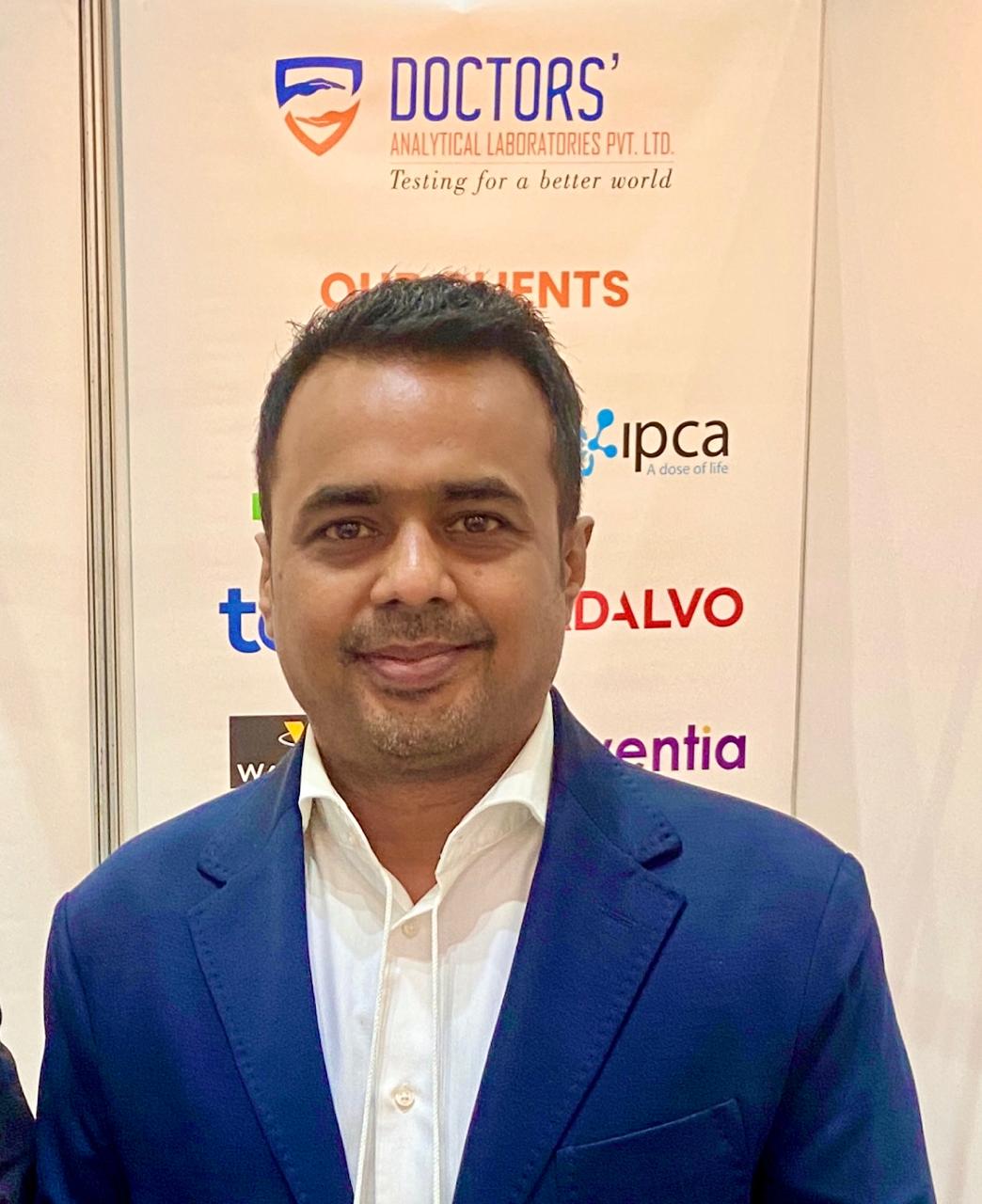
Ashay Mehta, Managing Director, Doctors’ Analytical Laboratories (DALPL)
As India’s food and nutraceutical industries face increasing regulatory scrutiny and growing consumer demand for safer, cleaner and scientifically validated products, independent testing laboratories are playing an increasingly important role in strengthening quality assurance and consumer trust. With expertise spanning food, pharmaceuticals, nutraceuticals, cosmetics, water and environmental testing, Doctors’ Analytical Laboratories (DALPL) has expanded its capabilities to address the evolving analytical and regulatory requirements of the industry. In this interview with NUFFOODS Spectrum, Ashay Mehta, Managing Director, Doctors’ Analytical Laboratories (DALPL), discusses the importance of independent testing, scientific validation of food and nutrition claims, emerging regulatory challenges and the need for robust, risk-based testing programmes. He also shares insights into how laboratories can evolve from compliance-driven testing facilities into scientific partners, helping brands strengthen transparency, product integrity and consumer confidence.
You have built Doctors’ Analytical Laboratories over the past two decades in a highly regulated, trust-sensitive industry. What were the key decisions and milestones that helped establish DALPL’s credibility and differentiate it as an independent testing organization?
In testing, credibility is not something you claim. It is something a regulator, an auditor or a client verifies, again and again. Three decisions shaped DALPL.
The first was to stay independent. We have no manufacturing or trading interests, so what we offer is an accurate result. Clients know our reports reflect the data, not a commercial motive.
The second was to build around accreditation rather than treat it as a certificate on the wall. Our NABL accreditation under ISO/IEC 17025:2017 sits alongside recognitions from FSSAI, APEDA and IOPEPC, and registration with Indonesia's quarantine authority for agricultural exports. Each one is renewed through audits of our methods, our people and our records. That discipline matters as much to our clients as the results themselves.
The third, and the most defining, was how we responded to our 1st US FDA inspection in 2016, where we received a Form 483 observation. It would have been easy to fix the immediate issue and move on in the same facility. Instead, we used it to take a hard look at our vision. We further strengthened our quality systems, and in 2017 we launched a dedicated Pharmaceutical Testing Division on that updated foundation. Our most recent US FDA inspection closed with zero observations, and we have since also been approved by Health Canada.
That experience taught me that trust in this industry is built in the difficult moments. Clients don't expect a lab to be perfect. They expect it to be honest, to fix things properly, and to keep improving.
From your experience testing food products, what are some of the biggest gaps between how brands and consumers perceive food safety versus what laboratory testing actually reveals? Which areas require greater awareness across the food industry?
One common gap is that consumers often judge safety by what they can see, smell and taste, while many risks are not visible. A spice can look vibrant and still carry pesticide residues or aflatoxins. A glass of packaged water can be crystal clear and fail a microbiological test. Freshness and safety are not the same thing.
On the brand side, the gap is often one of sampling and frequency. Some companies test a product thoroughly at launch or for a licence, then rely largely on supplier certificates afterwards. But raw materials change with every season, region and vendor. A spice lot from one harvest can behave very differently from the next. Safety is best assured batch by batch, not only at the product level.
Three areas would benefit from greater awareness across the industry:
The shift I would like to see is from "test to comply" to "test to know". Compliance testing confirms a result on a given day. A well-planned testing programme helps you understand where your risks lie.
Food brands are increasingly using claims such as “natural,” “sugar-free,” “high-protein,” “clean label,” and “clinically tested.” How important is scientific validation in substantiating these claims, and where do you see the biggest challenges in aligning marketing claims with analytical evidence?
A claim on a pack is a promise to the consumer, and scientific validation is what gives it substance. In India it is also a regulatory requirement. The FSSAI (Advertising and Claims) Regulations, 2018 define many of these terms precisely. "Sugar-free", for example, has a defined upper limit per 100 g or 100 ml, and "high protein" depends on how much of the product's energy actually comes from protein. If the analytical results don't support the claim, it may not be compliant, however good the intention.
The rules are tightening further. The FSSAI Labelling and Display Amendment, 2026, effective July 2027, defines minimally processed foods, mandates "Fortified with" declarations, and requires warnings on artificial sweeteners. FSSAI has also proposed red front-of-pack warnings, such as "High Fat", "High Sugar", "High Salt" or "Highly Sweetened Beverage", in a font one point larger than the nutrition table on the back. Single-ingredient foods and inherently high-fat, sugar or salt products such as ghee, edible oil, sugar, jaggery and honey would be exempt. When one lab result decides whether a pack carries a red warning, brands will benefit from having accurate, batch-level data in place well before the rule is final.
Some of the common challenges we see are:
My suggestion to brands would be to involve the laboratory at the formulation stage, test across batches and through shelf life, and keep the data ready, as regulators, retailers and consumers are increasingly asking for it.
India’s food and nutraceutical sectors are evolving rapidly, with regulations and testing requirements becoming more stringent. How are testing laboratories adapting to these changes, and what capabilities will become increasingly important for the industry?
Regulation in India is placing greater emphasis on analytical evidence. FSSAI's reclassification of packaged drinking water as a high-risk category, tighter oversight of health supplements and nutraceuticals, and rising international scrutiny of food exports all point in the same direction. Regulators and importing countries want measured evidence, at lower limits, more often.
At DALPL, we are building multi-market method panels, as exporters increasingly need to know whether a lot meets the limits of the EU, Indonesia and the Gulf at the same time. We are also continuously investing in data integrity and digital systems, since a result is only as credible as the records behind it.
Looking ahead, I see four capabilities becoming increasingly important:
I believe laboratories will increasingly be valued as scientific partners to the industry, not just providers of reports.
DALPL has expanded beyond food testing into pharmaceuticals, nutraceuticals, beauty and personal care, water, and environmental testing. What drove this diversification, and how do you balance sector-specific regulatory requirements while maintaining consistent standards of accuracy and reliability?
Diversification was driven by our clients and by the science, rather than a plan to do everything. Food, pharmaceuticals, nutraceuticals, cosmetics and water share the same analytical foundation: chromatography, mass spectrometry, microbiology and validated methods. Clients kept asking us to apply that capability to adjacent problems. A food company needed its water tested. A nutraceutical brand sat right between food and pharma. Manufacturers across sectors needed their production environments monitored for hygiene.
The pharmaceutical expansion in 2017 was the most deliberate step. It required us to meet US FDA, ICH and other global regulatory expectations, and that rigour has since benefited the whole lab, including food.
Balancing different regulators comes down to one principle: common systems, specialised scope. Each division runs its own quality system in line with its regulatory requirements, with the same rules for data integrity, calibration, method validation and documentation. What differs is the rulebook each result is measured against. A pharma method follows ICH and pharmacopoeial requirements. A food test follows FSSAI or an importing country's limits. A cosmetic is assessed against the relevant BIS standards. We keep dedicated teams and clear method ownership for each sector, so our specialists know their regulations well while sharing one culture of accuracy.
We have found the benefits go both ways. Pharma-grade discipline strengthens our food testing, and the pace of food testing keeps our pharma teams practical and client-focused.
Looking ahead, how do you see the role of independent testing and scientific validation evolving in India’s food industry? What should brands invest in today to build greater transparency and consumer trust as demand for safer, cleaner, and more evidence-backed products grows?
I expect independent testing to become far more visible to consumers. Today most test reports sit in a quality manager's file. In the coming years, consumers may well be able to scan a code on a pack and see that a batch was tested, by whom, and for what. Retailers, quick-commerce platforms and export buyers are already moving in this direction.
At the same time, the role of the lab will widen from testing to advising. Brands are likely to rely on laboratories to help design testing programmes, interpret new regulations and support claims before they go to market.
For brands looking to build trust, I would suggest focusing on four areas:
Consumers are becoming more informed every year. I believe brands that treat scientific evidence as an investment in trust, rather than only a compliance cost, will be well placed for the future.


