
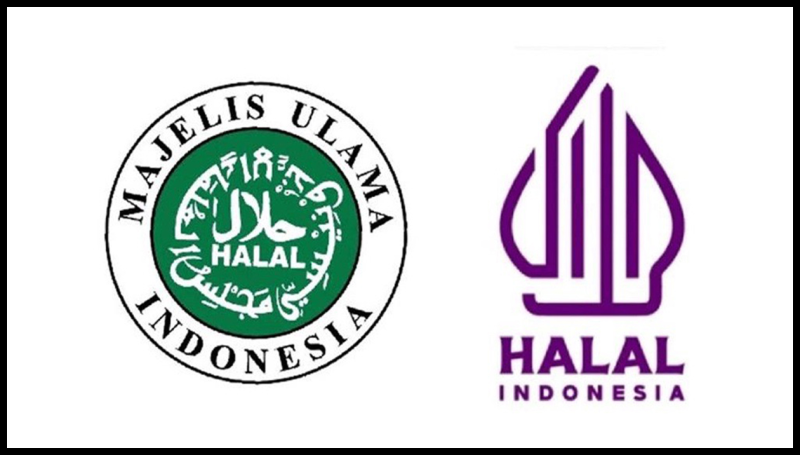
On Friday 16 October 2026, Indonesia's Coordinating Ministry for Economic Affairs announced that the halal requirement for imported food, beverages, slaughter products and slaughter services would start on 18 October 2028. Under Government Regulation No. 42 of 2024, it had been due to start no later than 17 October 2026. The ministry's secretary, Susiwijono Moegiarso, said the extension took account of the readiness of the national halal ecosystem and input from business and industry associations, according to reports in the Jakarta Post and Okezone.
The import date comes with a condition. The 2028 start for foreign food products is linked to the progress and completion of mutual recognition arrangements on halal certificates between Indonesia and other countries, according to summaries of the announcement published by CIRS Group and Emerhub. The extra two years are therefore partly time for Jakarta to finish its own paperwork with foreign certification bodies, as much as time for exporters to finish theirs.
Other categories moved too. According to the ministry announcement as summarised by Tilleke & Gibbins, CIRS and Emerhub:
Two points are easy to miss. First, the relief is not yet law. The changes are to be made by amending Articles 160 and 161 of PP 42/2024, and as of 23 October that amendment had not been published. Until it is, the 2026 dates technically remain in the regulation. Second, medium and large food companies have been under the obligation since 18 October 2024, and nothing in the announcement changes that. Emerhub also notes that raw materials, food additives and processing aids, which BPJPH had placed in its October 2026 phase, were not mentioned at all. The government has not said how they will be treated.
The government also said it would revoke BPJPH Regulation No. 4 of 2026 on conformity assessment of foreign halal products. According to Tilleke & Gibbins, that rule would have required importers to apply for a halal conformity check before lodging a customs declaration, for halal-certified and non-halal goods alike. Its withdrawal removes a step that importers had been bracing for at the border.
The timing caught many by surprise because BPJPH had insisted there would be no postponement. Its head, Ahmad Haikal Hasan, told parliament's Commission VIII on 10 June and a press conference on 9 October that the deadline would hold, and urged unready firms to apply rather than assume a delay, according to Emerhub's account. A week later the coordinating ministry overruled that position.
The obligation itself has not been cancelled. CIRS stresses that point. Indonesia's position, set out by BPJPH at the WTO's Committee on Technical Barriers to Trade in June 2025, is that non-halal products can still be imported and sold provided they carry a non-halal label. Halal-certified foreign products, meanwhile, need their certificates registered with BPJPH through the SIHALAL portal, which issues a registration number that appears under the Indonesian halal label.
That registration route only works if the exporter's certification body is recognised by BPJPH. For a manufacturer in Chennai or Chiang Mai, that is the hinge. If its certifier has an active agreement, its existing certificate can in principle be registered. If not, it faces re-certification through a recognised body or waiting for Jakarta to finish negotiations.
The list has grown steadily. BPJPH told the WTO in June 2025 that Indonesia had signed agreements with 87 foreign halal certification bodies across 32 countries. A compilation of BPJPH's list published by Emerhub, updated on 15 June 2026, counts 150 institutions across 45 countries, of which 114 are marked "MRA active", 34 "scheduled" and two "in assessment". In February 2026 alone, four bodies from China, the Philippines and Mexico signed recognition agreements at BPJPH's Jakarta office, Antara reported.
Below is how the main Asia-Pacific exporters stand, based only on the records we could verify.
|
Exporting country |
Bodies on BPJPH list (status) |
Government-level track |
What it means now |
|
India |
4: Jamiat Ulama-i-Hind Halal Trust, Halal India Pvt Ltd and JUHF Certification marked MRA active; Halal Certification Services India marked scheduled |
No government-level halal agreement found |
Recognised routes exist, but scope varies by body and product class |
|
Thailand |
1: Central Islamic Council of Thailand (CICOT), MRA active |
BPJPH briefed about 75 Thai exporters in March 2026 |
One national certifier, so a single bottleneck |
|
Malaysia |
1: JAKIM, MRA active |
Memorandum of cooperation on mutual recognition signed June 2023 |
Most mature route in the region |
|
Australia |
13 MRA active, 5 scheduled |
MoU on halal cooperation signed 13 July 2026 |
Broadest choice of certifiers among the five |
|
South Korea |
6, all MRA active, including Korea Muslim Federation and Korea Halal Authority |
MoU signed 18 September 2026; KIFSMA still seeking recognition |
Food routes exist; government accreditor not yet recognised |
|
Japan |
5, all MRA active |
Not checked |
Established private certifiers |
|
China |
13 MRA active, 1 scheduled |
Four bodies added February 2026 |
Fast-growing list |
|
Singapore |
1: MUIS, MRA active |
Not checked |
Single national body |
|
Vietnam |
1: Halal Certification Agency, MRA active |
Not checked |
Single body |
Sources: Emerhub compilation of the BPJPH list (15 June 2026); BPJPH; DFAT; Australian Embassy Jakarta; Korea Times. Recognition is granted per body and per product scope, so a listed body may not cover every category.
On paper, India is better placed than its exporters sometimes assume. Three Indian bodies are listed as active, and between them they cover food, beverages, slaughter services, pharmaceuticals and cosmetics, depending on the body. Scope matters, though. A body recognised for food is not automatically recognised for cosmetics or chemicals.
The Global Trade Research Initiative warned on 6 October, before the delay, that the rules would raise compliance costs for Indian exporters. Its founder Ajay Srivastava said self-declarations would no longer suffice, that certification would have to come from bodies with agreements with BPJPH, and that manufacturers would need to trace raw materials, solvents and emulsifiers and prevent cross-contamination. GTRI flagged frozen boneless buffalo meat and processed foods as the exposed lines. It also noted that India's total exports to Indonesia fell 16.52 per cent to US$4.49 billion in 2025-26.
None of that work is wasted by the delay. Firms that traced their supply chains this year have simply bought themselves a cushion. The risk sits with those that paused.
Thailand and Malaysia both route almost everything through a single national certifier, CICOT and JAKIM respectively. That gives clarity but concentrates risk: any backlog at the national body becomes a national backlog.
Thailand had been treating October 2026 as a hard stop. Nantapong Chiralerspong, director-general of the Commerce Ministry's Trade Policy and Strategy Office, said in August that processed products with multiple ingredients or additives would generally need certification, and urged firms to assess costs early. Thai agricultural and agro-industrial exports to Indonesia were worth US$1.42 billion in 2025, according to TPSO figures reported by The Nation.
Malaysia's arrangement is the oldest of the group. BPJPH and JAKIM signed a memorandum of cooperation in June 2023 covering mutual recognition of each other's certificates, witnessed by both heads of government.
Australia arguably has the most options. DFAT's guidance says 13 Australian certifiers had been approved by BPJPH as of May 2026, and the compiled list shows five more scheduled. On 13 July, BPJPH and the Australian Embassy signed an MoU on halal product assurance. Assistant Minister Matt Thistlethwaite, who witnessed it, singled out meat and dairy as the exposed export lines.
Korea's position shows how much of this is still being negotiated. Six Korean bodies appear as active on the list. But on 18 September, Food and Drug Safety Minister Oh Yu-kyoung signed a cooperation MoU with BPJPH at the Halal 20 Summit in Depok, while Seoul was still seeking recognition for the Korea Institute of Food Safety Management Accreditation, the Korea Times reported. Earlier talks in July won concessions for cosmetics, including an end to duplicate factory inspections and acceptance of trained non-Muslim halal supervisors. Those concessions did not cover food.
The deadline has moved, but the logic has not. For exporters, three tasks remain the same as they were on 15 October.
First, check scope, not just status. A certifier marked active on BPJPH's list may be recognised for food but not for the supplement or cosmetic line sharing the factory.
Second, register certificates rather than wait. Registration through SIHALAL is how foreign certificates become usable on Indonesian labels, and nothing in the announcement suggests that route is closing.
Third, watch the amendment text. Whether additives and processing aids are kept on the 2026 schedule or moved to 2028 matters to ingredient suppliers far more than the headline date, and the announcement is silent on them.
LPPOM MUI, which carries out halal audits in Indonesia, has continued to encourage companies to start certification early rather than treat the extension as a holiday. For exporters who did the work in 2026, the reprieve is a margin of safety. For those who did not, it is two years to catch up while competitors' certificates are already registered.
Who is on Indonesia's list: halal certification bodies recognised by BPJPH, selected exporters
Data:
|
Country |
MRA active |
Scheduled |
|
Australia |
13 |
5 |
|
China |
13 |
1 |
|
South Korea |
6 |
0 |
|
Japan |
5 |
0 |
|
India |
3 |
1 |
|
Malaysia |
1 |
0 |
|
Thailand |
1 |
0 |
|
Singapore |
1 |
0 |
|
Vietnam |
1 |
0 |
Source: Emerhub compilation of BPJPH's foreign halal institution list, updated 15 June 2026.


