
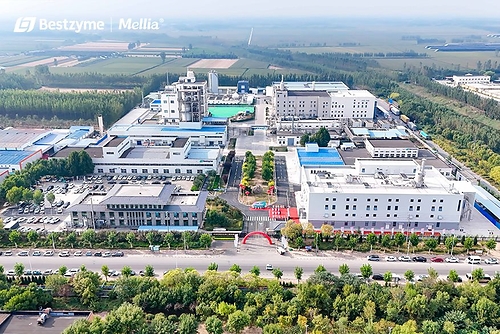
Bestzyme, a synthetic biology company under GenScript Biotech, announced the completion of the world's first dedicated, automated smart production line for sweet proteins at its Jinan facility. This milestone marks the first full-chain integration of R&D, mass production, and application for sweet proteins globally, addressing the food and beverage industry's long-standing challenge of reducing sugar without compromising taste.
Dr. Bai Aixi, General Manager of Bestzyme, noted that the real challenge in sugar reduction is not simply removing sugar, but replicating the pure, full-bodied, natural taste of sucrose while removing calories and metabolic burden. The company's flagship product, Mellia Brazzein sweet protein, is not a simple replacement for traditional sweeteners, but rather the "final piece of the puzzle" in sweetener formulations. It can efficiently blend with existing sweeteners such as Stevia and Monk fruit to achieve complete, rounded sweetness. With a clean label and no impact on blood sugar, Mellia means "zero sugar" no longer requires a compromise on taste — it's an upgrade.
Brazzein, derived from the West African Oubli fruit, is thousands of times sweeter than sucrose, with virtually no glycemic impact and zero calories. However, due to low host expression levels and extreme difficulty in separation and purification, it has long remained at the laboratory stage. Bestzyme, with over a decade of expertise in industrial enzymes and biocatalysis, has successfully overcome high-density fermentation.
The new Jinan facility spans 5,000 square meters and features a fully automated "fermentation — purification — freeze-drying" process. Once operational, the Mellia sweet protein product line will have an annual capacity of over 100 tons. Based on high-purity Brazzein sweetness conversion, this is equivalent to the sweetness of 300,000 tonnes of sucrose annually. Capacity is expected to have the potential to double within two years.


