
Watch Now
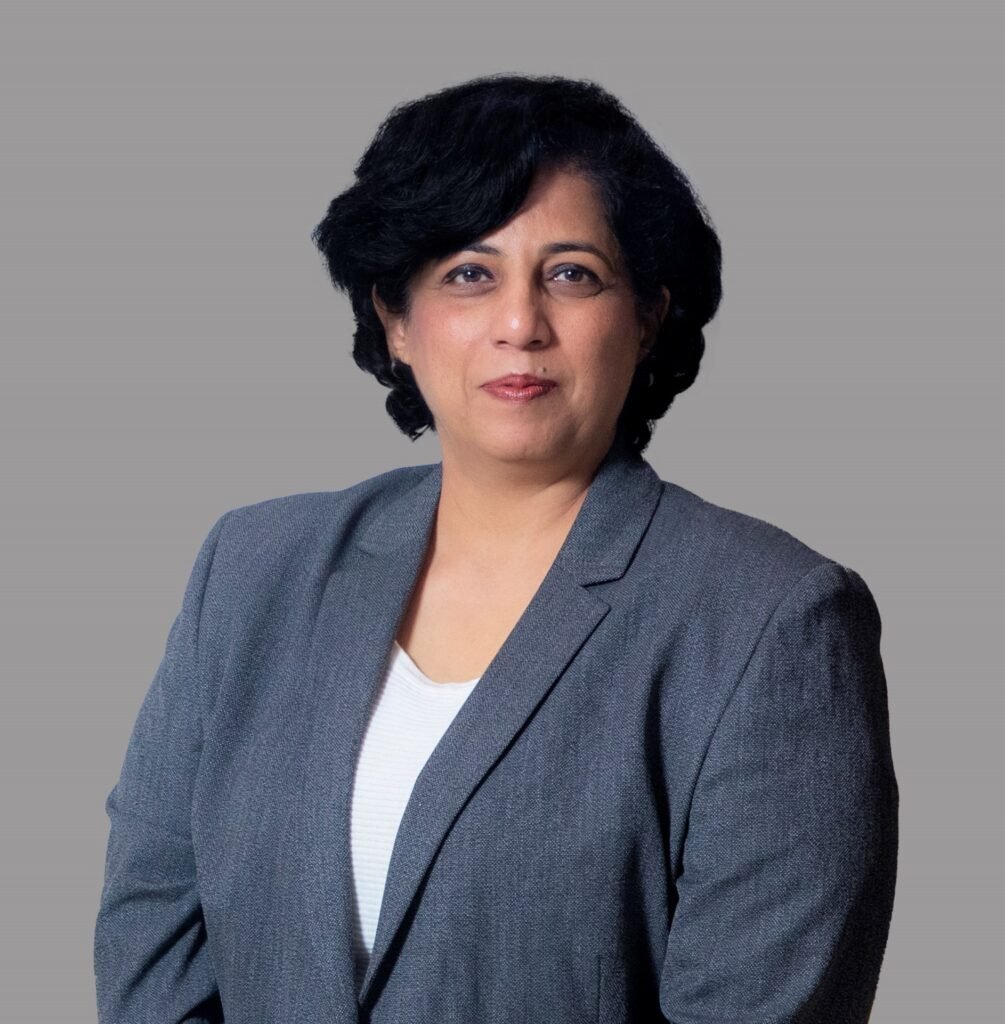
JYOTI BHASIN
MANAGING DIRECTOR,
NSF APAC
“The Asia-Pacific region, representing 60% of the world’s population, has experienced significant
growth. For manufacturers in this region, understanding brand loyalty and maintaining customer
trust is essential. This trust is especially crucial in the food and pharmaceutical industries, where
current Good Manufacturing Practices (cGMP) play a vital role.
cGMP provides a flexible framework that ensures manufacturers are equipped with the current
technologies, allowing for a customized approach that meets local needs while adhering to global
standards.
At NSF, we understand the various challenges manufacturers face as industry standards continue
to evolve. We prioritize educating businesses about the regulatory landscape to help them navigate
this complexity effectively. As an independent global organization with over 80 years of experience
dedicated to improving human and planet health, NSF has been actively involved in the Asia-
Pacific region for the past 17 years, with a commitment to extending our global services and values.
Our goal is to foster collaboration and bridge the gap between regulatory requirements and available resources, guiding manufacturers on their path to compliance and excellence. To better serve our clients, we have established offices throughout the region, which allows us to offer what we refer to as "GLOCAL support." This approach ensures that we meet international requirements while also attending to local needs. We strive to support both the local demands of businesses and their broader international aspirations. By providing a standard suite of services, we also focus on customizing those services to meet specific needs. We believe that cGMP is not just a set of practices but a vital component in shaping a brighter future for manufacturers.”
THE EPISODE IN WORDS.
Safeguarding Trust in Manufacturing: An Interview with Jyoti Bhasin, Managing Director, NSF APAC
Consumer trust in food, nutrition and life sciences is built on more than just products; it is underpinned by the integrity of manufacturing. At the centre of this lies cGMP – Current Good Manufacturing Practice. NUFFOODS Spectrum Asia sat down with Jyoti Bhasin, Managing Director of NSF APAC, to explore what cGMP really means, the challenges unique to Asia-Pacific, and how NSF is supporting companies to achieve global standards.
Q: Jyoti, could you begin by telling us a little about NSF, its mission, and the role it plays in the food, nutrition and life sciences industries?
A: Certainly. NSF is an organisation with over 80 years of history, and our mission is focused
and clear: we safeguard public health and planetary health. We do this by working across
three essential domains — food, water, and life sciences — all of which are fundamental to
human well-being.
In Asia-Pacific, where we have operated for more than 17 years, our vision has been to serve
as a seamless extension of NSF’s global operations. We bring the same standards that define
our work in the United States, while ensuring our programmes are adapted to local realities.
Through local teams, we strike a balance between global consistency and local relevance.
Q: Many of our readers are familiar with the term cGMP but may not fully appreciate its significance. Could you explain what cGMP entails, and why the “c” makes such a difference?
A: GMP itself stands for Good Manufacturing Practice. It ensures that products are
manufactured safely, consistently, and to the quality claimed. The “c” stands for Current, and
that is crucial.
Industries evolve, technologies advance, and what was state-of-the-art five years ago can
quickly become outdated. Just as mobile telephones progressed from bulky, antenna-topped
devices to today’s sophisticated smartphones, manufacturing practices too must remain
current.
The “c” ensures that the very latest science, technology and processes are incorporated. This
is important in food, but absolutely vital in pharmaceuticals where precision is of an
altogether higher order.
Q: How does compliance with cGMP enhance product quality and safety, whilst at the same time building consumer trust and brand loyalty?
A: Trust is at the heart of consumer behaviour. We rarely purchase simply a product; we buy
the trust behind that product. That is why brands matter. They represent not merely goods, but
reliability and assurance.
cGMP enforces that trust. It requires validation of raw materials, robust manufacturing
processes, well-maintained equipment, and properly trained staff. The end result is a product
that consistently delivers what it promises.
What makes cGMP particularly powerful is that it provides a rigorous framework without
prescribing one rigid method. It sets high expectations, but also affords businesses the
flexibility to adopt approaches that best suit their operations, provided they meet the standard.
Q: What, in your view, are the key challenges manufacturers in Asia-Pacific face when striving for cGMP compliance, and how does NSF help them to overcome these hurdles?
A: Asia-Pacific is an immensely ambitious region, home to 60 per cent of the world’s
population. Standards here are rising rapidly, but they are evolving from a very diverse
baseline.
Many requirements were originally drafted by regulators in the United States or Europe,
where certain practices are assumed as a given. In Asia, those same practices may still be in
development. This creates a gap.
NSF’s role is to help businesses first recognise that gap — to assess where they stand
compared to what is required — and then to provide a roadmap for bridging it. Once the gap
is clear, progress becomes achievable. We guide manufacturers through that journey, step by
step, from assessment to execution.
Q: NSF’s certification programmes, such as the NSF/ANSI 455 standard, are highly regarded. How do they equip manufacturers for regulatory inspections and international trade?
A: Our certification programmes are aligned with regulatory requirements such as those of
the US FDA. For any dietary supplement or cosmetic manufacturer aspiring to export to the
United States, obtaining NSF certification provides assurance and confidence.
Recently, we signed an MoU with the Indian Drug Manufacturers’ Association to develop a
tiered cGMP framework — Bronze, Silver and Gold — to help companies progressively raise
their compliance. This stepladder approach allows manufacturers to demonstrate their
capability in stages, ultimately reaching a gold level that aligns with the highest export
requirements.
In short, our programmes give manufacturers confidence that, should a regulator inspect
them, their systems and processes are already aligned with international expectations.
Q: Finally, with new regulatory frameworks such as MoCRA in the United States, how do you see cGMP shaping the future of manufacturing in Asia- Pacific, and how is NSF positioning itself to support this evolution?
A: Regulations will inevitably become more demanding, as consumer safety rightly requires.
Our role is to support businesses in meeting those demands.
That is why NSF has established offices in India, Thailand, Korea, Japan and Australia — to
combine global expertise with local presence. This allows us to offer both standardised
services and customised solutions tailored to the specific regulatory and market conditions of
each country.
cGMP is not merely about compliance today; it is about shaping tomorrow’s manufacturing
landscape. At NSF, we see ourselves not just as auditors, but as partners in helping companies
achieve operational excellence and build lasting consumer trust.